.JPG)
Sobibor Extermination Camp
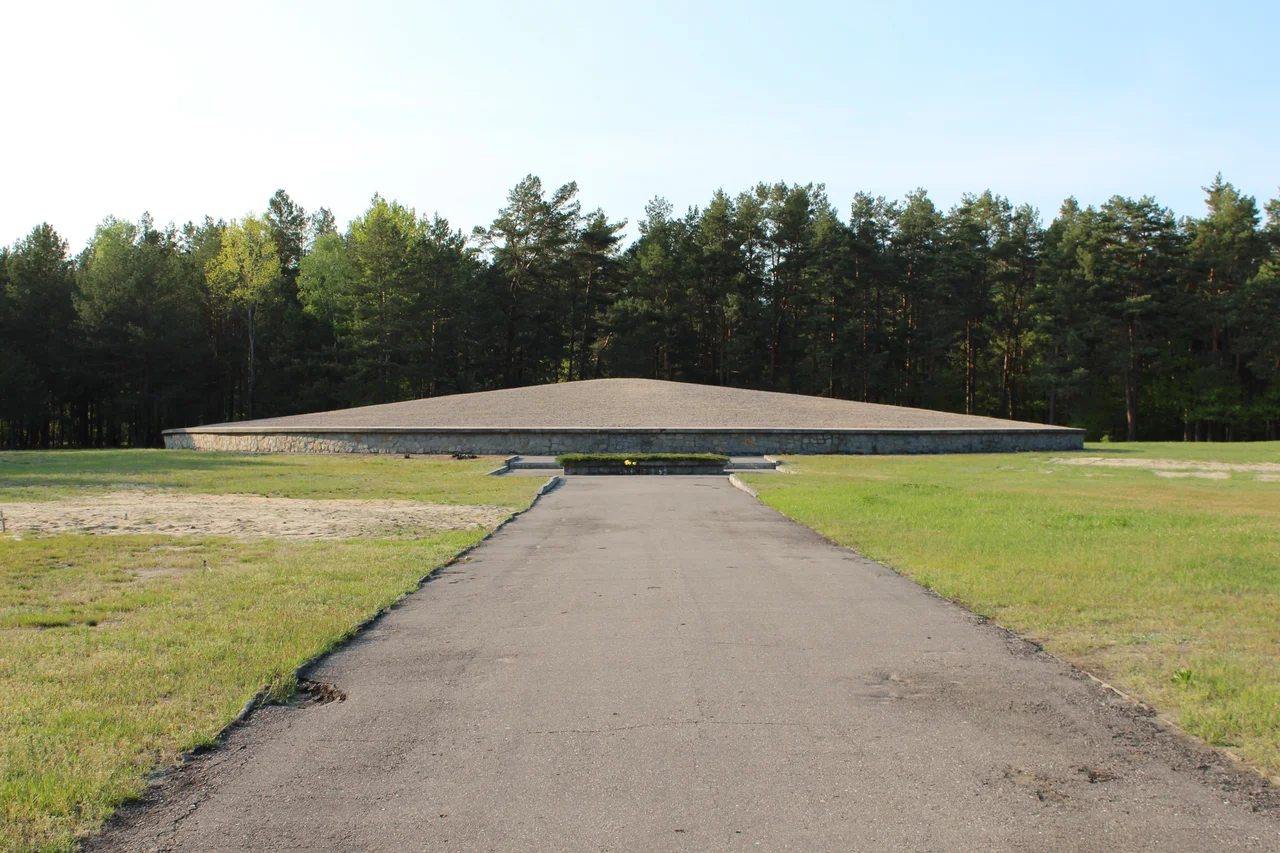
On the afternoon of 14 October 1943, an axe came down inside a tailor's barracks in a clearing of the Polish forest, and the most remarkable revolt of the Holocaust began. The Nazis had built Sobibor for one purpose - to murder Jewish people and erase the evidence - and for eighteen months they had succeeded with industrial precision. Roughly 250,000 men, women, and children were killed here, most within hours of stepping off the trains. Then, in a few hours of planning by Polish-Jewish organizer Leon Feldhendler and Soviet-Jewish Red Army lieutenant Alexander Pechersky, the prisoners turned the camp's machinery against the men who ran it. About 300 reached the forest; roughly 60 lived to see the end of the war.
Operation Reinhard
Sobibor was one of four camps built for Operation Reinhard, the deadliest phase of the Holocaust. Construction began in March 1942 under SS-Hauptsturmfuhrer Richard Thomalla, who had already overseen the building of Belzec. The first commandant was Franz Stangl, a meticulous Austrian who would later run Treblinka. The camp's design was deceptive on purpose. The SS landscaped the front compound with lawns and geraniums, gave their barracks names like the Merry Flea and the Swallow's Nest, and called the narrow fenced path that led to the gas chambers the Himmelstrasse - the Road to Heaven. Survivor Jules Schelvis later recalled feeling reassured upon arrival by the cottage-like buildings and the bright little curtains. Behind the pine-thatched fences in Lager III, a heavy gasoline engine pumped carbon monoxide into the chambers.
The Dead
Most who arrived at Sobibor are remembered by the manifests of the trains that brought them. Jews from the Lublin district came first, then transports from Slovakia, France, the Netherlands, Belarus. The Dutch losses were catastrophic: roughly 34,000 people were sent from the Westerbork transit camp, and only a handful survived the war. Children identification tags from the Netherlands were among the items archaeologists pulled from the soil during excavations in 2009. So were false teeth, suitcase keys, and keepsakes from Marienbad. The SS demolished the camp after the revolt and planted trees over the killing area to hide what they had done. Eventually the trees gave the bones up. In 2014, archaeologists located the foundations of the gas chambers themselves, ending decades of uncertainty about precisely where the murders happened.
Pechersky and Feldhendler
Leon Feldhendler had been a member of the Judenrat in Zolkiewka. He worked in the sorting barracks at Sobibor, which gave him enough food to keep his mind clear, and through the summer of 1943 he tried to organize an escape. The plans went nowhere. He needed soldiers. On 22 September, a transport arrived from the Minsk Ghetto carrying about twenty Soviet Jewish Red Army prisoners of war. Among them was Lieutenant Alexander Pechersky - an actor and songwriter in civilian life, a political officer in uniform. Within weeks the two men had built a plan to give all 600 surviving prisoners at least a chance. Pechersky later said the moment he committed himself was while chopping wood near Lager III, when he heard a child inside the gas chamber calling for its mother and thought of his own daughter Elsa. The plan, he decided, could not be only an escape. It had to be a revolt.
Fourteen October
The revolt began at four in the afternoon. Deputy commandant Johann Niemann arrived at the tailor's shop to be fitted for a leather jacket taken from a murdered Jew. He removed his pistol, turned to admire the back, and two prisoners split his head open with axes. Over the next hour, one SS officer was killed roughly every six minutes - lured to workshops with promises of new boots and tailored coats and dispatched with knives and homemade weapons. Eleven SS men died this way. The plan called for the prisoners to march out the front gate at evening roll call as if heading to a work detail, but the killings were discovered too soon. Shots rang out from the storage rooms. The crowd surged for the fences. Some climbed the wire and ran the minefield, the explosions tearing apart the people in front. About 300 made it into the forest. Pechersky was among them. So was Feldhendler. So was Toivi Blatt, who survived because the fence collapsed on top of him.
What Came After
The Germans hunted the escapees with SS, Wehrmacht, and Luftwaffe planes, and offered local bounties. Many were caught and shot in the surrounding villages within days. Of the roughly 300 who reached the trees, only about 60 lived to see liberation. Both architects of the revolt survived the war and neither was permitted peace afterward. Leon Feldhendler returned to Lublin, where he was murdered in his own apartment on 6 April 1945 by Polish antisemites - one of more than a thousand Jews killed in postwar Poland. Alexander Pechersky returned to Rostov-on-Don and lived under quiet Soviet harassment for decades; the Russian authorities refused him permission to testify at the Eichmann trial in Jerusalem. The Nazis razed the camp, planted a forest, and tried to make Sobibor disappear. The forest, the foundations under the soil, the survivors who lived long enough to testify, and the orchestra of names recovered from the trains have all refused to let it.
From the Air
Located at 51.45 N, 23.59 E in the forests of eastern Poland, near the Bug River and the Belarusian border. The site lies about 80 km northeast of Lublin (EPLB) and roughly 75 km southeast of Brest. The terrain is flat, heavily wooded, and bisected by the rail line that delivered the trains. Cruising altitude offers a clear view of the broad Polesie woodlands; the memorial site itself is small and best identified by the rail spur and the Bug River meander to the east.
Nearby Stories
- Damachava Ghetto 12 km away
- Dormition Cathedral, Volodymyr 35 km away
- Lubartów Ghetto 42 km away
- Zymne Monastery 57 km away
- Holy Trinity Orthodox Cathedral, Lutsk 105 km away
- Byaroza Monastery 106 km away
- Treblinka Uprising 132 km away
- Siege of Przemyśl 155 km away