
Treblinka Uprising
By late July 1943, the prisoners in Treblinka's upper camp had nearly finished their assigned work. For five months they had been forced to exhume the corpses buried in the mass graves and burn them on open-air pyres. Around 700,000 bodies. When the work was done, they would be killed too — there would be no need for them anymore, and there would be no witnesses. So they decided to fight. On Monday, 2 August 1943, around four o'clock in the afternoon, a single pistol shot rang out in the lower camp. It was the signal for one of the most extraordinary acts of armed resistance in the entire Holocaust.
The Conspirators
The Organizing Committee began forming in February or March 1943, in the camp's lower section where the Jewish work prisoners — the Arbeitsjuden — sorted the clothing and belongings of the murdered. The first leader was Julian Chorążycki, a medical doctor from Warsaw and a captain in the prewar Polish Armed Forces. He was discovered with smuggled money and killed himself rather than reveal his comrades. Władysław Salzberg, a furrier from Kielce who ran the tailor shop, took on a leading role. So did Marceli Galewski, an engineer the Germans had appointed camp elder. Berek Lajcher, a doctor from Węgrów known to the conspirators only as Dr. Leichert, joined in June and may have become the de facto leader. In the upper camp — the death camp itself — Zelo Bloch, a Czech-Jewish officer who had served in the Czechoslovak Army, organized a parallel cell. By July about sixty prisoners were in the conspiracy. They knew that exposure meant immediate death for everyone.
The Plan
News of the Warsaw Ghetto Uprising reached Treblinka in May, and the example of the ghetto fighters gave the prisoners both courage and a model. The plan was audacious: seize weapons from the SS armory using teenage boys called Putzers who served as the Germans' orderlies, set fire to the camp, kill the guards, destroy the gas chambers, and break out into the surrounding forest. The escape route ran north and east toward the Bug River and the Białowieża Forest. The conspirators rehearsed it in their heads through every meal and every roll call. In April the boys nearly succeeded in stealing two boxes of grenades — but the fuses were stored separately, and the boxes had to be quietly returned. By late July, with the cremation work nearly complete, the upper camp prisoners issued an ultimatum: set a date or we revolt alone. The committee chose Monday, 2 August.
The Revolt
Things began to go wrong almost immediately. The weapons removal from the armory was supposed to start at two o'clock; an SS man named Max Möller stayed inside the building and had to be lured out, costing precious time. The boys had to pack pistols and grenades into small bags and carry them one at a time through a window to a garage. By late afternoon only a few dozen grenades and a handful of firearms had been distributed. Then around 3:30, an SS-Oberscharführer named Kurt Küttner caught a young prisoner with money hidden for an escape and was about to drag him out for punishment. A messenger reached Galewski. An armed conspirator named Wallabańczyk drew his pistol and shot Küttner. It was around four o'clock. The uprising had begun. Sudowicz's group threw grenades at the commandant's office. Rudek Lubrenicki and a Czech Jew named Stanisław Lichtblau blew up the camp's fuel depot. Salzberg's men set fire to the barracks. Machine guns from the watchtowers cut down anyone trying to reach the fence. The fighting lasted, according to Commandant Franz Stangl, less than half an hour. The fires burned until evening.
The Survivors
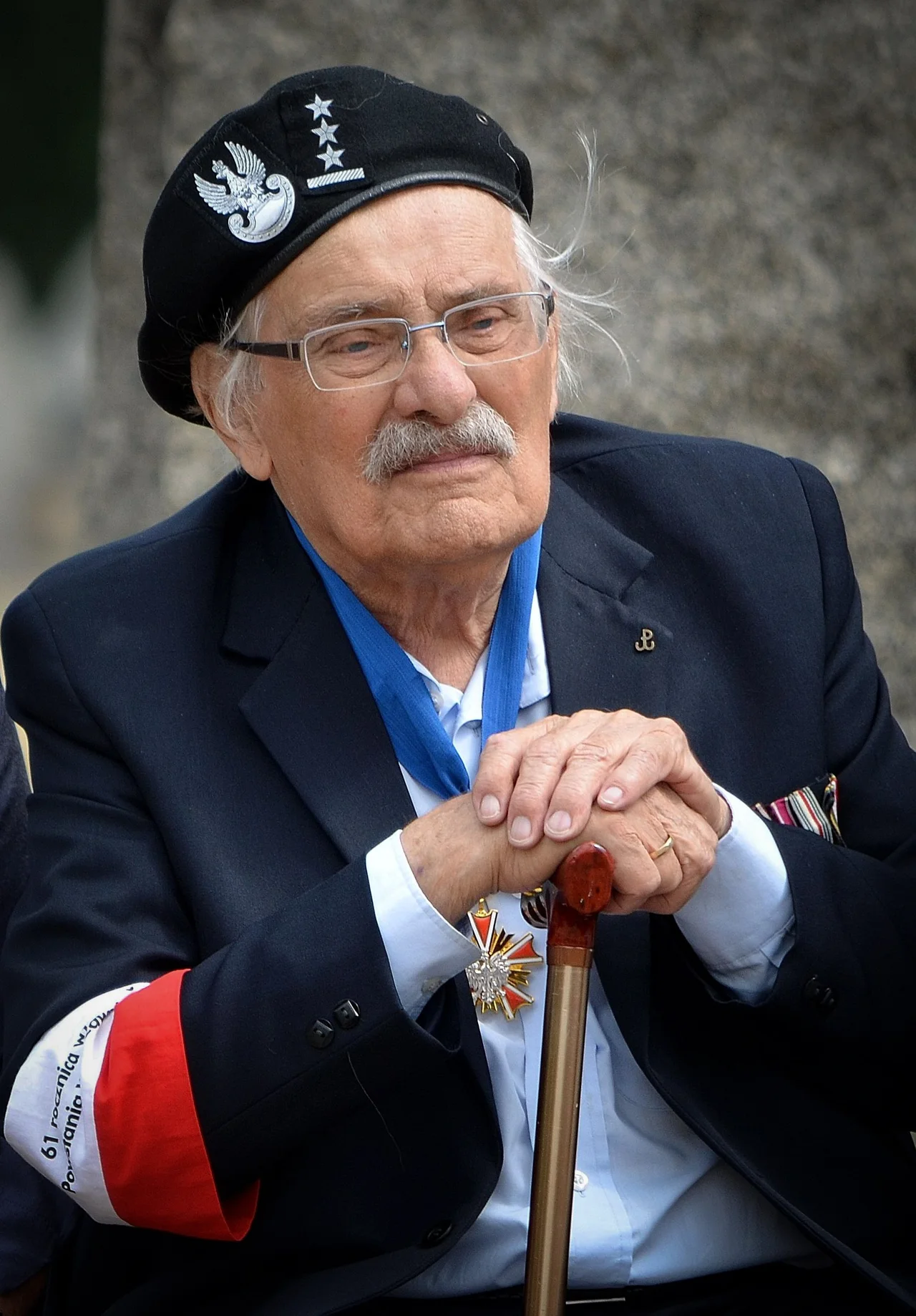
Of approximately 840 prisoners in the camp that day, about 400 escaped through the breached fences and the smoke. Between 350 and 400 were killed in the fighting or shot trying to climb the wire. Over 100 were captured alive. The escapees scattered across the forests of Masovia and Podlasie. They were hunted by SS search parties, by some Polish villagers motivated by greed or fear, and by ordinary bandits posing as partisans. Many were sheltered by other Polish villagers — historian Teresa Prekerowa estimated that altruistic assistance accounted for about sixty percent of the documented cases. Two Czech Jews, Richard Glazar and Karel Unger, survived by posing as Organisation Todt workers and traveling to Germany, where the Americans liberated them. Samuel Rajzman was sheltered by a Polish farmer until the Red Army arrived. Roughly 70 of the 400 escapees survived the war. The insurgents had failed to destroy the gas chambers — the SS murdered at least 7,500 more Jews from the Białystok Ghetto at Treblinka in late August. But the uprising hastened the camp's liquidation. In 1945, General Michał Rola-Żymierski posthumously awarded the Cross of Valour to Chorążycki and Galewski. Samuel Willenberg, the last living participant in the revolt, died on 19 February 2016.
From the Air
The uprising took place at the Treblinka extermination camp at 52.63°N, 22.05°E, in a pine forest of Masovian Voivodeship roughly 80 km northeast of Warsaw. The escape route ran north and east toward the Bug River, a few kilometers away, and beyond it toward the Białowieża Forest on what is now the Polish-Belarusian border. Nearest airport is Warsaw Chopin (EPWA). Every August 2, commemorative ceremonies are held at the memorial. Recommended viewing altitude 3,000-5,000 ft to take in both the camp clearing and the forested terrain through which the escapees fled.
Nearby Stories
- Royal Castle, Warsaw 33 km away
- Białystok during World War II 50 km away
- Duchy of Warsaw 53 km away
- Battle of Warsaw (1831) 68 km away
- Białystok Ghetto 70 km away
- Osowiec Fortress 77 km away
- Brest Fortress 85 km away
- Soldau Concentration Camp 94 km away