
Spa Road Junction Rail Crash
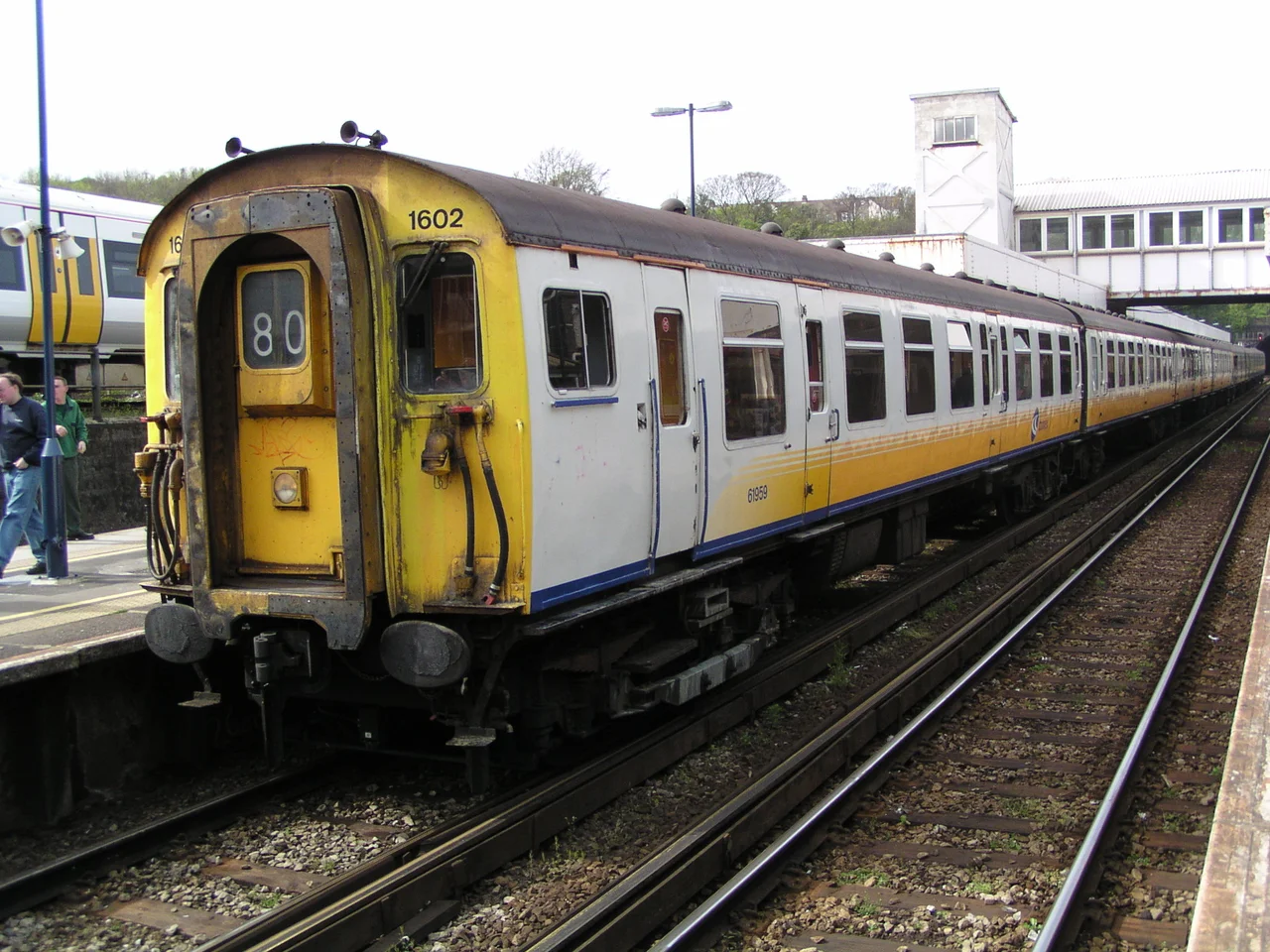
The driver of the Dover Priory to Charing Cross train passed a flashing double yellow. He passed a single yellow. Then he passed a red. He continued for 283 metres past it, at 39 miles per hour, before his eight-coach Connex South Eastern service struck the Brighton-to-Bedford Thameslink at Spa Road Junction in Bermondsey. It was 8 January 1999, dark and raining, peak evening rush hour. Both trains derailed. Most carriages were damaged. By the strange physics of crash dynamics, with closing speeds reduced because the Thameslink was still moving across the junction at 31 mph, nobody died. Eight people were taken to hospital with bruises and whiplash. None were detained overnight. But the accident at this anonymous south London junction set in motion a piece of British safety legislation that, within five years, would put automatic brakes on nearly every train in the country.
The Junction
Spa Road Junction is one of London's busiest railway crossroads, a tangle of seven tracks immediately south-east of London Bridge station, where lines from Charing Cross, Cannon Street, the Brighton Main Line and the South Eastern Main Line all converge. Trains crisscross at ladder-crossovers in patterns choreographed from the London Bridge signalling centre next to platform 16. On the evening of the crash, the Thameslink had been held at red until the route was set for it to cross from the Brighton Main Line onto the London Bridge Up Loop. When the signal cleared, the train began its slow crossing. The Connex driver, approaching from behind on the South Eastern Main Line, had three full warnings ahead of him. Each one indicated tighter braking. He responded to none of them.
What the Sunflower Showed
Every British train cab carries a small electromechanical device called a Sunflower - a black disc that displays yellow petals when the train passes an Automatic Warning System magnet at a caution or danger signal. In the wreckage of the Connex cab, the Sunflower showed all-black: clear. The driver, when questioned, said he had seen no warnings. The Health and Safety Executive's investigators were skeptical. AWS systems on both trains had tested as working. The investigators concluded that the collision shock had knocked the electromechanical indicator from yellow to black at the moment of impact - a known quirk of the older design. Even had the Sunflower shown clear in error, they noted, the driver was still required to observe and obey the lineside signals he passed. The HSE finding came down to human factors: the driver had passed a signal at danger without authority before. He was still under special supervision. After the crash, he was permanently removed from driving duties.
The Forgotten Train
Behind the wreckage sat another full train. The Connex South Central service from London Bridge to Guildford, with around 200 passengers, had come to a halt close enough to the accident that nobody was sure what to do with it. The emergency services were overwhelmed trying to reach the 282 people on the two derailed trains. The Guildford passengers, in rain and darkness, were initially left without supervision. Some climbed down onto the tracks and made their own way out, weaving between live rails. Some were guided through the abandoned buildings of Spa Road railway station - the original 1836 terminus of the London and Greenwich Railway, the world's first elevated steam-powered passenger line, then closed for over a century. One passenger from the crashed trains, uninjured but unsupported afterwards, won damages in court and remarked dryly that fellow passengers in any future rail accident 'should be aware that unless we are carted off to hospital we will have to fend for ourselves wherever we are dumped.'
The Law That Followed
The Spa Road investigation made a single technological recommendation: the new Train Protection and Warning System could have prevented the crash, or at least slowed the Connex train. TPWS was already in development. The accident pushed it into law. The Railway Safety Regulations 1999, introduced in August of the same year, required train protection across the entire national network by the end of 2003. The regulations stopped short of mandating the full Automatic Train Protection system used on the continent - TPWS is cheaper, simpler, less complete - but they did require that any train running a red signal would have its brakes applied automatically within a quarter of a second. Within four years, every major junction in Britain had it installed. The October 1999 Ladbroke Grove crash, in which 31 people died for almost identical reasons, would later accelerate the same programme. Spa Road, with its four bruises and no fatalities, was the warning the country very nearly didn't heed.
From the Air
Located at 51.49°N, 0.0544°W in Bermondsey, immediately south-east of London Bridge station on the elevated brick viaducts of south-east London's rail network. Recommended viewing altitude 1,500-2,500 feet. London City (EGLC) lies 4 nm east-northeast, Heathrow (EGLL) 16 nm west. The Shard's spire stands as a prominent visual marker 500 metres west of the junction.
Nearby Stories
- Battle of Britain, Northfleet 1.1 km away
- Bayham Old Abbey 5.4 km away
- Catharine Macaulay 6.4 km away
- Hatfield rail crash 8.8 km away
- Chequers 8.9 km away
- Chelmsford Cathedral 10 km away
- Queen Victoria Hospital 13 km away
- Fishbourne Roman Palace 36 km away