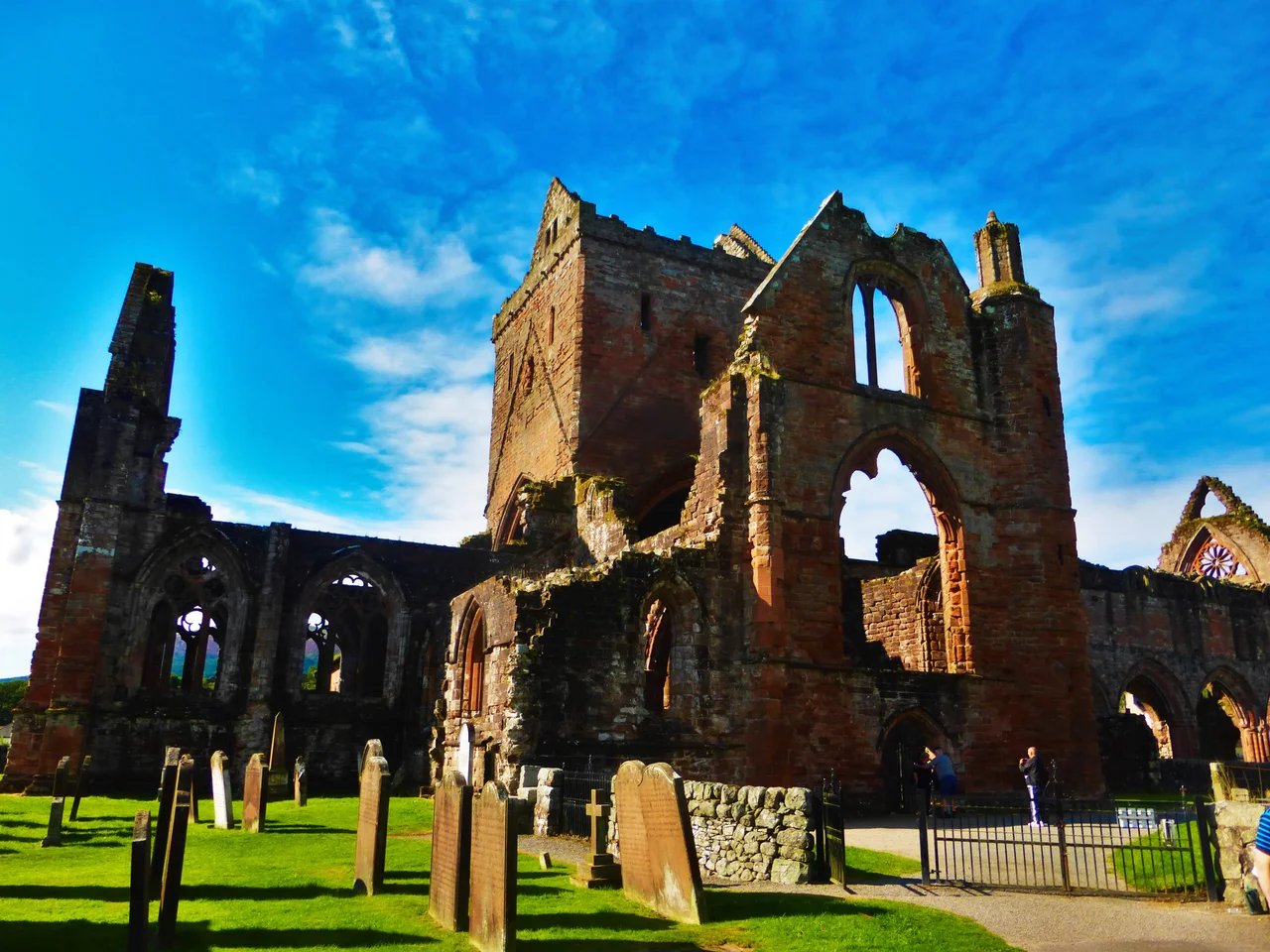

Sweetheart Abbey
She carried it for twenty-two years. After her husband John Balliol died in 1268, Dervorguilla of Galloway had his heart embalmed and placed in a small casket of ivory and silver, and she carried that casket with her, wherever she went, until she died in 1290. The Cistercian monastery she founded in 1273 to pray for his soul she named Dulce Cor in Latin - Sweet Heart. When her own time came, the casket was buried alongside her at the high altar she had paid for. The Reformation lost the graves. The name stuck.
The Founding
Dervorguilla was the sole surviving heiress of Alan, Lord of Galloway, and one of the wealthiest women in 13th-century Britain. Her marriage to John Balliol of Barnard Castle joined two of the great houses of the Anglo-Scottish border. They had founded Balliol College, Oxford together in 1263, in part as penance imposed on John by the Bishop of Durham. When he died, Dervorguilla kept his heart by her and completed every project the two of them had begun. She finalised the college's statutes - the document she signed is the founding charter Balliol still observes. And in 1273 she founded a Cistercian house on the banks of the New Abbey Pow in Galloway, eight miles south of Dumfries, as her husband's spiritual memorial. It was a daughter house of nearby Dundrennan, established in the Early English style under the first abbot, Henry. The monks called it novum monasterium, the new monastery; locally it was called Dulce Cor. The village that grew up around it kept the second name for itself, and the abbey kept the first.
The Building
The abbey church was built in deep-red local sandstone, the same stone the Maxwells used at Caerlaverock to the southeast. The nave stretched east toward the chancel under a great central bell tower. The precincts extended to thirty acres, enclosed by a stone wall whose lower courses still survive in places. Like all Cistercian houses, Sweetheart's interests reached beyond prayer. The White Monks - so called for the white cowls worn over their religious habits - were Europe's most systematic medieval agriculturalists. They drained land, bred horses and cattle, ran corn mills, and made themselves the centre of local economic life. The Monksmill at the end of New Abbey's main street, though its present buildings date to the late 18th century, sits on the site of a mill built by and for these monks to serve the surrounding farms.
Wars and a Royal Lodger
During the First War of Scottish Independence, King Edward I of England himself stayed at Sweetheart Abbey in 1300, while campaigning through Galloway. (The siege of Caerlaverock that same summer is a few miles southeast.) Fifty years of warfare in the region left the abbey poor and battered - the Bishop of Galloway later complained of its 'outstanding and notorious poverty.' Archibald Douglas, 3rd Earl of Douglas, known as Archibald the Grim, became the abbey's major benefactor in the late 14th century, financing wholesale repairs and a substantial rebuilding. The same Archibald who built Threave Castle thirty miles west and fortified Caerlaverock through the Maxwells. The depredations of subsequent wars, however, caused Dervorguilla's grave and her husband's heart to be lost. The exact location of the foundress's burial is still unknown.
Suppression
The Scottish crown began placing the abbey under a series of commendatory abbots from 1565 - laymen who collected the revenues without taking vows. The last actual Cistercian abbot was Gilbert Broun, who held the title from 1565 to 1612. After the Reformation he continued openly to celebrate the Catholic faith and was charged repeatedly with 'enticing to papistrie' from 1578 onwards. In 1605 he was finally arrested, in spite of resistance from the whole surrounding countryside, transported to Edinburgh, tried, and sentenced to exile. The last of the monks died in 1624. The buildings and lands passed to Sir Robert Spottiswoode, son of the Archbishop of St Andrews. When Charles I established the Diocese of Edinburgh in 1633 he asked Spottiswoode to relinquish New Abbey to the new diocese; Spottiswoode agreed but was never paid, and the king restored the estate to him in 1641. Spottiswoode was soon forced into exile by the Covenanter rising.
What Remains
The roofless church still dominates the village, its bell tower visible for miles across the Solway plain. The nave's great arches still stand, and the surviving windows show the richly carved tracery of the original Early English work, with the triforia visible above the rows of pillars. The buried at Sweetheart include William Paterson (1658-1719), the Dumfriesshire-born founder of the Bank of England, the Catholic priest and historian James Carruthers (1759-1832), and Eric Drummond, 7th Earl of Perth (1876-1951), who was the first Secretary-General of the League of Nations. A 14th-century prayer book known as the Sweetheart Abbey Breviary is now in the National Library of Scotland in Edinburgh. Dervorguilla's heart-casket, and her grave with it, is still somewhere beneath all this red sandstone - precisely where, no one has ever determined.
From the Air
Sweetheart Abbey sits at 54.98 N, 3.62 W in the village of New Abbey, eight miles south of Dumfries on the Solway plain. The nearest airport is Dumfries (former RAF Dumfries) about 8 nm north-northeast; Carlisle (EGNC) lies 30 nm southeast and Prestwick (EGPK) is 55 nm northwest. From 2,000 to 4,000 feet AGL the abbey's red sandstone bell tower stands sharply against the surrounding pale fields, with Criffel (1,866 ft) directly south as the dominant terrain. The Nith estuary is east, opening to the Solway Firth. Caerlaverock Castle on its triangular plan lies just 4 nm to the east-southeast. Expect quick weather changes off the firth.
Nearby Stories
- Keswick 7.7 km away
- Workington Lifeboat Station 8.2 km away
- Morton Castle 9.5 km away
- Quintinshill Rail Disaster 9.8 km away
- Garlieston 19 km away
- Cumnock 29 km away
- Point of Ayre Lighthouse 30 km away
- Kielder Observatory 35 km away