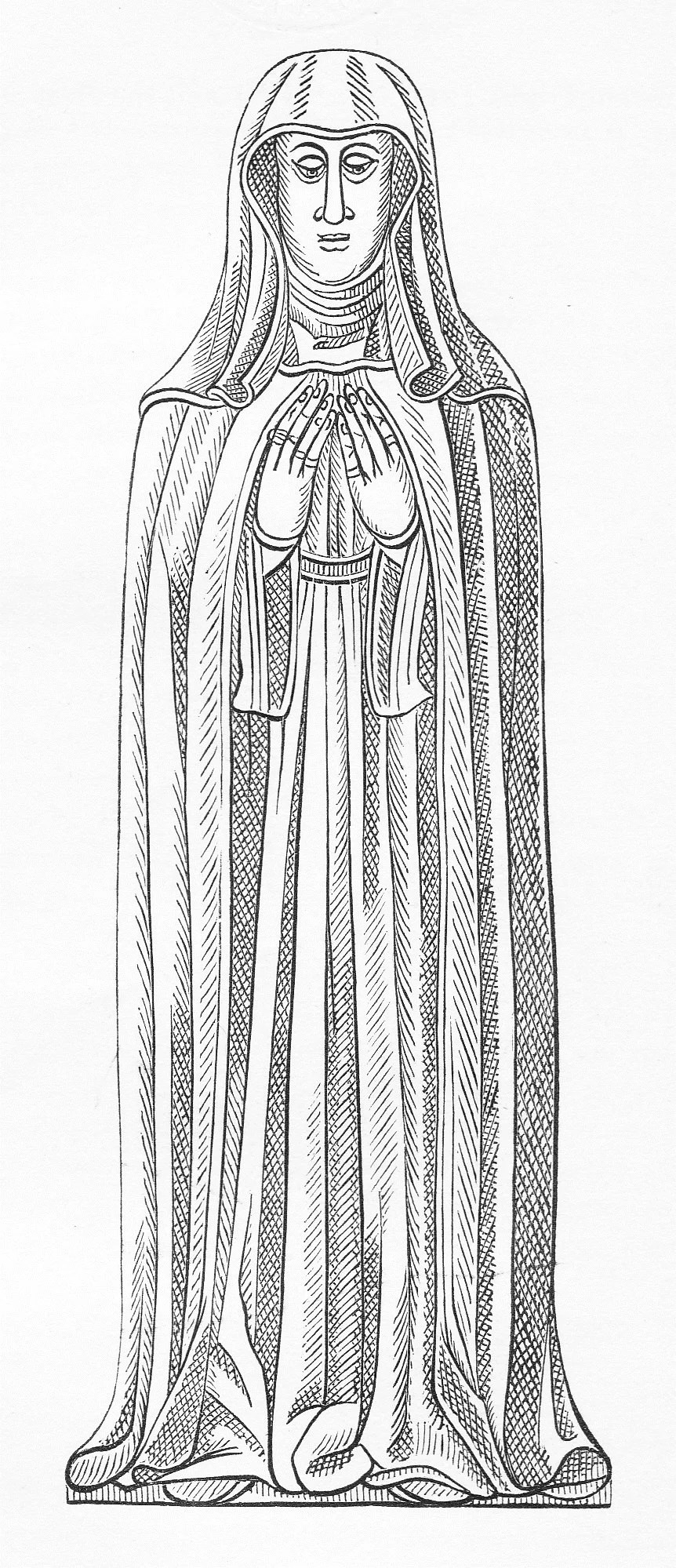

Syon Abbey
On 14 February 1547, the coffin of Henry VIII rested overnight at Syon Abbey on its way from Westminster to Windsor for burial. According to the chronicles, a Franciscan friar had prophesied twelve years earlier that the king's body would be desecrated by dogs - as had happened to the biblical King Ahab. That night, as the coffin lay in the dissolved abbey's ruined chapel, some 'corrupted matter of a bloody colour' was said to have leaked onto the floor and been licked up by the abbey's stray dogs. The story may be invented. The location is not. Syon Abbey, founded in 1415 by Henry V on a bend of the Thames at Isleworth, was once the wealthiest religious house in England. It was dissolved by Henry VIII, briefly restored under Mary I, dissolved again by Elizabeth I, and chased into exile in the Netherlands, then Portugal, then Devon. The community survived, unbroken, for 596 years - the only English religious house to do so. The last three sisters closed it in 2011.
The King's Great Work
Syon was born from one king's guilt. Henry IV had usurped the throne of his cousin Richard II in 1399 and was implicated in Richard's murder in 1400 and the killing of the Archbishop of York Richard Scrope in 1405. To expiate that guilt he vowed to found three monasteries. He died before he could. His son Henry V, two years before Agincourt, decided to fulfil the vow as part of an enormous architectural programme called the King's Great Work, centred on the rebuilding of Sheen Palace by the Thames at modern Richmond. Three monasteries would rise around it: a Celestine house, a Carthusian house called the House of Jesus of Bethlehem, and a Bridgettine house across the river dedicated to the Holy Saviour and St Bridget of Sweden. The Bridgettines had been suggested to the king by Lord FitzHugh, who had visited the mother house at Vadstena Abbey in Sweden. Four nuns - Anna Karlsdotter, Christina Finwitsdotter, and the Esbjornsdotter sisters - were sent from Vadstena to teach the new community its rule.
An Abbey Run by Women
Syon was a dual monastery - 85 people in total, 60 women and 25 men - but the women ran it. By the Bridgettine rule, the abbess was the head of the entire community, including the male confessor general, the twelve priests, the four deacons, and the eight lay brothers who lived in a separate court. The sexes were forbidden to mix; the confessional grille was the only point of contact, and at one point during the Reformation dispute the authorities suggested bricking it up. The abbey kept a famous library - one collection for the monks, another for the nuns, full of devotional and mystical works in both Latin and English. Catherine of Siena's Dialogue of Divine Revelation was translated into English specifically for Syon under the title The Orchard of Syon, with a special prologue addressed to the sisters. Only eight abbesses were elected in the abbey's pre-Reformation existence: Matilda Newton, Joan North, Maud Muston, Margaret Ashby, Elizabeth Muston, Elizabeth Gibbs, Constance Browne, and finally Agnes Jordan, who surrendered the monastery in 1539 and received a pension of 200 pounds - extraordinarily large for the time.
Reynolds at Tyburn
The dissolution came hard for Syon. Many of its monks initially accepted Henry VIII's title as Supreme Head of the Church of England. Some, however, refused. Among the refusers was Richard Reynolds, a brilliant doctor of divinity later canonised as a saint. Reynolds was the one who arranged a meeting at Syon between Sir Thomas More and the mystic Elizabeth Barton, the 'Holy Maid of Kent,' whose prophecies against the king's divorce became part of the prosecution case against More. On 4 May 1535 Reynolds was hanged, drawn and quartered at Tyburn for denying the king's supremacy. The example was meant to terrify the rest of the community into submission. Thomas Cromwell's agents - Bedyll and Leightone - moved into the abbey to interrogate the remaining brothers. Bedyll reported that 'the bretherne stand stif in thaire obstinacy as you left thaim.' The nuns proved easier to convince. In the chapter house, the Bishop of London asked them all to remain seated if they accepted the king's new title. All remained seated. One sister, Agnes Smythe - 'a sturdy dame and a wylful' - tried unsuccessfully to prevent the convent seal from being handed over. In 1539 the abbey surrendered. The community was expelled.
Lisbon, Devon, and the End
Unlike most dissolved English communities, the Syon nuns refused to disperse. They went to the Netherlands together. Mary I called them back in 1557, and they returned briefly to their old buildings, which had remained largely intact under the Crown. Elizabeth I dissolved them again in 1558. They left England under royal licence and travelled through France and Spain - 'many troubles and afflictions' - eventually settling in Lisbon in 1594. They stayed for 267 years. When they returned to England in 1861 they settled first in Spetisbury in Dorset, then Chudleigh in Devon, and finally in 1925 at Marley House near South Brent on the edge of Dartmoor, which they renamed Syon Abbey. They were the only English religious community to have survived the Reformation unbroken. In 2004 the remaining medieval books from the library were deposited at the University of Exeter. In 2011, reduced to three elderly sisters, the community closed Syon Abbey and sold it. The remaining sisters moved to Plymouth. The original site at Isleworth, meanwhile, is occupied by Syon House - the seat of the Dukes of Northumberland since 1604. Recent excavations have revealed an undercroft, two Gothic doorways, and the foundations of the abbey church running beneath the present mansion's lawn. The abbey is still there, in pieces, eight feet down.
From the Air
Located at 51.4767°N, 0.3119°W on the north bank of the Thames at Isleworth, in the London Borough of Hounslow, opposite Kew Gardens. Recommended viewing altitude 1,500-2,500 feet. Heathrow (EGLL) lies 5 nm west - aircraft on the eastern approach pattern overfly Syon House regularly. London City (EGLC) is 13 nm east-northeast. The site is identifiable by Syon House's distinctive square Georgian mansion and lion-topped gateway, with the Thames curving west into Kew immediately south.
Nearby Stories
- Battle of Britain, Northfleet 1.1 km away
- Bayham Old Abbey 5.4 km away
- Catharine Macaulay 6.4 km away
- Hatfield rail crash 8.8 km away
- Chequers 8.9 km away
- Chelmsford Cathedral 10 km away
- Queen Victoria Hospital 13 km away
- Fishbourne Roman Palace 36 km away