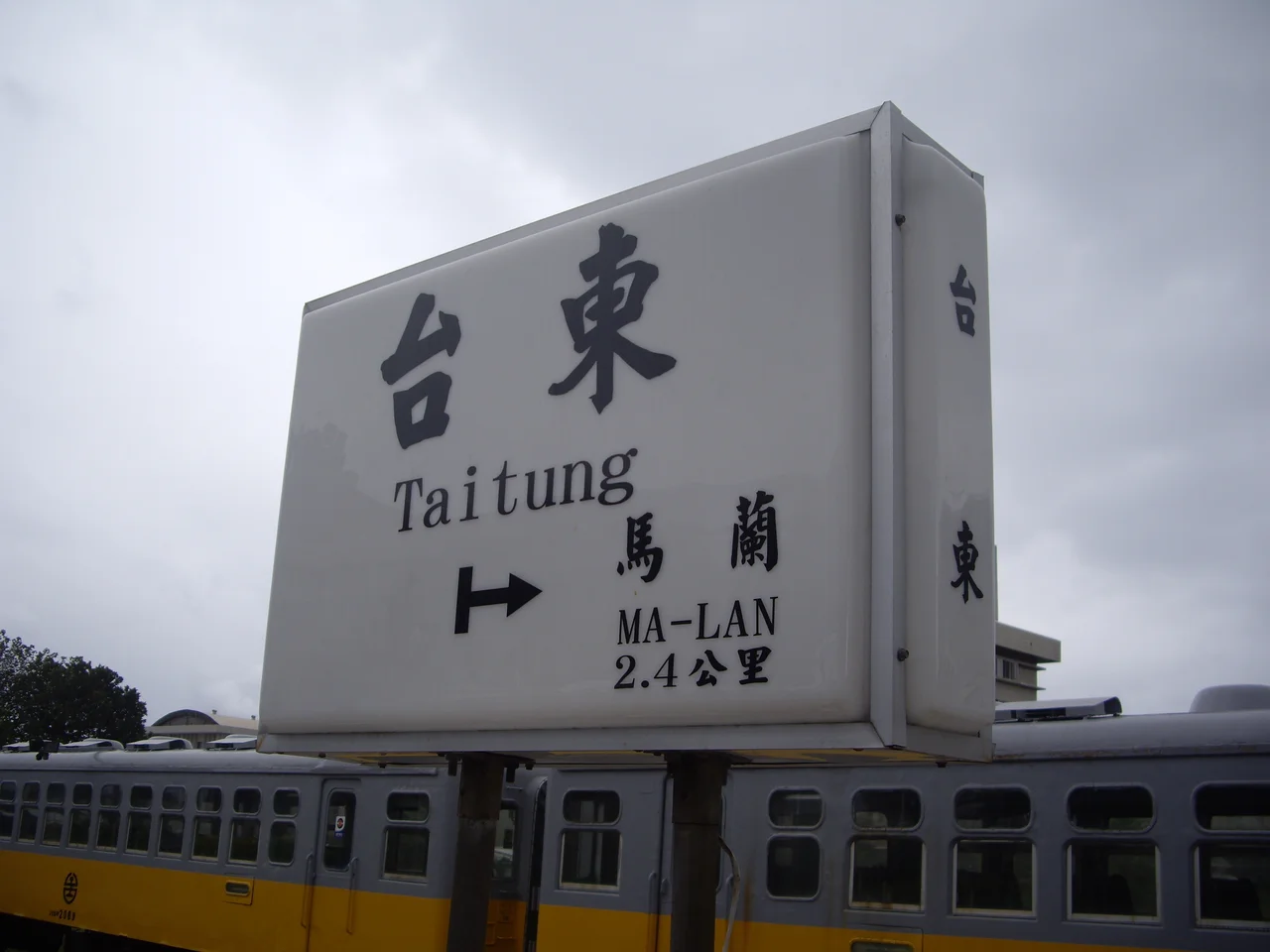

Taitung Railway Art Village
On June 1, 2001, the last train pulled away from the old Taitung Station for good. The South Link Line had arrived — the final connection that completed Taiwan's east coast railway circuit — and the volume of passengers and freight it brought was more than the original downtown terminal could handle. A new Taitung Station opened further north, and the old one fell quiet. It had served the city for nearly eighty years, ever since the Japanese colonial government established it on April 20, 1922, as the terminus of the railway it built to open up Taitung's hinterland. Decades of arrivals and departures had accumulated in those platforms and warehouses. Rather than let that accumulation dissolve, Taitung did something unusual: it turned the station into art.
Tracks That Shaped a City
The railway came to Taitung because the Japanese needed it to. In the early twentieth century, the colonial government undertook the systematic construction of roads and rail lines throughout eastern Taiwan, transforming what had been a remote, mountainous territory into a more connected part of the empire. The railway brought an influx of Han Chinese settlers to a region already home to several indigenous groups — Amis, Puyuma, Bunun, and others — and the old Taitung Station stood at the center of those arriving currents.
For eight decades, the station was Taitung's main gateway. Goods moved through its freight warehouses; people moved through its platforms. The South Link Line's completion in 1991 had already begun shifting traffic patterns. By 2001, when the old terminal was formally decommissioned, it had outlived its original function. The question was what to do with it.
Warehouses Become Galleries
The answer arrived in 2003, when the old station formally reopened as the Taitung Railway Art Village. The approach was practical and imaginative in equal measure: don't demolish, don't over-renovate. The five rustic warehouses that once stored freight were converted into art studios, classrooms, a performance stage, and the Hualien Railway Culture Museum — a nod to the broader rail heritage of eastern Taiwan. The old station hall itself became the art village's information center.
Most of the structural character was deliberately preserved. Platforms, railway signals, a triangular rail junction, and even an air-raid shelter from the wartime era remain in place. An old train still sits on the tracks. The effect is one of layered time — you move through a space that was a working station not long ago, and the remnants of that working life are part of what you're meant to experience, not something to be tidied away.
A Creative Anchor for Taitung
Taitung has long cultivated an artistic identity distinct from Taiwan's faster-moving western cities. The Railway Art Village has become one of its most recognizable expressions of that identity — a place where local artists work, visitors wander, and the boundary between studio and street is deliberately porous. Events, exhibitions, and live performances make use of the open-air stage and surrounding grounds.
The village sits in the heart of Taitung City, a short distance from where taxis congregate near the intersection of Guanming and Sinsheng Roads. It is reachable on foot from the center of town — appropriate for a city that rewards slow movement and wandering. The surrounding neighborhood still holds traces of the Japanese-era urban fabric: low-slung buildings, winding lanes, the unhurried pace that Taitung has maintained partly by staying off the main currents of Taiwan's economic boom.
For those arriving by train at the new Taitung Station and then making their way downtown, a visit to the Railway Art Village closes a kind of loop — the old station that once received those journeys now waits quietly, turned outward toward art and memory.
From the Air
The Taitung Railway Art Village sits at approximately 22.752°N, 121.147°E within Taitung City, about 3 km north-northeast of Taitung Airport (RCFN). On final approach to RCFN's runway 23, the downtown core of Taitung passes to the right, with the old station site visible in the grid of low-rise streets near the city center. Recommended viewing altitude: 1,500–2,500 feet on the downwind leg. The East Rift Valley opens northward from Taitung, and on clear days the coastal highway to Hualien traces the shoreline visible just east of the city.
Nearby Stories
- Jiadong 8.7 km away
- Bunun Cultural Museum 10 km away
- Liudui Hakka Cultural Park 12 km away
- Yujing District 16 km away
- Shouka Mountain Pass 40 km away
- 1951 East Rift Valley Earthquakes 97 km away
- Mavulis Island 157 km away
- 2021 Hualien Train Derailment 162 km away