
Takao Railway Museum
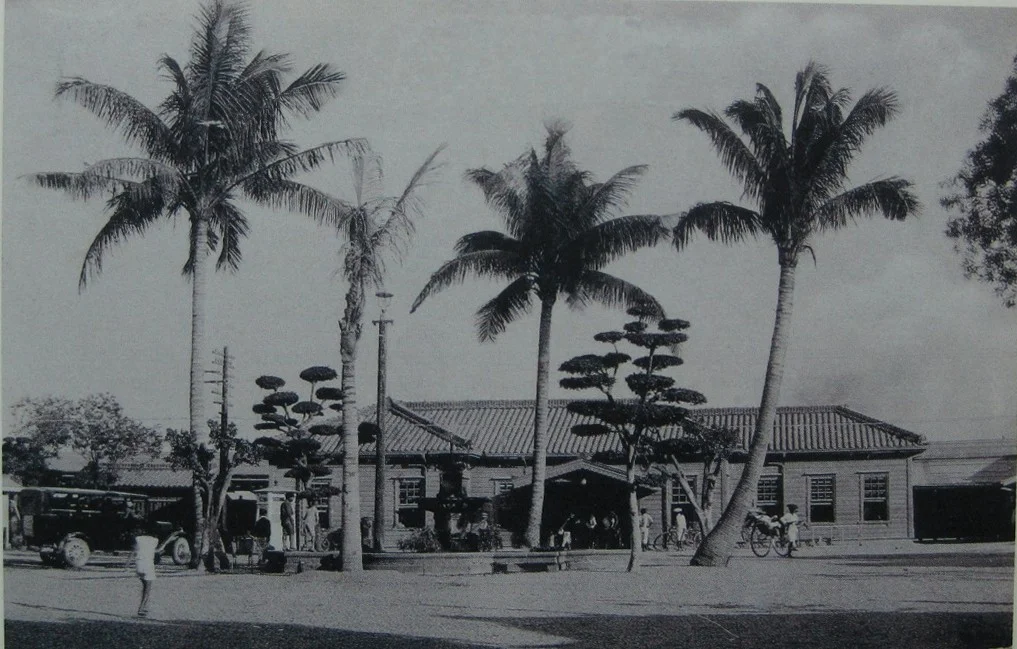
On 9 November 2008, at precisely 5:30 in the afternoon, the last train pulled away from Kaohsiung Harbor Station and did not return. The platform emptied. The clocks kept running for a while, and then they didn't. What followed wasn't demolition — it was transformation. The station that the Japanese colonial administration had built as the city's first railway terminus, the building that bore the name Takow Station before Kaohsiung was Kaohsiung, became a museum. The locomotives stayed. The coconut trees stayed. The hip-roofed building, with its blend of Japanese architectural discipline and Chinese roof styling, stayed too. The Takao Railway Museum opened in place of the departure hall, and time, rather than moving through the station, settled into it.
The First Station in Kaohsiung
Kaohsiung's railways came with Japanese rule, and the harbor station came first. Known originally as Takow Station — an older romanization of the city's name — it served as the point where cargo from the port met the rail network connecting the island. The city's identity as a maritime and industrial hub was partly built on this connection, and the station sat at the hinge between them. In 2003, more than five years before its final train, the Kaohsiung City Government designated the station building a historical site — an acknowledgment that whatever happened to rail traffic in the area, the structure itself belonged to the city's memory. The building survived, and when the last departure came, the Railway Culture Society stepped in to manage what the station would become next.
Architecture of Two Traditions
The museum building is a quiet study in colonial hybrid design. The structural logic is Japanese — clean lines, careful proportions, the kind of civic solidity that Japanese architects brought to public buildings throughout Taiwan during the colonial period. But the roof curves upward at the eaves in the Chinese hip style, an accommodation to local tradition that reads as deliberate rather than incidental. It was a common gesture in colonial-era Taiwan, this layering of imported and indigenous form, and the result at Takao is a building that feels neither purely Japanese nor purely Chinese but specifically Taiwanese in the way such hybrids tend to become over time. In front of the entrance, tall coconut palms shade the approach — they were planted during the station's working life, and they are old enough now to have their own authority.
Steam Engines Under the Open Sky
The museum's most immediate presence belongs to the locomotives parked on the tracks outside. CT259 is a Pacific-type steam passenger locomotive — a 4-6-2 wheel arrangement, made in Japan circa 1935, an example of the Japanese National Railway's Class C55. These engines were the prestige machines of the colonial rail era, built for passenger service, their lines elegant in the way that steam engineering achieved elegance at its peak. Beside it stands DT609, a Consolidation-type freight locomotive with a 2-8-0 configuration, dating to the 1920s, built for the harder work of hauling cargo across the island. Both are classified under the Japanese National Railway Class 9600 lineage. Two diesel locomotives from the Taiwan Power Company round out the outdoor display. Standing beside them, you can measure in iron and steel how much of the island's twentieth century ran on these tracks.
What the Museum Holds
Inside, the Takao Railway Museum operates as a branch of the Kaohsiung Museum of History, a connection that places it within a wider project of urban memory-keeping. The exhibition rooms contain books, artifacts, and relics from the railway age — timetables, signal equipment, station memorabilia, photographs from when the platforms were crowded and the trains ran on schedule. None of it is spectacular in the way that large national museums tend toward spectacle. The scale is human and local, which suits the building. This was always a working station, not a monument, and the museum maintains that quality. The artifacts feel less like exhibits and more like things that were used here, put away carefully, and are now available for inspection.
Finding the Station Today
The Takao Railway Museum sits in the Gushan District, a short walk east from the Hamasen MRT Station on the Kaohsiung Orange Line — the same station that was known as Sizihwan Station until 2024. The neighborhood around it retains traces of its old harbor character: warehouses converted into galleries and restaurants, streets that still carry the slightly industrial textures of a working port district even as the uses change. The museum is easy to miss if you don't know to look for it. The coconut trees mark the entrance before the building does. And then you see the locomotives, patient and enormous on their short section of track, weathering in the subtropical sun the way old machines do when no one is quite sure what else to do with them except keep them where they are and let them be looked at.
From the Air
The Takao Railway Museum is located at approximately 22.622°N, 120.276°E in Gushan District, close to the northern edge of Kaohsiung Harbor. From the air, the area is identifiable by the harbor basin to the south and the green hillside of Shoushan rising behind the district. The building is modest in footprint and sits within a dense urban block; the outdoor locomotive tracks are visible at low altitude in clear conditions. Nearest airport is Kaohsiung International (RCKH), approximately 8 km southeast. The museum is part of the broader harbor-front redevelopment zone visible from flight approaches into RCKH from the north.
Nearby Stories
- Taimali 7.2 km away
- Meinong East Gate Tower 15 km away
- Kunci Temple 20 km away
- Checheng Fu'an Temple 42 km away
- Dongji Island 49 km away
- Orchid Island 69 km away
- South Penghu Marine National Park 77 km away
- Hong Kong 12 549 km away