
The High Language of the Tengger Mountains
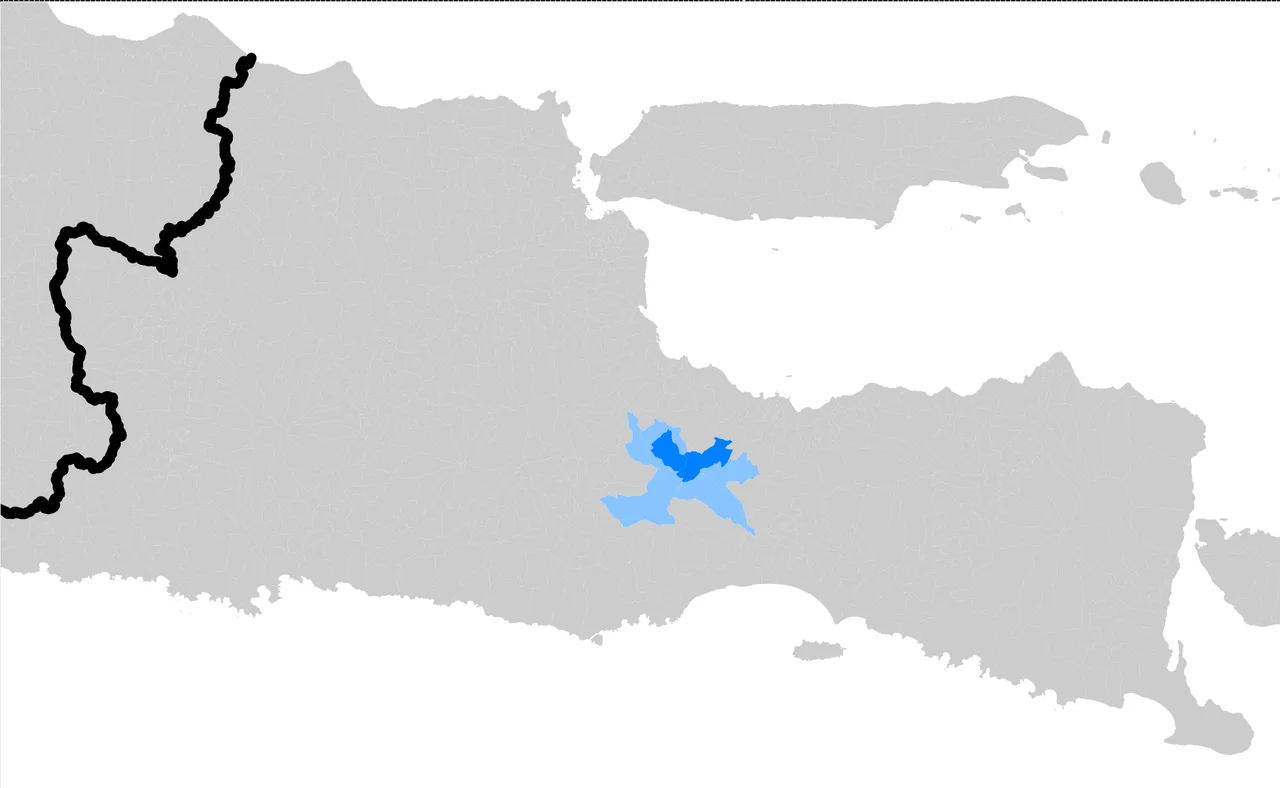
The Tengger people call their language basa dhuwur -- the high language. It is not a metaphor for refinement or prestige. It is geography. Every Tengger village sits above the lowlands, clinging to mountain slopes at elevations reaching 2,100 meters, and the dialect spoken there has stayed elevated in a different sense as well. While lowland Javanese evolved through centuries of contact with Malay traders, Islamic scholars, and Dutch administrators, Tenggerese held onto words and sounds that date back to Kawi, the Old Javanese of medieval inscriptions and court poetry. Some linguists argue it is not merely conservative but a direct descendant of Kawi itself, a living fossil tucked into the folds of the Bromo Tengger Semeru National Park.
Words That Survived the Lowlands
The distinction between Tenggerese and standard Javanese is not subtle. Where lowland speakers shifted the open vowel 'a' into the rounded 'o' sound in most positions -- so that dewa becomes dewo and cora becomes coro -- Tenggerese speakers preserved the original 'a' unchanged. It is a small phonological detail, but it creates a markedly different sonic texture, one that immediately marks a speaker as Tengger. The vocabulary diverges further. Tenggerese retains archaic lexical items from Old Javanese that have vanished entirely from the speech of Surabaya or Solo. The language belongs to the Malayo-Polynesian branch of the Austronesian family, classified alongside the Arekan Javanese dialects of East Java's cities and the Osing language of Banyuwangi. But where Osing speakers reject the label of Javanese dialect entirely, the Tengger people openly embrace it. Their language is Javanese, they insist -- just the older version.
A Dialect Fractured by Volcanoes
Mountain slopes and dense forest separate the Tengger villages from one another, and this isolation has splintered the dialect into village-level varieties. In Ngadisari, the standard-bearing village in Probolinggo's Sukapura district, a man says reyang when he means 'I.' Walk a few ridgelines south to Ngadas in Malang Regency and the same speaker would say eyang instead -- a word that sounds identical but is never interchangeable. Imperative forms shift too: gawanen in one village, gawaen in the next. These differences are minor enough that speakers from any Tengger village can understand one another without effort, but they testify to just how effectively volcanic terrain can partition a linguistic community. The mountain ridges that kept Tenggerese archaic also kept it from consolidating, producing a scatter of micro-dialects across fewer than thirty villages spread through four regencies: Pasuruan, Probolinggo, Malang, and Lumajang.
Three Languages Before Breakfast
Most Tengger adults navigate three languages daily without much thought. At home and among neighbors, they speak Tenggerese. When lowland Javanese visitors arrive -- traders, officials, tourists drawn to Mount Bromo -- they switch to basa ngisor, the 'low language' of Arekan Javanese. In schools and government offices, Indonesian takes over. Code-switching between these three registers happens fluidly, sometimes within a single conversation, and many younger Tengger speakers have added functional English as well, a consequence of living inside one of Indonesia's most popular international tourist destinations. Yet the hierarchy of usage remains consistent. Tenggerese is the language of family, ritual, and identity. Wedding ceremonies are conducted in it. Mantras are recited in it. Folktales are passed down in it. The other languages are tools for navigating the outside world; Tenggerese is the medium through which the Tengger understand themselves.
Voice Expression, Word Expression
The Tengger have two names for their language, both derived from Old Javanese and Sanskrit. Carabasa Tengger blends the Sanskrit-rooted uccāraṇa with bhāṣa to mean something like 'word expression.' Piwākyan Tengger draws on the Old Javanese wākya to mean 'voice expression.' The distinction is revealing. Language for the Tengger is not merely a communication system -- it is an expressive act, something spoken and heard, shaped by the voice as much as by grammar. This perspective helps explain why the language persists despite every pressure toward assimilation. The Tengger are not a large population. Their villages are remote. Their children attend schools taught in Indonesian and standard Javanese. National media, mobile phones, and the steady flow of tourists all push toward linguistic homogenization. But the language endures because it is woven into ceremonies that have no substitute, into prayers that lose their meaning in translation, into a sense of highland identity that the lowland languages cannot express.
From the Air
Located at 7.93S, 112.95E in the volcanic highlands of East Java, within the Bromo Tengger Semeru National Park. The Tengger villages are scattered across mountain slopes surrounding the Tengger Caldera, visible as small settlements clinging to ridgelines at elevations of 1,500-2,100 meters. The caldera itself is unmistakable -- a 10 km depression with five volcanic cones rising from a grey sand sea. Abdul Rachman Saleh Airport (WARA) in Malang lies approximately 50 km west. Juanda International Airport (WARR) in Surabaya is roughly 100 km northwest. Recommended viewing altitude: 10,000-12,000 feet to spot the highland villages against the volcanic terrain.
Nearby Stories
- Kelud: The Mountain That Swallows Its Own Lake 23 km away
- Where an Empire's Memory Lives in Clay and Stone 23 km away
- Bangil Railway Station 31 km away
- Meru Betiri: The Last Forest on Java's Southern Edge 35 km away
- Shaken Foundations: The 2021 East Java Earthquake 65 km away
- Blue Fire and Bitter Water: Ijen Volcano 76 km away
- Where Three Worlds Meet: The Great Mosque of Sumenep 88 km away
- The Ghost Boat That Built an Empire 400 km away