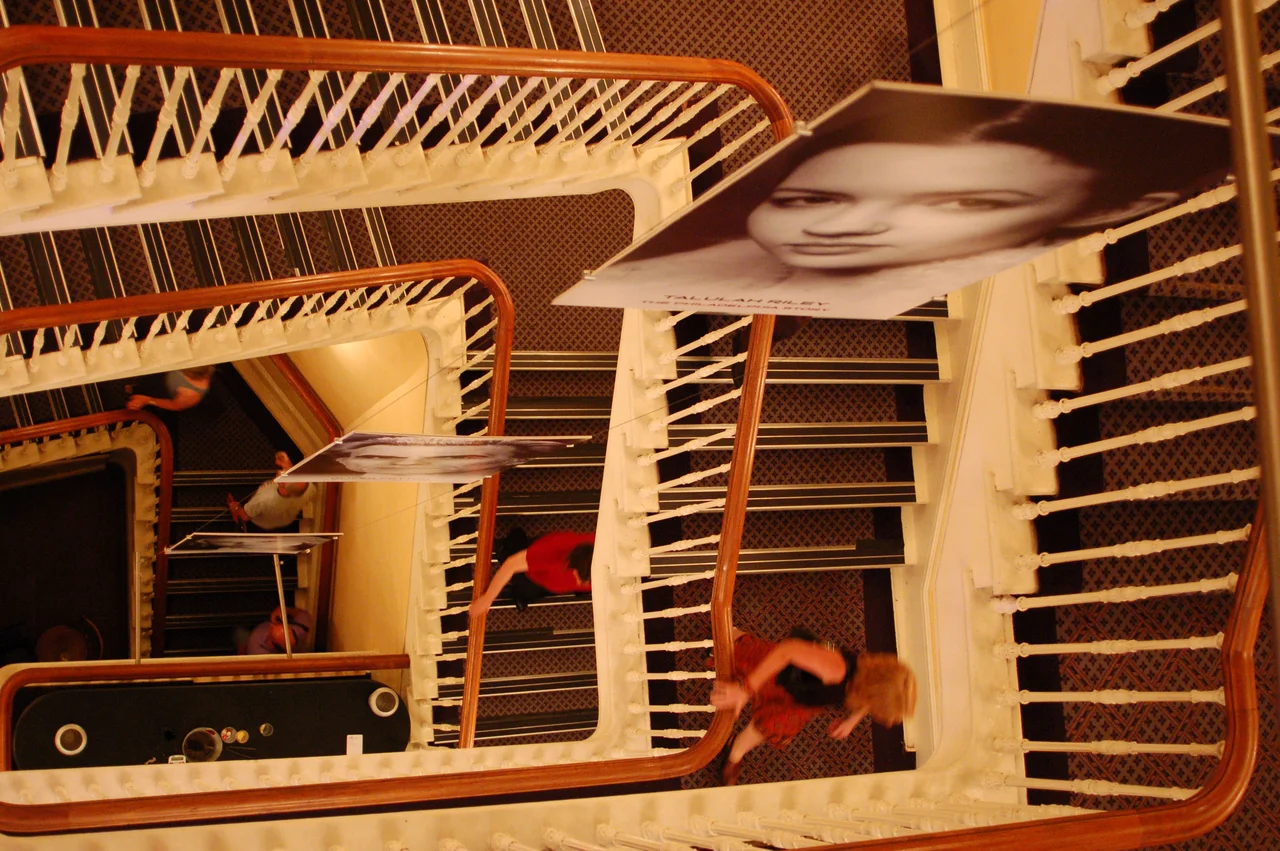

The Old Vic
The Old Vic stands on the corner of Waterloo Road and The Cut, in the same building it has occupied since 11 May 1818, when it opened as the Royal Coburg Theatre under the patronage of Princess Charlotte and her German husband Prince Leopold of Saxe-Coburg. It was, by the standards of its early years, a minor theatre on the wrong side of the river - across the Thames from the licensed houses of Covent Garden and Drury Lane, in the kind of London that respectable people did not visit. In 1825 a young Black American actor named Ira Aldridge played here in only his second job in the country. By the time he died in 1867 he was one of the biggest stars in Europe. The journey of the Old Vic is, in many ways, his journey - a place that started at the edge and ended up at the centre.
Edmund Kean's Insult
In 1824 the lease passed to George Bolwell Davidge, who tried to elevate the repertoire by bringing the legendary Edmund Kean across the river to play six Shakespeare plays in six nights. The audiences, perhaps unused to high tragedy, were not at their best behaviour. At his curtain call Kean turned to them and announced: I have never acted to such a set of ignorant, unmitigated brutes as I see before me. The line went into theatre lore. The theatre's role in bringing classical drama to working-class south Londoners survived Kean's rudeness; the more characteristic fare of the Royal Coburg under its early lessees was sensational and violent melodrama, plays demonstrating the evils of drink, churned out, the records note, by a confirmed teetotaller named Douglas Jerrold who served as house dramatist.
Royal Victoria
On 1 July 1833 the theatre was renamed the Royal Victoria, under the protection of the Duchess of Kent, mother to the fourteen-year-old Princess Victoria who would become queen four years later. The princess visited only once. She enjoyed the performance - light opera and dance, in a clean and comfortable house - but the single visit hardly justified the theatre's later marketing as Queen Victoria's Own Theayter. In 1858 a fire scare in the auditorium caused a stampede that crushed sixteen people to death inside the theatre, one of the worst mass-casualty incidents in Victorian theatre. The building struggled commercially through the rest of the century, was rebuilt in 1871 as the Royal Victoria Palace in the style of an Alhambra Music Hall, and was failing again by 1880.
Emma Cons and Coffee
In 1880 the theatre was bought by a remarkable Victorian reformer named Emma Cons, who renamed it the Royal Victoria Hall and Coffee Tavern and ran it on strict temperance lines - no alcohol, evenings of penny lectures and improving entertainment for the working poor of Lambeth. By that point the local nickname Old Vic had already stuck. The penny lectures grew into the Morley Memorial College for Working Men and Women, funded by an endowment from the textile magnate Samuel Morley, with classes held back stage and in the theatre's dressing rooms. Adult education in south London was born here, on the same boards where Hamlet would later soliloquise. Morley College moved to its own building in the 1920s, but the dual identity - theatre and educational institution - shaped the Old Vic for a century after.
Lilian Baylis
Cons died in 1912 and the theatre passed to her niece Lilian Baylis - a tough, cockney-accented manager with an emotional commitment to two things: Shakespeare and opera at prices working people could afford. Between 1914 and her death in 1937, Baylis produced the entire Shakespearean canon at the Old Vic, more than once. She made it the cradle of English classical acting. John Gielgud, Edith Evans, Sybil Thorndike, Laurence Olivier, Ralph Richardson all played here for her. Between 1925 and 1931 she also rebuilt the derelict Sadler's Wells Theatre across the river and established a ballet company there under Ninette de Valois - the company that would become the Royal Ballet. Baylis ran the theatre as a kind of impossible mission, with thin budgets and unshakable will. She died at her desk in November 1937, leaving behind both institutions.
Blitz and the National
The Old Vic was badly damaged during the Blitz in 1940 and the company spent the war touring, based in Burnley in Lancashire. In 1944 it re-established itself in London with Olivier and Richardson as its stars, performing at the New Theatre (now the Noël Coward) until the Old Vic reopened in 1950. In 1963 the Old Vic Company dissolved into the new National Theatre Company under Laurence Olivier, with the National based at the Old Vic until its purpose-built concrete fortress opened on the South Bank in 1976. For thirteen years, the place where Lilian Baylis had once handed out prayer books to her actors was the official national theatre of Britain. After the National moved out, the Old Vic was used by the Prospect Theatre Company, which made a triumph of Derek Jacobi's Hamlet and toured it as far as China - the first English company to tour the People's Republic. Prospect collapsed in 1981 when the Arts Council pulled its funding.
Spacey, and After
After complete refurbishment in 1985 and several decades of varied fortunes, Kevin Spacey was appointed artistic director in 2003 in a blaze of publicity. His tenure produced some excellent work and some failures, including a Richard III directed by Sam Mendes in 2011. He stepped down in 2015. Two years later, in 2017, allegations of sexual harassment and assault against Spacey emerged in the wake of the Me Too movement; the Old Vic conducted an internal inquiry and released a statement apologising for not creating an environment or culture where people felt able to speak freely. Spacey was later tried in the UK and found not guilty of all charges. The theatre established its Guardians Programme - trained staff offering a confidential outlet for colleagues to raise concerns about behaviour - and the model has been adopted by other arts organisations. Matthew Warchus succeeded Spacey in 2015, presiding over Tim Minchin's Groundhog Day and Jack Thorne's annual A Christmas Carol. He leaves in September 2026. Rupert Goold has been announced as his successor.
From the Air
The Old Vic stands at 51.5020°N, 0.1093°W at the corner of Waterloo Road and The Cut, immediately south of Waterloo Station and a few hundred metres east of the South Bank's main concentration of theatres. From 1,500-2,500 ft AGL look for the white classical facade tucked among the dense Lambeth streetscape; Waterloo Station's curved glass roof and the London Eye on the Thames are unmistakable navigation references just to the north. Nearest airports: London City (EGLC) 5 nm east, London Heathrow (EGLL) 14 nm west, RAF Northolt (EGWU) 13 nm northwest. The new National Theatre - to which the Old Vic effectively gave birth - sits a few hundred metres west on the riverbank.
Nearby Stories
- Battle of Britain, Northfleet 1.1 km away
- Bayham Old Abbey 5.4 km away
- Catharine Macaulay 6.4 km away
- Hatfield rail crash 8.8 km away
- Chequers 8.9 km away
- Chelmsford Cathedral 10 km away
- Queen Victoria Hospital 13 km away
- Fishbourne Roman Palace 36 km away