
Triệu Dynasty
Beneath modern Guangzhou, in the Yuexiu district, archaeologists in 1983 uncovered the tomb of a king who had been dead for more than two thousand years. The jade burial suit, bronze drums, and gold seal pulled from that tomb belonged to Zhao Mo — second king of Nanyue, a realm that straddled what is now southern China and northern Vietnam. The dynasty he inherited, founded by his grandfather Zhao Tuo in 204 BC, is one of the most contested in East Asian history: Chinese scholars have called it a separatist deviation from Han civilization, while Vietnamese historians have alternately praised its founder as their nation's first emperor and condemned him as a foreign conqueror. Both readings contain truth. Neither fully contains the kingdom.
A General Who Kept His Province
Zhao Tuo was born in the State of Zhao, in what is now Hebei province — as far from the Pearl River Delta as it is possible to be while remaining within Chinese historical memory. He arrived in the far south as a military officer under the Qin dynasty, eventually becoming governor of Nanhai (roughly present-day Guangdong) after the death of his superior in 208 BC. When the Qin empire began to collapse, a fellow Qin official advised him to consolidate control of the southern territories rather than wait for the chaos to resolve itself.
He did. In 204 BC, Zhao Tuo declared independence and established the kingdom of Nanyue — the name meaning "Southern Yue" — with its capital at Panyu, the city that would become Guangzhou. He ruled for decades, outlasting the turbulent end of the Qin, the rise of the Han, and multiple attempts by Han emperors to subordinate him. When Han envoy Lu Jia arrived to press Zhao Tuo into accepting Han suzerainty, Zhao Tuo received him while squatting with his hair in a bun — pointedly adopting the customs of the Yue people rather than the posture of a Han vassal. The exchange of words between them, preserved in the Book of Han, has the flavor of two men who understood exactly what the negotiation was really about.
What Chinese History Made of Nanyue
Chinese historiography has never quite settled on what Nanyue was. The scholar Huang Zuo produced the first detailed published history of the kingdom in the fifteenth century. Later, in 1696, the poet Qu Dajun offered a sharper verdict: praising Qin Shi Huang as the model of cultural purity and comparing Zhao Tuo unfavorably to the first emperor. The charge was separatism — breaking away from the unified Han civilization that Chinese historians have tended to treat as the natural order.
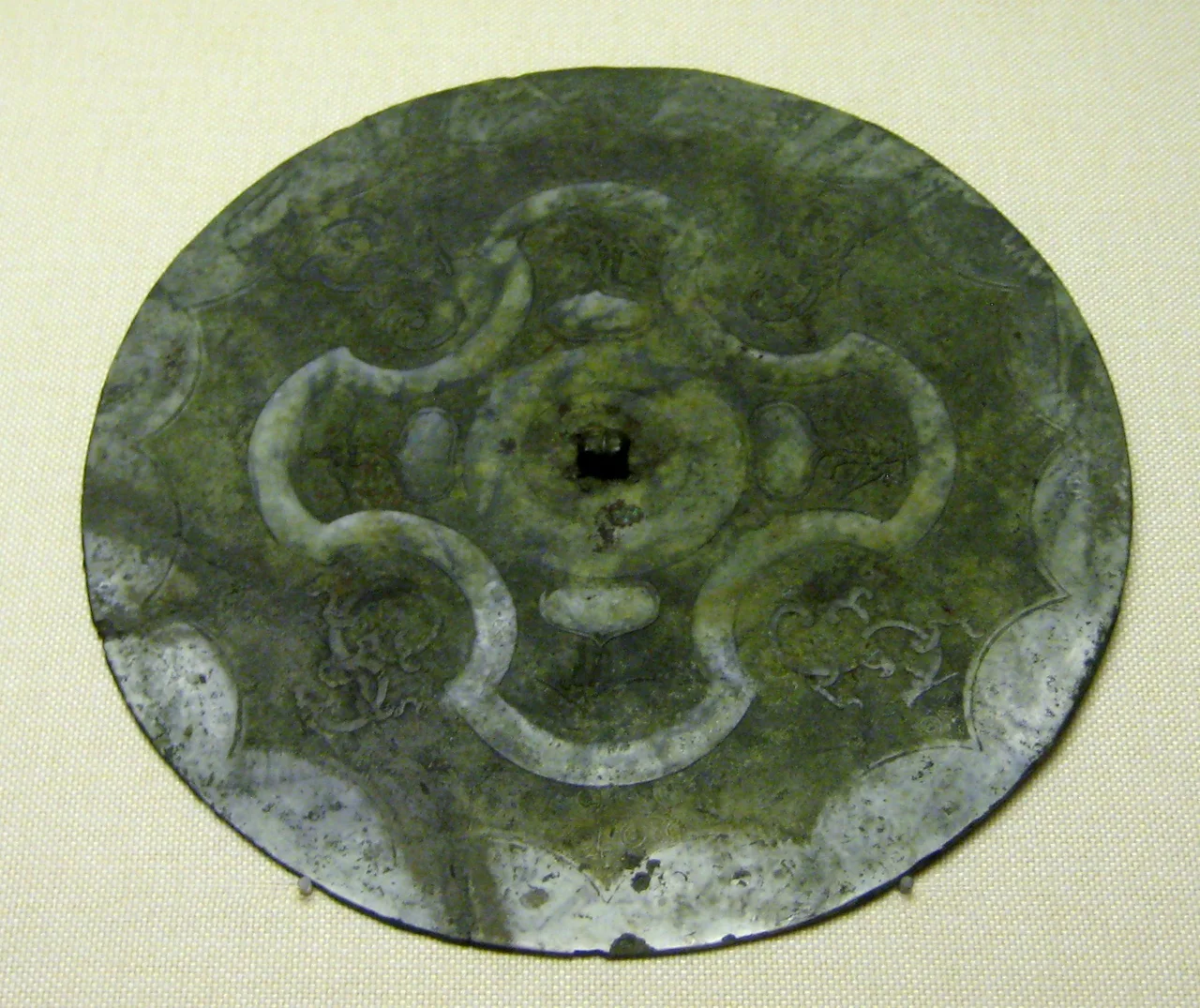
Yet the same tradition also credited Nanyue with bringing Han culture southward, civilizing the frontier regions of Lingnan. That double verdict — separatist and civilizer — reflects the genuine complexity of a state whose ruling elite blended immigrant Han settlers with native Yue peoples, and whose king deliberately adopted Yue customs while building on Qin administrative foundations. The archaeology supports the ambiguity: the tomb of Zhao Mo, now housed in the Museum of the Mausoleum of the Nanyue King in Guangzhou, contains bronzes showing influences from the Han, Chu, Yue, and Ordos regions simultaneously.
What Vietnamese History Made of the Same Kingdom
Vietnamese historians faced a different dilemma. Zhao Tuo — known in Vietnamese as Triệu Đà — conquered the Vietnamese kingdom of Âu Lạc and incorporated its territory into Nanyue. That conquest could be read as subjugation by a foreign power, which is exactly how some Vietnamese nationalist historians have read it. But for centuries, the popular memory ran in the opposite direction: Zhao Tuo was celebrated as a folk hero who stood up to the Han Empire, the ruler who kept the south independent.
In the thirteenth century, the Vietnamese historian Lê Văn Hưu opened his history of Vietnam with the Triệu dynasty, giving Zhao Tuo the title of Vietnam's first emperor. Later, after Lý Bí drove Chinese forces out of northern Vietnam in the sixth century, he proclaimed himself "Emperor of Nam Việt" — explicitly invoking Nanyue as the state he was reviving. The same dynasty that Chinese historians called a deviation from proper Han order was, in Vietnamese terms, the founding moment of a distinct southern identity.
That double inheritance — separatism from one vantage, national origin from another — makes Nanyue unusual even by the standards of disputed ancient history. The kingdom's territory encompassed both Chinese Lingnan and Vietnamese Jiaozhi; its founder came from Hebei and governed in a Yue manner; its end came in 111 BC when Han armies finally took Panyu after years of gradual encirclement.
The Fall and What Remained
Zhao Tuo's successors were less adept at maintaining independence. His grandson Zhao Mo, who inherited the throne at age 71, called on Han military assistance when the neighboring Minyue attacked in 135 BC — an invitation that Emperor Wu of Han accepted with rather more ambition than Zhao Mo had intended. Crown Prince Zhao Yingqi was sent to the Han court, effectively as a hostage. The entanglement deepened with each generation.
By 111 BC, the Han had conquered Panyu and dissolved Nanyue into nine administrative districts organized under the prefecture of Jiaozhi. Resistance continued in the former Vietnamese territories — temples to the Nanyue prime minister Lü Jia and his associates scatter across the Red River Delta of modern northern Vietnam, suggesting the war's aftermath stretched decades beyond the fall of the capital. The Trưng Sisters' revolt of AD 40, celebrated in Vietnamese history as an early act of resistance against Chinese domination, rises directly from the world Nanyue's collapse created.
The jade suit of Zhao Mo, now on display in Guangzhou, remains the most vivid object from a kingdom that two nations still debate. It was made to preserve the body of a king whose state belonged, in different ways, to both of their histories.
From the Air
The ancient capital of Nanyue, Panyu, corresponds to modern Guangzhou, centered near 23.14°N, 113.26°E. The Museum of the Mausoleum of the Nanyue King, where Zhao Mo's tomb artifacts are displayed, sits in Yuexiu district. From the air, the Pearl River Delta — the geographic core of what was Nanyue — fans out south of Guangzhou into a maze of channels, islands, and reclaimed land extending toward Hong Kong and Macau. ZGGG (Guangzhou Baiyun International Airport) lies north of the city center. A flight path from ZGGG southwest over the Pearl River Delta at 3,000–5,000 feet captures the full scale of the Lingnan region that Zhao Tuo governed: flat, river-laced, subtropical, defined by water.
Nearby Stories
- Shunde 12 km away
- 2015 Shenzhen Landslide 15 km away
- Mount Luofu 23 km away
- Qingyuan Maglev Tourist Line 32 km away
- Kaiping 56 km away
- Heyuan 90 km away
- Chikan, Kaiping 92 km away
- Erlitou Site Museum of the Xia Capital 1257 km away