.jpg)
Underground Hospital, Mount Isa
On 19 February 1942, Japanese aircraft bombed Darwin, and the war the rest of the world had been fighting arrived suddenly on Australia's northern doorstep. Hundreds of kilometers inland at Mount Isa, the copper mine was exactly the kind of strategic prize an enemy might target, and there seemed to be almost nothing left to defend it. Dr Edward Ryan, superintendent of the district hospital, looked at his wards full of patients and decided he would not leave them exposed to the sky. He went to the one group of people in town who could dig into solid rock faster than anyone alive: the miners. What they built in the weeks that followed was unlike anything else in the country, a complete hospital hidden beneath a hill.
Two Weeks Underground
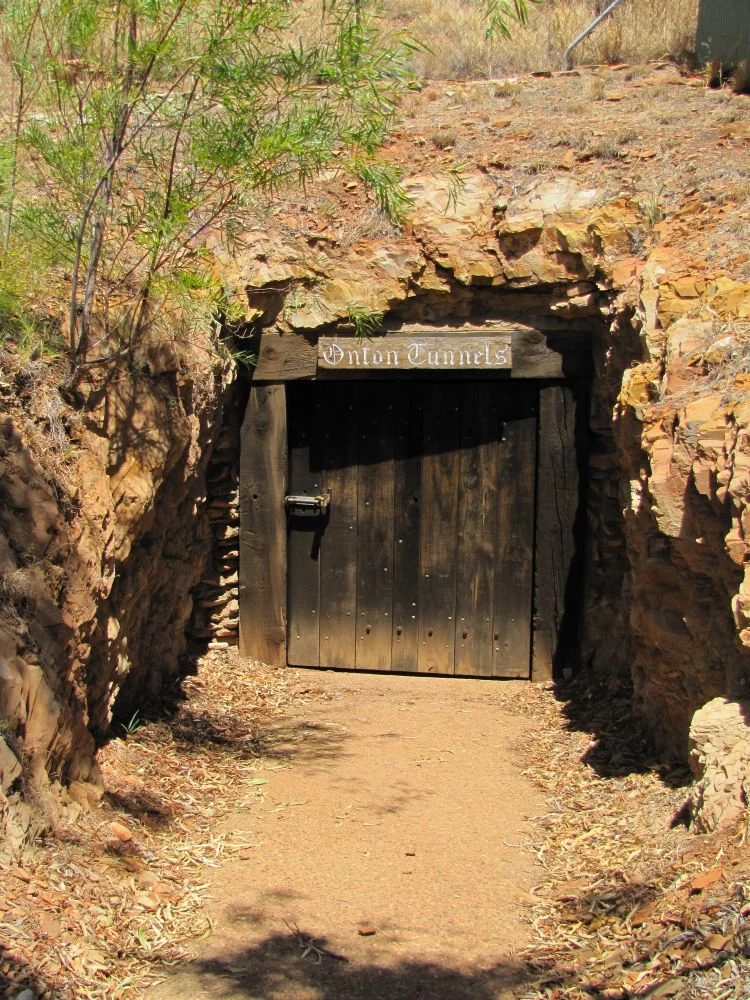
Ryan took his idea to Vic Mann, the mine superintendent, who offered the company's equipment and the services of underground foreman Wally Onton to run the job. The miners volunteered their own off-duty hours. Working through March and April 1942, they drove three parallel tunnels, or adits, straight into the hillside, then joined them at the back with a crosscut to form an E-shaped warren of roughly 100 meters of passage. The drilling, blasting, and mucking out, the brute labor of moving broken rock, took only about two weeks. A vertical shaft to the surface provided ventilation and an emergency ladder. These were men who carved tunnels for a living, and they turned that hard-won skill to the task of protecting their own town.
A Hospital in the Rock
What they fitted out was no mere bomb shelter. Timbered like a mine with Oregon and native hardwood, lined in places with gidyea logs, the tunnels held male, female, and maternity and children's wards, a surgical theater, and a delivery room. Electric lights burned underground, a telephone connected it to the world above, and buckets of water and sand, stirrup pumps, and shovels stood ready against fire. Dr Ryan kept it stocked at all times with linen, dressings, medical equipment, and pharmaceuticals. Once a week the staff ran a drill, nurses and orderlies wheeling the less-seriously-ill patients up the steep gravel path and into the cool dark of the hill. It was a fully working hospital that waited, ready, for a catastrophe everyone expected.
The Raid That Never Came
The bombs never fell on Mount Isa. It became clear that the raids on Darwin and the northern towns were harassment rather than the opening move of an invasion, and after the battles of the Coral Sea and Midway shattered Japanese naval power, the threat receded entirely. The drills stopped. The underground hospital, built for emergency, settled into quieter uses: a cool dormitory where nurses slept on the hottest nights, then, as such places do, a store room slowly filling with files and discarded equipment. After the war, with security grown lax, children slipped in to play among the abandoned medical supplies and pharmaceutical bottles still scattered on the earthen floor.
Fire, Collapse, and Rescue
The hill nearly swallowed the place for good. In the 1960s its entrances were buried under rubble from a new hospital wing, and for a decade it lay sealed and forgotten until the fill began collapsing, in 1977, again in 1988 and 1992. Each reopening reignited debate, sharpened by Australia's renewed interest in its wartime sites. Then fire struck twice, in 1994 and again in 1997, the old files and X-ray plates feeding the flames while firefighters, unable to fight water against it, finally smothered the tunnels with high-expansion foam. But the community had decided the hospital was worth saving. Restored from old photographs between 1997 and 2001 and now reached through the Beth Anderson Museum, the only entirely underground hospital known in Australia stands again, a monument to the fear of 1942 and to the miners who answered it with their hands.
From the Air
The Underground Hospital is tunneled into a low hill at the rear of the Mount Isa Base Hospital grounds, near 20.73 degrees south, 139.49 degrees east, in the residential 'townside' east of the Leichhardt River. The site itself is subterranean and not visible from the air, but the city is unmistakable: navigate by the 270-meter lead smelter stack on the western mineside bank, visible up to 40 km out, then look to the hospital precinct east of the river. Recommended overflight at 4,000 to 6,000 feet AGL. Mount Isa Airport (ICAO YBMA) lies just northeast of the city. Visibility is excellent in the dry winter season; the summer wet brings haze, heat shimmer, and thunderstorms.
Nearby Stories
- Mary Kathleen, Queensland 16 km away
- Quamby 38 km away
- Mount Cuthbert Township and Smelter 71 km away
- Kuridala Township site 73 km away
- Moonah Creek Hanging Tree 82 km away
- Camooweal Caves National Park 82 km away
- Community Hall, Camooweal 113 km away
- Glenormiston Station 222 km away