
Van Diemen's Land
The name itself became a curse. In 19th-century England, to be sent to Van Diemen's Land was to be sent to the edge of the known world, to chains and exile and a country with a reputation for swallowing men whole. This was the colonial name for the island we now call Tasmania, and for half a century it carried so much dread that when the colony finally won self-government, one of its first acts was to scrub the name away. But the horror England feared was only part of the story. The deeper tragedy belonged to the island's first people, whose world was undone in a single generation.
A Dutchman's Name for Someone Else's Island
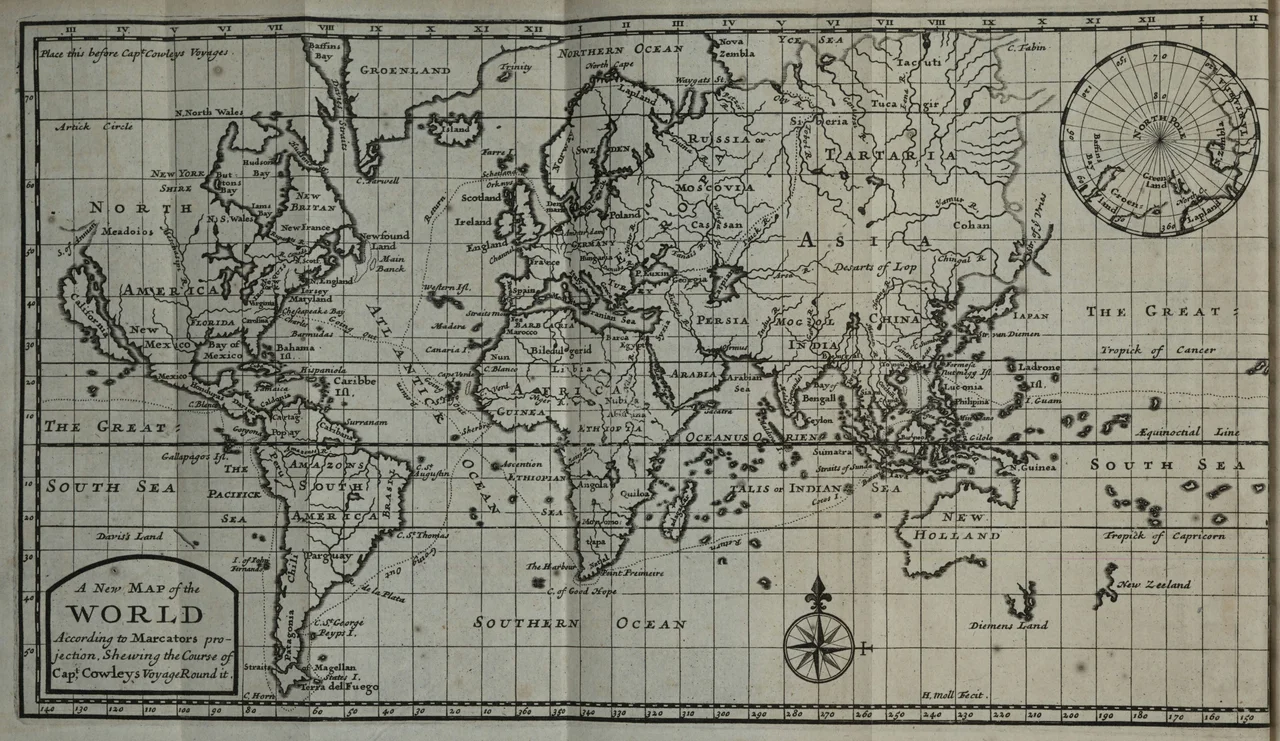
In 1642 the Dutch navigator Abel Tasman became the first known European to reach these shores, landing on the south-east coast and raising his flag. He named the island Anthoonij van Diemenslandt, after Anthony van Diemen, the Governor-General of the Dutch East Indies who had sent him. The name honoured a patron who never saw the place. For more than a century afterwards Europeans barely touched the island, and it was not even known to be an island until Matthew Flinders and George Bass sailed around it in 1798. The British established their first settlement on the Derwent River in 1803, partly to keep French explorers from claiming the ground first, and in 1825 Van Diemen's Land became a colony in its own right.
The Island That Caught the Worst
Van Diemen's Land became the hard heart of Australia's convict system. From the early 1800s until transportation here ended in 1853, roughly 73,000 convicts were shipped to the island, about 40 percent of all convicts ever sent to Australia. Most were not monsters. They were the poor of Britain and Ireland, transported for theft, for poaching, for crimes that often came down to hunger. Men were assigned as labour to free settlers or worked in public gangs; women were sent into service or confined in the female factories, harsh workhouse prisons of which the colony had five. Only the most defiant reoffenders were sent on to Port Arthur on the Tasman Peninsula. The settlements at Macquarie Harbour and Port Arthur grew so notorious that the colony's very name became a byword for suffering, sung in mournful ballads from Ireland to the American backwoods.
Defiance and the Long Voyage of the Cyprus
The convicts were not passive in their misery, and now and then they seized their own freedom in startling ways. On 14 August 1829 the brig Cyprus, carrying convicts and supplies, lay becalmed in Recherche Bay on its way to Macquarie Harbour. The prisoners allowed on deck overpowered the guards and took the ship, marooning those who would not join them. Then they did something extraordinary: they sailed a stolen colonial brig clear across the Pacific to Canton, pausing at Japan during the years when that country was sealed against all foreigners, very likely the first Australian vessel ever to reach its coast. The escape ended in scattered arrests and, for two of the mutineers, the gallows in London. But the voyage itself stands as a reminder that the people behind the convict statistics were resourceful, determined, and human.
The Black War and a People Nearly Erased
The arrival of the British was a catastrophe for the Aboriginal Tasmanians, who had lived on the island for tens of thousands of years. When the colony was founded in 1803, they numbered somewhere between 3,000 and 7,000 people. As settlers and their livestock spread across the hunting grounds, violence followed, escalating through the 1820s into the conflict known as the Black War. Settlers and Aboriginal people killed one another; disease swept through communities with no immunity; and in 1830 the colony mustered a vast human chain, the Black Line, in an attempt to sweep the remaining Aboriginal people from the settled districts. Within roughly three decades the population had collapsed to around two hundred survivors. Historians still debate whether the word genocide fits what happened here. What is not in doubt is the scale of the loss, or that the Tasmanian Aboriginal people did not vanish: their descendants live in Tasmania today, and they are reclaiming their language, their place names, and their history.
Burying a Name
By the 1850s the colony was desperate to escape its own reputation. Free settlers far outnumbered convicts, towns were growing, and the stain of the old name was bad for business and worse for pride. When responsible self-government arrived, the new parliament moved quickly, and on 1 January 1856 Van Diemen's Land officially became Tasmania, honouring the explorer Tasman while quietly burying the demon syllable buried in the old name. The last penal settlement, Port Arthur, closed in 1877. The name change worked, in a sense; few who enjoy Tasmania's wild beauty today think first of chains. But the island carries both stories beneath its calm surface, the convicts who were sent here against their will and the first people who were here all along, and an honest visit holds room for both.
From the Air
Van Diemen's Land is the historical name for the island of Tasmania, centred at roughly 42 degrees S, 147 degrees E, separated from mainland Australia by the Bass Strait to the north. From altitude the whole island reads as a rugged, heart-shaped landmass of forested mountains, with Hobart on the Derwent River estuary in the south-east and the deeply indented Tasman and Forestier peninsulas (site of Port Arthur) jutting from the south-east coast. Principal airports are Hobart International (ICAO YMHB) in the south and Launceston (YMLT) in the north. Tasmania sits in the path of the Roaring Forties, so expect strong westerly winds, fast-moving frontal cloud, and changeable visibility, especially over the western highlands and the exposed southern coast.
Nearby Stories
- Cataract Gorge 24 km away
- Mount Field National Park 52 km away
- Freycinet National Park 54 km away
- Overland Track 54 km away
- Cradle Mountain-Lake St Clair National Park 57 km away
- Maria Island 61 km away
- Richmond Bridge 66 km away
- Bay of Fires 80 km away