
Varginha
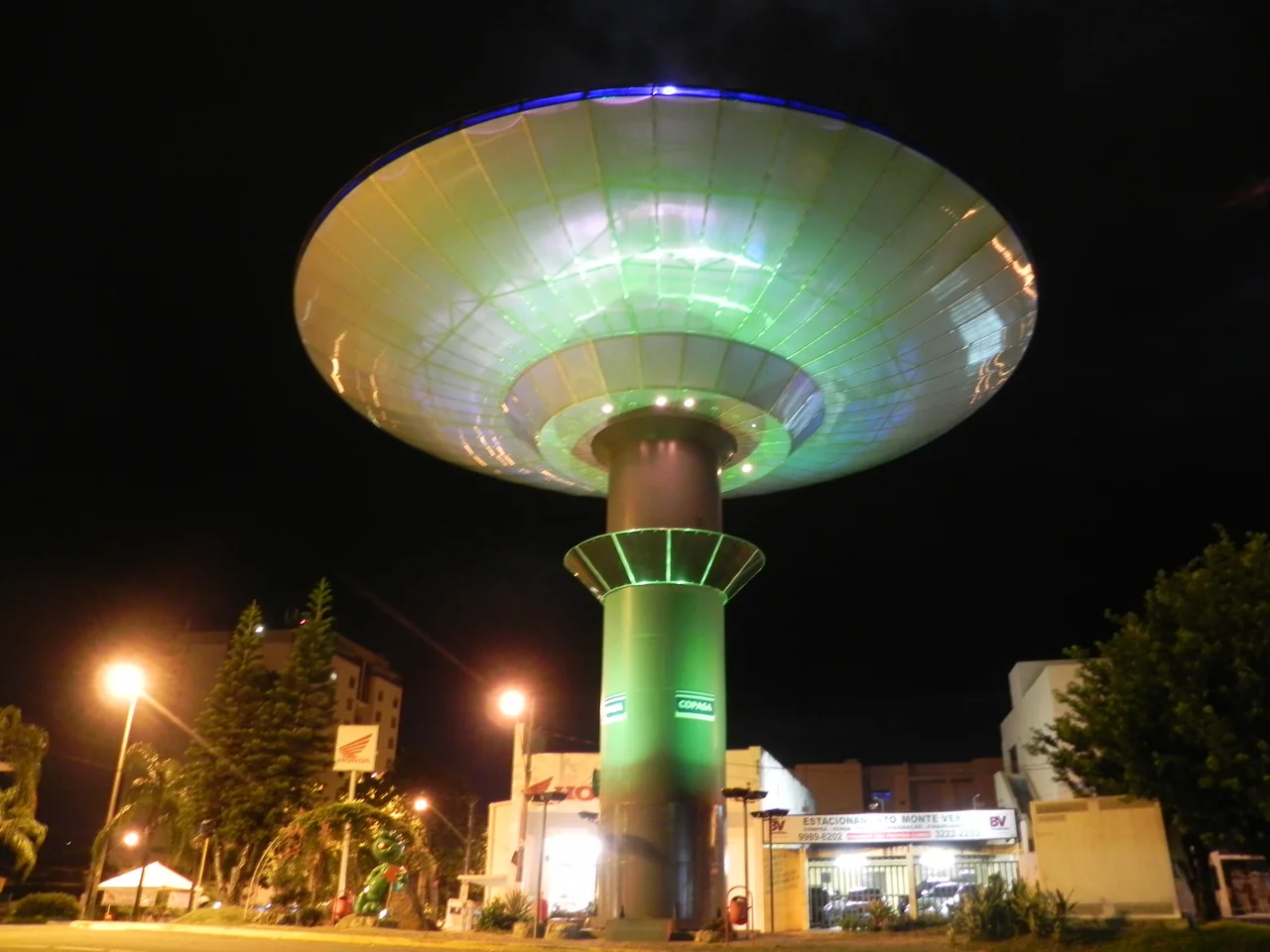
Coffee built Varginha. The spaceship came later. Walk downtown today and both are on display - the trading offices and brokerage houses that move beans from thousands of hillside farms to ports around the world, and the 20-meter flying saucer water tower in the central park that commemorates, or exploits, depending on who is telling the story, a 1996 UFO sighting that made this mid-sized Brazilian city internationally famous. The sensible, unglamorous truth is that Varginha is one of the most important coffee cities in the world. The more fun truth is that its mascot is a green alien named Ginho. Both versions of the place are equally real, and both are bankable.
How a Rest Stop Became a Coffee City
The muleteers built the chapel first. In 1785, the tropeiros - mule drivers moving cargo between São Paulo and the gold regions of Minas Gerais - were pausing regularly at a place called Vargem, a small meadow on their route. They needed a chapel for weddings and funerals, so they built one near where the Divine Holy Spirit parish church now stands. In 1806 a larger chapel followed, dedicated to Espírito Santo das Catanduvas. Catanduvas, a Tupi word meaning 'rough, thorny scrub,' gave the place its first name. Coffee changed everything. When the great 1870s expansion of the São Paulo coffee belt reached across the border into southern Minas, farmers realized the soil and altitude here - 920 meters up, with warm days and cool nights - produced exceptional beans. Trading houses opened. Drying patios spread. Warehouses multiplied. By 1882 the town had its current name, Varginha - a diminutive of vargem, 'little meadow.' The meadow is long since covered by a city of 120,000 people, but the coffee work has not stopped.
The Immigrant Waves
Brazil abolished slavery in 1888, the last country in the Western Hemisphere to do so. Varginha, like the rest of the coffee belt, needed workers to replace the enslaved people who had built its plantations. The Brazilian government subsidized Italian immigration, paying passage in exchange for a period of coffee-harvest labor. Thousands of Italians settled in Varginha at the turn of the 20th century, and the surnames they brought still fill the city directory. They founded the Moinho Sul Mineiro wheat mill in partnership with local Varginhenses. They built the Theatro Capitólio in the Tolentino style, decorated by the Italian painter Alexandre Vallati. They kept their dialect for a generation, then lost it to the World War II ban on enemy languages. Later waves of immigrants followed - Syrians and Lebanese in the early 20th century working in produce trade, Japanese families in the 1970s arriving with the Brazilian subsidiary of a German company called CBC, and most recently Taiwanese investors setting up factories in the industrial zone. Varginha's ethnic layers run deep. One consequence: when Brazilian troops shipped out to Italy in World War II as part of the Força Expedicionária Brasileira, Varginha sent volunteers who had uncles and grandparents in the country they were fighting in.
The Spaceship in the Park
On January 20, 1996, three young women in Varginha reported seeing a humanoid creature in a vacant lot. What followed - military denials, ufologist investigations, a dead police officer, dead animals at the local zoo, and competing books and documentaries - turned the city into the Brazilian Roswell. Rather than deny or minimize, Varginha embraced the attention with the practical cheerfulness of a small city that needed new tourism revenue. The municipal water tower in the central park was redesigned as a 20-meter flying saucer, the Nave Espacial de Varginha, and lit at night. Bus stops around town were rebuilt in the shape of spaceships. Shops sell grey alien dolls wearing the jerseys of local football clubs. The mascot Ginho appears on postcards and coffee mugs. In August 2004, the UFO Congress of Varginha drew ufologists and curiosity-seekers from across Brazil, sponsored by the city hall. None of this disproves or confirms anything about 1996. What it proves is that a town can turn an ambiguity into an industry, and that sometimes the best response to an unanswerable question is to start selling t-shirts.
The Quiet Economy
Beyond the spaceship jokes, Varginha runs on a serious economy. The city hosts factories for Philips-Walita, Cooper-Standard, Plascar, SteamMaster, and Samsung. It has the highest GDP in southern Minas Gerais. In 2012 the Centro Industrial Tecnológico opened in the airport zone, housing the Porto Seco Sul de Minas - an inland dry port that handles coffee exports and other imports and exports. Varginha sits almost equidistant from São Paulo (316 km), Belo Horizonte (315 km), and Rio de Janeiro (390 km), and the Rodovia Fernão Dias (BR-381) runs close enough to keep cargo flowing. Veja magazine once ranked it seventh on a list of the top 20 mid-sized Brazilian cities for investment and quality of life. Most visitors who come for the spaceship end up noticing the ordinary city around it - the traffic, the shopping malls, the university, the coffee trucks lined up at warehouse doors. The alien tourism covers operational costs. The coffee still pays the mortgage.
From the Air
Located at 21.55°S, 45.43°W in southern Minas Gerais at about 925 m elevation. Varginha sits along the Rodovia Fernão Dias (BR-381), the main São Paulo-Belo Horizonte highway, with coffee plantations dominating the surrounding countryside. The Nave Espacial de Varginha, a 20 m disc-shaped water tower, is visible in the central park. Major Trompowsky Airport (SBVG) lies approximately 5 km from downtown and serves general and limited commercial aviation. Belo Horizonte's Pampulha (SBBH) and Confins (SBCF) are the nearest major airports, 300+ km north.
Nearby Stories
- Our Lady of the Rosary Church, Lavras 2.7 km away
- Boa Esperança, Minas Gerais 20 km away
- Cambuquira 25 km away
- Poços de Caldas 60 km away
- Serra da Mantiqueira 71 km away
- Vargem Grande do Sul 87 km away
- São João del-Rei 88 km away
- Southeast Brazil 148 km away