.jpg)
Vauxhall Helicopter Crash
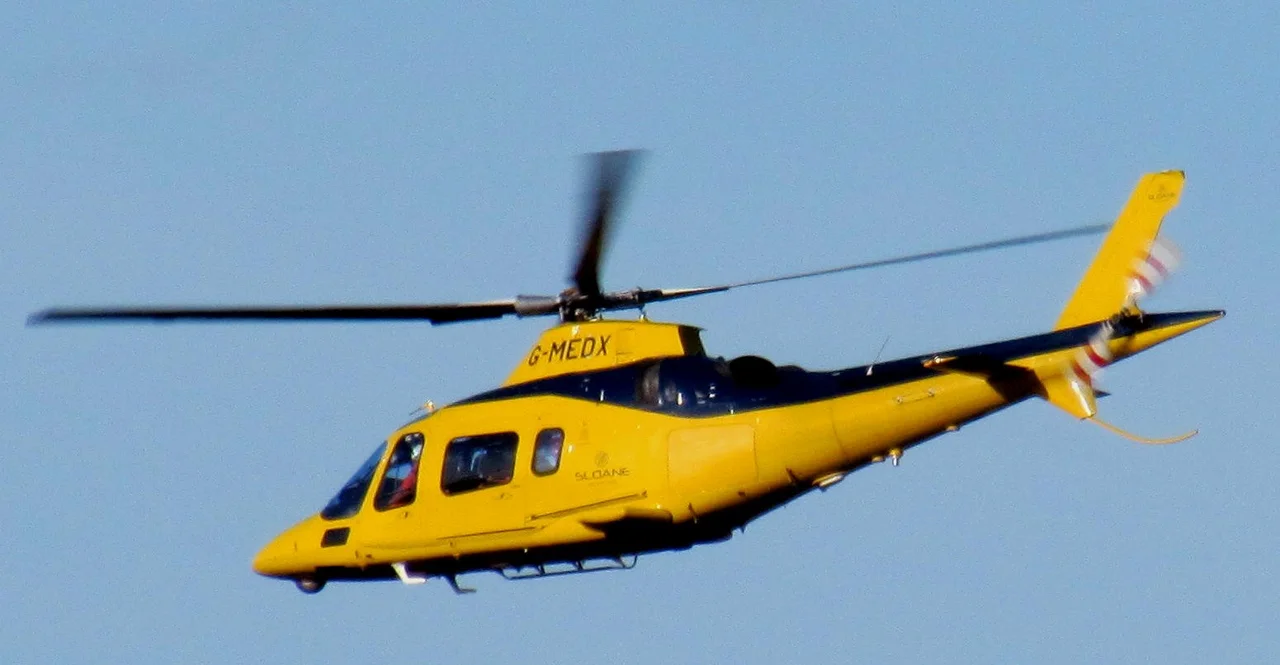
Just after eight in the morning on 16 January 2013, a south London office worker heard what he later described as 'a very unusual buzzing sound.' The fog was thick over central London that day - the kind of freezing January fog that wraps itself around the city and refuses to lift. Within seconds, a twin-engine Agusta A109E helicopter struck the jib of a tall construction crane attached to a residential tower at Vauxhall. The pilot, Pete Barnes, and a pedestrian on the ground, Matthew Wood, were killed. It was the first fatal helicopter crash in central London since records began in 1976.
The Flight That Should Not Have Happened
Pete Barnes was an experienced helicopter pilot, a former television aerial cameraman who had flown for film productions and the police. On the morning of the crash he was repositioning the Agusta from Redhill Aerodrome in Surrey to Elstree Airfield in Hertfordshire, to collect Richard Caring - the restaurateur who owned the aircraft - and take him on to Elveden in Suffolk. As Barnes prepared to depart Redhill, the weather across London was deteriorating. The Met Office later described conditions that morning as prone to widespread low cloud, poor visibility, and patches of freezing fog. Caring himself, by then aware of the conditions, twice told Barnes that he was willing to delay. Barnes replied that he had already started his engine, and chose to proceed. The flight track took him on a curving route across central London - past Battersea, towards Elstree - that brought the helicopter through the Vauxhall area at low altitude in deteriorating visibility.
The Crane and the NOTAM
The crane the helicopter struck belonged to a Terex CTL 180 jib crane attached to the St George Wharf Tower then rising above Vauxhall - the tallest residential building in the United Kingdom at the time. The crane extended to 770 feet above mean sea level. A Notice to Airmen - a NOTAM - had been issued and reissued for its presence, current that morning. The investigation could not establish exactly why Barnes turned onto a collision course with it. The Air Accidents Investigation Branch concluded in its final report, published on 9 September 2014, that the pilot 'turned onto a collision course with the crane attached to the building and was probably unaware of the helicopter's proximity to the building at the beginning of the turn,' and that he 'did not see the crane or saw it too late to take effective avoiding action.' The report made ten safety recommendations covering NOTAM dissemination, low-visibility helicopter operations over central London, and pilot decision-making.
The Ground
On the ground, the consequences were immediate and chaotic. Matthew Wood, a 39-year-old pedestrian, was killed as the wreckage fell onto Wandsworth Road. The helicopter crashed near Vauxhall bus station and a busy junction during the morning commute. The London Fire Brigade pulled one person from a burning car. Eighty-eight firefighters worked on the wreckage; another 57 dealt with the damaged crane and evacuated residents from the St George Wharf Tower. Two office buildings, five cars and two motorbikes were damaged. The blaze was out within twenty minutes; the wider response continued for days. Vauxhall bus station took five days to fully reopen. Nine Elms Lane stayed closed while one of the largest mobile cranes in the country - a Terex TC 2800-1, brought down from Leyland in Lancashire - was used to lift the damaged jib safely. All roads reopened on 11 February.
The Inquiry
Prime Minister David Cameron promised a review of helicopter flight rules over central London on the day of the crash. Boris Johnson, then Mayor of London, announced his own review of regulations and the safety of tall buildings. Kate Hoey, the local Labour MP for Vauxhall, called for an inquiry into the increasing number of helicopters flying over London - a position she had argued for more than two decades earlier with a 1991 Ten Minute Rule Bill on helicopter and heliport legislation that did not pass. An inquest in December 2015 returned verdicts of accidental death for both Barnes and Wood. The case prompted reviews of how construction cranes are notified to pilots, of low-flying rules over the capital, and of pilot decision-making in marginal weather - the kind of incremental aviation safety work that follows almost every serious accident.
What Vauxhall Looks Like Now
The St George Wharf Tower was completed in 2014. The skyline of Vauxhall has continued to fill in: the US Embassy across the river at Nine Elms, the redevelopment of Battersea Power Station two miles upstream, and a clutch of new high-rise towers that did not exist when the helicopter flew over that morning. The crash sits in the recent memory of central London aviation as the moment when the risks of helicopter movement over a densely built city were paid in two lives - one pilot, one pedestrian - and translated into rule changes that have shaped helicopter operations over the capital ever since.
From the Air
The 2013 crash site is at 51.4825 N, 0.1274 W in Vauxhall, central London, on the south bank of the Thames. Central London restricted airspace tightly constrains helicopter operations through the Helicopter Routes (H1-H10) over the city, with mandatory radio contact and weather minima. Nearest airports: London City (EGLC) 6 nm east, Heathrow (EGLL) 14 nm west. London Heliport (EGLW) at Battersea is 1 nm west - the destination most central-London helicopter flights are heading for.
Nearby Stories
- Battle of Britain, Northfleet 1.1 km away
- Bayham Old Abbey 5.4 km away
- Catharine Macaulay 6.4 km away
- Hatfield rail crash 8.8 km away
- Chequers 8.9 km away
- Chelmsford Cathedral 10 km away
- Queen Victoria Hospital 13 km away
- Fishbourne Roman Palace 36 km away