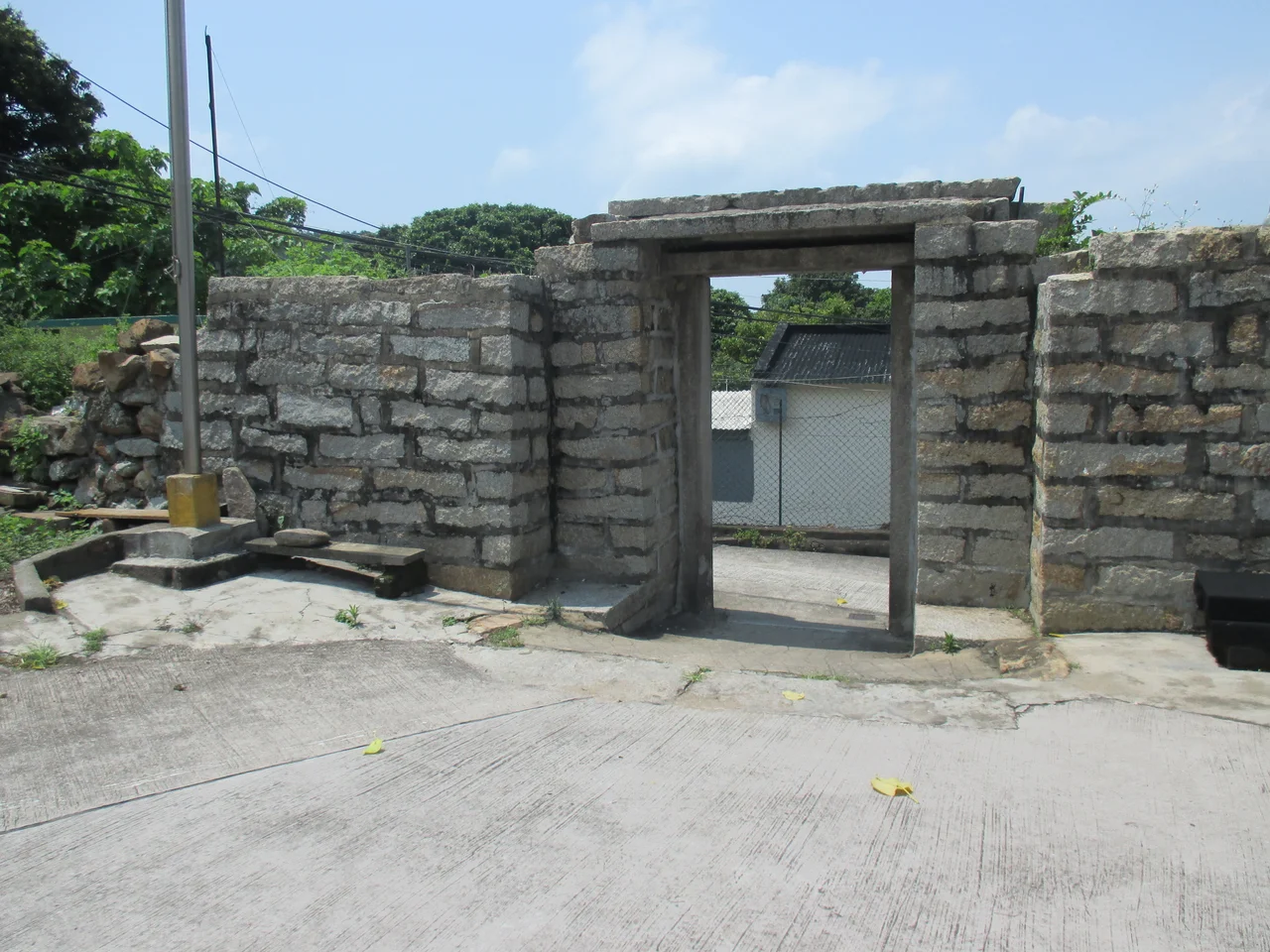

Walled Villages of Hong Kong
Iron gates, 18-inch-thick walls, and the remains of a moat — in most cities these would mark a medieval castle. In Hong Kong's New Territories, they mark someone's village. The walled settlements that survive across the territory are not museums or ruins: many are still home to the descendants of the clans that built them, sometimes six hundred years ago. Walk through the single narrow entrance of Kat Hing Wai in Kam Tin and you are stepping into a Tang family stronghold where about 400 people still live inside walls first raised to hold off bandits and tigers. The word on the gate, *wai*, simply means 'walled' in Cantonese — but the stories behind these walls are anything but simple.
Walls Against the Sea
Pirates made Hong Kong's winding coastline treacherous throughout the Ming and Qing dynasties. The territory's labyrinthine shores, hilly interior, and scatter of islands created ideal cover for raiding parties — and left coastal villages dangerously exposed. The response, for both Punti settlers from southern China and Hakka newcomers, was to build. Stone walls rose around clusters of row houses. Cannon towers appeared at corners. Some villages ringed themselves with moats. The architecture was not decorative; every element served a defensive function. Over centuries, many of these fortifications were dismantled — the moat at Wing Lung Wai was filled in during the 1960s — but enough survived to give the New Territories a landscape unlike anywhere else in the world.
The Layout of a Fortress Home
A Hong Kong walled village follows a recognisable plan. Row houses run in parallel, separated by lanes narrow enough to slow an intruder. The whole complex is arranged in a square or rectangle, with a single entrance gate on the central axis and a village shrine at the far end. What looks like a tight-knit neighbourhood functions also as an interlocking defence network: no one passes through unobserved. Kat Hing Wai, the best-known example, measures 100 metres by 90 metres and is still entirely encircled by its seven-metre-high Qing-dynasty blue brick wall. Outside runs the ghost of a moat. Inside, most houses have been rebuilt in recent decades, but the bones of the fortress remain.
Clan, Stone, and Centuries
Each walled village belongs to a clan, and each clan has a founding story. Kat Hing Wai's Tang Clan traces its presence in Kam Tin to the Song dynasty — their ancestor Tang Hon Fat is recorded as settling in what is now Kam Tin in 973. Kat Hing Wai itself was founded in the Ming dynasty, and the enclosing walls were built in the early Kangxi reign of the Qing. The Tsang Clan began building their granite-and-timber stronghold, Tsang Tai Uk in Sha Tin, in 1847 — a project that took around twenty years to complete. The Liu Clan of Sheung Shui Wai came originally from Fujian during the Yuan dynasty, arriving in what is now Hong Kong and enclosing their settlement with a moat built in 1646, one of the oldest still intact. The Pang Clan of Fanling Wai arrived even earlier, during the Song dynasty. These are not ancient peoples who have vanished — their descendants pay rates, ride the MTR, and come home through iron gates their ancestors commissioned.
The Last Urban Village
While most walled villages occupy rural corners of the New Territories, one sits inside the dense urban fabric of Kowloon: Nga Tsin Wai Tsuen, near San Po Kong in Wong Tai Sin. It is the only remaining walled village in Hong Kong's built-up urban areas — the sole survivor of a form of settlement that once existed across Kowloon before development swallowed everything around it. The Hong Kong government announced plans to redevelop the site in 2007, setting off years of preservation debate. Its existence in the middle of a dense modern city captures something essential about Hong Kong: layers of history compressed into an island-and-peninsula geography where there is very little room for anything to be left behind.
What Survives and Why It Matters
Two heritage trails now thread through the most significant surviving villages. The Lung Yeuk Tau Heritage Trail connects five walled villages in Fanling: Lo Wai, Ma Wat Wai, San Wai (also called Kun Lung Wai), Tung Kok Wai, and Wing Ning Wai. The Ping Shan Heritage Trail leads to Sheung Cheung Wai in Yuen Long. At many of these sites, the walls still stand, the entrance gates still bear their inscriptions, and the village shrines still receive offerings. These places survived piracy, colonial administration, wartime occupation, and property development booms. That they are still standing — some of them still inhabited by the same family names who built them — is, in itself, a form of stubbornness that the walls were always designed to express.
From the Air
The walled villages of Hong Kong's New Territories lie beneath approach paths for VHHH (Hong Kong International Airport) at roughly 22.44°N, 114.17°E. At 3,000–5,000 feet on approach over the New Territories, the flat agricultural plains around Kam Tin and Fanling are visible north of Kowloon. Kat Hing Wai in Kam Tin and Tsang Tai Uk in Sha Tin are the most visually distinctive — look for their rectangular walled enclosures standing apart from surrounding development. The Lion Rock ridge provides a geographic reference: walled villages cluster in the valleys to its north and west.
Nearby Stories
- Chapel of St. Francis Xavier 3.5 km away
- Cuiheng 4.1 km away
- 2015 Shenzhen Landslide 16 km away
- Shunde 31 km away
- Wanshan Archipelago 37 km away
- Nanxiong Formation 96 km away
- Heyuan 149 km away
- Checheng Fu'an Temple 629 km away