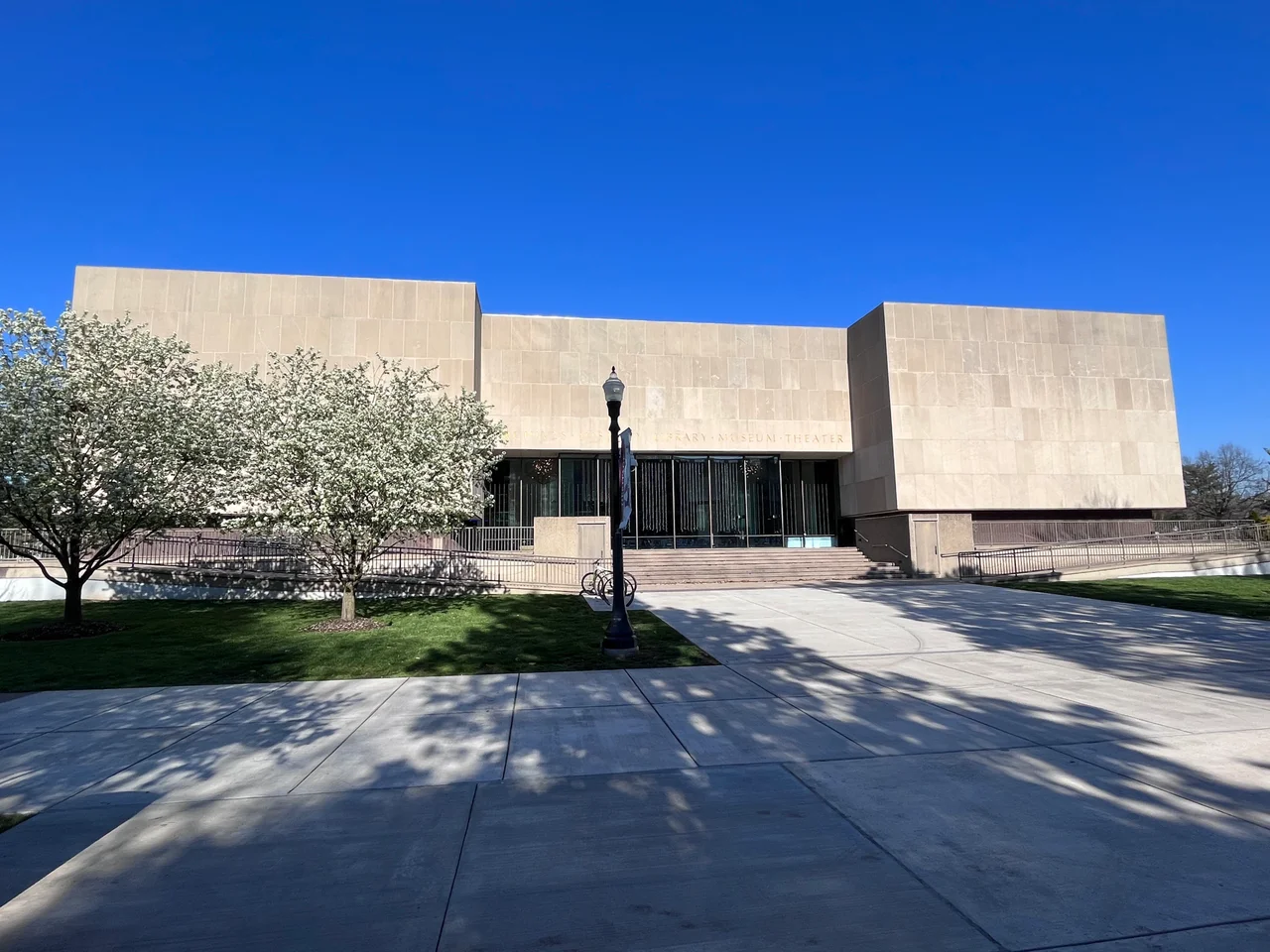

West Virginia State Museum
In 1931 a Braxton County farmer found a piece of sandstone covered in strange carved letters. He sold it to the state in 1940. The state sent it to University of Michigan archaeologist Emerson F. Greenman, who studied the inscriptions and concluded what later researchers have confirmed: the Wilson Stone is, in all likelihood, a fraud. It still sits in the West Virginia State Museum, alongside genuine Civil War regimental flags and pioneer surgical tools. Some pieces in a state museum are there because they are real. Others are there because the story of how they were exposed as fake is itself part of the state's history.
A Museum Born With the State
The museum's roots reach back to 1890, when the West Virginia Historical and Antiquarian Society opened an exhibit inside the state capitol - only 27 years after West Virginia itself had broken from Virginia during the Civil War. Governor William MacCorkle formally opened the museum in 1894. The collection bounced from one capitol annex to another, then to the capitol basement, growing in fits and starts as a young state worked out what kinds of objects told its story. In 1976 the materials moved into the new West Virginia Science and Culture Center, with chronological exhibits built around the slow accumulation of artifacts.
What the Collections Hold
The current museum is managed by the West Virginia Department of Arts, Culture and History, and the exhibits range across natural history, art, geology, paleontology, coal, and the cultural histories of the people who have lived in these hills. The Civil War Regimental Flag Collection, which won a Save America's Treasures grant in 2001, includes banners that have been in the museum's care since the 1890s. There are early medical tools belonging to Joseph Robins, one of West Virginia's pioneering physicians - lancets, bone saws, the rough instruments of frontier medicine. And the Wilson Stone, mounted as both artifact and cautionary tale, a forgery that fooled enough people to merit university examination.
The 17.9 Million Dollar Refit
After decades of use, the museum closed for five years and reopened in summer 2009 following a 17.9 million dollar remodel. The new exhibits emphasized immersive design - recreated coal mines, walk-through historical settings, audio narration synced to dioramas. The intent was to bring younger visitors back into a state museum that had felt increasingly dated. The result was widely praised for ambition, but the curation choices proved contentious for at least one important constituency.
The UMWA Complaint
In 2011, United Mine Workers of America president Cecil Roberts wrote a detailed letter complaining about the museum's depiction of his union and of West Virginia labor history. The Battle of Blair Mountain - a 1921 armed uprising of around 10,000 coal miners against company guards, deputies, and eventually federal troops, the largest labor action in U.S. history outside of war - was treated, in the union's view, with inaccuracies that minimized the miners' grievances and the violence done to them. The complaint pointed to a tension that runs through any museum in a coal state: how to display the industry that built the state without underplaying the cost paid by the people who dug the coal. The museum has continued to update exhibits, but the conversation about who gets to narrate West Virginia's story is not finished.
From the Air
Located at 38.338 N, 81.614 W on the West Virginia Capitol Complex grounds in Charleston, near the gold-domed Capitol on the south bank of the Kanawha River. Yeager Airport (KCRW) is about 4 miles northeast. Best viewed at 2,500-4,000 feet on clear days, with the Capitol dome as a clear visual anchor.
Nearby Stories
- Mystery Hole 6.5 km away
- West Virginia Colored Children's Home 9.4 km away
- Clay, West Virginia 13 km away
- Staats Mill Covered Bridge 14 km away
- Hobet Coal Mine 23 km away
- Appalachia 23 km away
- Fred M. Vinson Museum and Welcome Center 30 km away
- Ponn Humpback Covered Bridge 43 km away