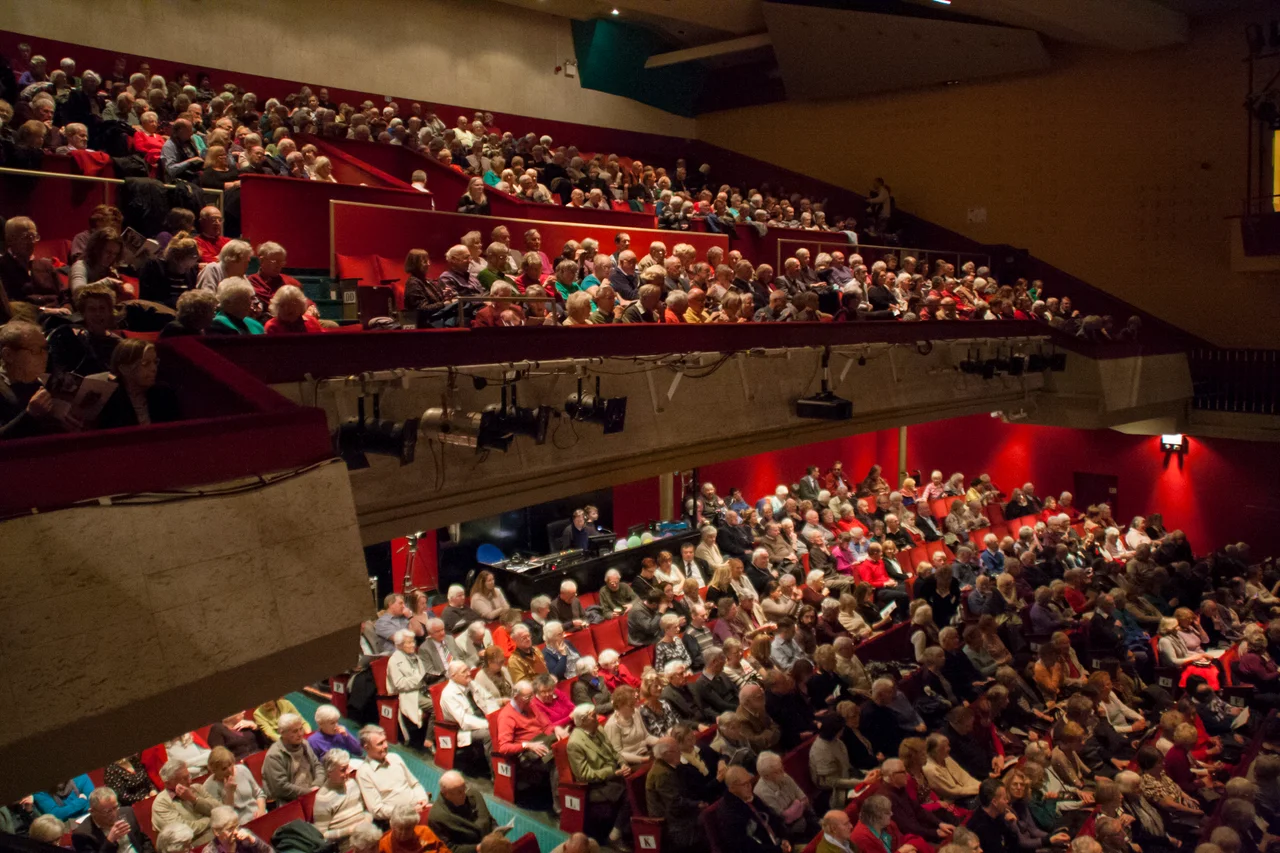

Weymouth Pavilion
On 13 April 1954 a workman misused a blowlamp on the roof of the Weymouth Pavilion. Within an hour the entire timber-and-steel building was destroyed. The fire took out a 988-seat theatre, a ballroom, the cafes and bars - everything that had stood at the southern end of Weymouth's Esplanade since 1908. The damage came to 80,000 pounds. The insurance was paid out. The remains were demolished. Four years later, construction began on a replacement, which opened on 15 July 1960 and is still there today. The new pavilion has nearly been demolished twice since, and survives because local people refused to let it go.
Edwardian Ambitions
Weymouth had been a fashionable seaside resort since George III made his summer visits to the town starting in 1789, and by the early 20th century the council wanted a proper entertainment venue to match the town's expanding tourist trade. An architectural competition was launched in 1907. Construction followed at the southern end of the Esplanade between the harbour and the beach, on a site that required land reclamation as well as building. The cost came to 14,150 pounds. The Weymouth Pavilion opened on 21 December 1908 - timber-framed, steel-skeleton construction with a generous auditorium and a sea-facing facade. From 1914 onwards the council leased it to Ernest Wheeler, who ran it for twenty-five years. When the Alexandra Gardens Theatre opened in 1924 as a competitor, the pavilion added film screenings to its programme.
Commandos and Moroccans
When war came in 1939, the pavilion was requisitioned by the military. No. 4 Commando, formed in 1940 as part of the new commando programme, used the building as a base. Later that same year the pavilion housed 800 men of the French Moroccan army who had been evacuated from continental Europe and arrived at Weymouth in transit - North African soldiers stranded in southern England, sleeping on the floor of an Edwardian seaside theatre, waiting for someone to decide where they would go next. The pavilion then served as a medical centre during the British evacuation of the Channel Islands in summer 1940. In April 1942 the building took bomb damage in an air raid. Afterwards the Admiralty held it as a naval post sorting office, processing the mail of sailors stationed across the south coast, until 1947.
Renamed and Burned
After the Admiralty handed it back in 1947, the council leased the pavilion to the Buxton Theatre Circuit, who fitted a new cinema projection room in 1949 and reopened the venue in May 1950 as the Ritz. Melcombe Productions took over the operation in September 1951. Restoration work began in January 1954, including the renewal of the roof - and that work led directly to the disaster. On 13 April 1954, a workman using a blowlamp on the wooden exterior accidentally started the fire that destroyed the building within the hour. The Ritz had been on Weymouth's seafront for less than four years.
The 1960 Pavilion
Debate dragged on through the 1950s. Construction of a replacement finally began in September 1958, to designs by architect Samuel Beverley. The council ran a public competition to choose a name in 1959 and settled on Weymouth Pavilion over the alternative The Normandy. The new building cost 154,000 pounds and opened on 15 July 1960. It is the Pavilion that still stands today - a 988-seat theatre, a 600-capacity ballroom called the Ocean Room, a piano bar restaurant, a Ritz Cafe (the name preserved from the burned predecessor), and various function and meeting rooms. The architecture is unmistakably late-1950s civic modernism, the kind of building that British seaside towns put up everywhere in those years.
Saved Twice
By 2006 the council was planning a 135-million-pound redevelopment of the entire pavilion site, with a new theatre, a hotel, a marina, apartments, a ferry terminal and a Jurassic Coast visitor centre - all timed for the 2012 Olympic sailing events. The recession of 2009 killed the scheme. A 160-million-pound redevelopment proposal in 2012 from White Knight Designs ran out of time as the Olympics arrived. In 2012 the council began looking at cost-cutting options, eventually proposing demolition of the pavilion in favour of a car park. Local campaigners launched a petition. The Stage covered the campaign. In February 2013 the council formally decided to hand the building to the community rather than demolish it. Local businessman Phil Say won the bid to run it as a non-profit Community Interest Company. The lease was signed on 5 July 2013. The Pavilion reopened on 13 July. By January 2015 visitor numbers had more than doubled; in 2014, the new operation drew over 300,000 visitors and sold more than 60,000 tickets. The Christmas pantomime Snow White broke box-office records the following year.
From the Air
Weymouth Pavilion at 50.60883 N, 2.44836 W at the southern end of the Esplanade in Weymouth, Dorset. From altitude the pavilion sits on a slim peninsula between Weymouth Beach to the east and the harbour entrance to the west - the building marks the point where the long curve of the Esplanade ends and the harbour begins. Nearest airfields: Bournemouth (EGHH) about 45 km east, Exeter (EGTE) roughly 90 km west. Recommended cruise 2,000-3,500 ft for a clear view of the bay, the harbour entrance, and the southern end of the seafront.
Nearby Stories
- Needles Lighthouse 18 km away
- Lyme Bay Canoeing Disaster 19 km away
- HMS Formidable (1898) 19 km away
- National Motor Museum, Beaulieu 22 km away
- Sherborne Castle 22 km away
- Muchelney Abbey 24 km away
- German Submarine U-672 29 km away
- Battle of Cherbourg (1864) 58 km away