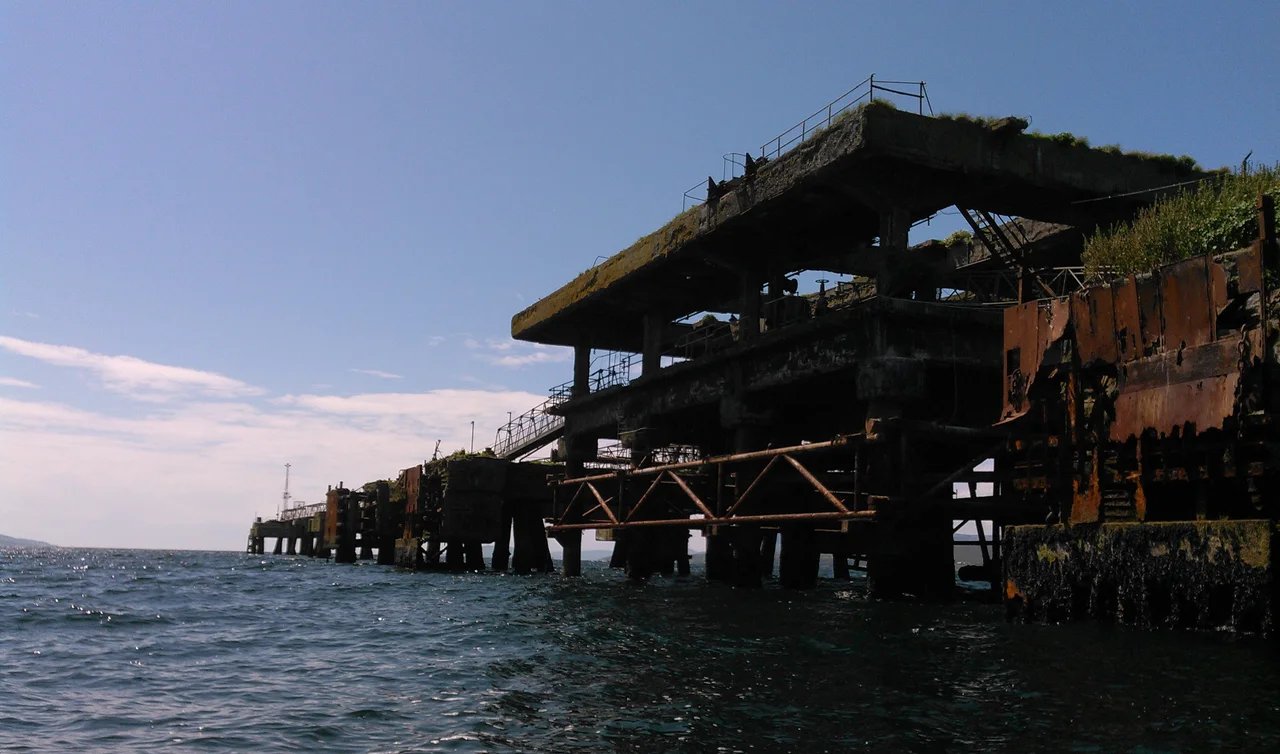

Whiddy Island disaster
Forty-one men were aboard the Betelgeuse when she began to discharge her cargo on the jetty at Whiddy Island just after midnight on 8 January 1979. One of them had brought his wife on the voyage. None of them survived the next half hour. Eight terminal workers on the jetty died with them. So did a Dutch diver, later, during the salvage. Fifty people in all. The cause was a tanker hull at the end of its working life, an unloading sequence done wrong, fire-fighting equipment that did not work, and a corporate culture that treated Bantry Bay's deep, sheltered water as a place to cut costs out of sight. The investigation took a year. The grief has not finished.
Who They Were
Forty-two French nationals, seven Irish nationals, and one British national, plus the Dutch diver lost during salvage. Only 27 of the 50 bodies were ever recovered from the wreck. The crew of the Betelgeuse were from coastal towns in France - most of them men with families waiting in Brittany and Normandy and along the Atlantic coast. The terminal workers were local men from Bantry and the villages around the bay, sons and brothers and husbands and fathers. The officer's wife who had joined her husband for the run from Saudi Arabia to Portugal - originally - was a woman whose name appears in tribunal documents but rarely in the headlines. Her presence aboard speaks to how routine these voyages were supposed to be: ordinary enough that a spouse might come along for company. She was killed alongside everyone else.
An Ordinary Operation Gone Wrong
The Betelgeuse had been at sea since 24 November 1978. She had sailed from Ras Tanura in Saudi Arabia with a full load of crude oil, bound originally for Sines and then Leixoes in Portugal. Both attempts to unload were frustrated - bad weather, then a ship aground in the harbour entrance. Total S.A., her operator, ordered her instead to Whiddy Island, where the Gulf Oil terminal could handle the largest tankers in the world. Around one in the morning, men on the jetty heard a rumbling and cracking from inside the ship's hull. Some local residents later claimed that up to five minutes passed between that sound and the first explosion - long enough that an evacuation, had anyone been organized for one, might have saved lives. No evacuation was attempted. The explosion blew men off the jetty into the water. The vessel split in half. The cargo ignited and burned at temperatures exceeding 1000 degrees Celsius. Firefighters arriving from Bantry, Skibbereen, Castletownbere, and beyond could not approach the wreck. They concentrated on stopping the fire from reaching the storage tanks ashore, which held 1.3 million tonnes of crude oil.
What the Tribunal Found
The Costello Tribunal - presided over by Mr Justice Declan Costello - took a year to gather evidence and produced a 480-page report. It found three contributing causes. First, the Betelgeuse was in poor structural condition: her hull and tanks were cracked, corroded, and leaking. She was eleven years old, worked hard, at the end of her service life. Total S.A. was to blame. Second, the unloading sequence had been done wrong: ballast and discharge timing left the hull stressed unevenly, until she broke her own keel. Total was again held largely responsible, with the caveat that everyone who knew what had happened on the deck of the ship had died in the explosion. Third, the fire-fighting equipment on both the ship and the jetty was inadequate and badly maintained. The terminal's own fire engine would not start. Firefighters had to break into the depot to find equipment, much of which then failed to work. Gulf Oil and Total were jointly blamed. Total has never accepted the tribunal's conclusions. Exactly what happened on that ship, in that hour, will never be settled.
The Long Anger
On 6 March 1979, the Dail debated the disaster. One TD asked whether Gulf Oil's standing as one of the largest employers in West Cork had made the Irish state too cautious to enforce inspections. The question implied another: whose lives had been priced cheaply enough that the cracks in the Betelgeuse's hull had not been a problem until it was. The first section of the wrecked tanker was towed 100 miles offshore and scuttled. Two more sections went to Spanish breaking yards; the fourth was broken up locally. The terminal was eventually transferred to the Irish government and used to hold the strategic petroleum reserve. The jetty was not repaired until 1990, then replaced by an unloading buoy in 1996. At the 40th anniversary commemoration in January 2019, family members of the victims called for stronger enforcement of safety regulations and for the introduction of corporate manslaughter as a criminal offence. They were still calling, four decades on, for what they had been denied: a finding that someone, somewhere, would be held to account.
The Bell in the Graveyard
A memorial sculpture, incorporating the ship's bell recovered from the wreck, stands in the hillside graveyard above Bantry harbour. The bodies of two unidentified casualties from the explosion are interred nearby. The bell hangs where it can be seen by anyone walking up to the cemetery, looking back over the bay where it was rung for the last time on a January night in 1979. Family members from France and Ireland have come there together at every anniversary, sometimes a few of them, sometimes hundreds. They light candles. They read out the names. Fifty, plus the diver - and one more, sometimes, for the officer's wife whose own name was almost lost in the wider count. The bay below them, on still days, looks like a place where nothing could possibly go wrong. That is part of what makes the memorial so difficult to stand beside.
From the Air
The Whiddy Island terminal sits at 51.69 degrees north, 9.53 degrees west, near the head of Bantry Bay in West Cork, Ireland. From the air the island shows as a low, fertile landmass about 5.6 km long, with the remnants of the original concrete jetty visible as small dark objects in the water about 400 metres offshore. The storage tanks are still operational, holding part of Ireland's strategic petroleum reserve. Nearest international airport is Cork (EICK), about 80 km east; Kerry (EIKY) is roughly 90 km northwest. The bay's deep, sheltered water - the very feature that made it suitable for supertankers - is also what now makes it a place of pilgrimage for families of the victims.
Nearby Stories
- Dingle Bay 4.2 km away
- Dunmanway 5.5 km away
- Eurovision Song Contest 1993 6.4 km away
- Ballinskelligs Abbey 7.5 km away
- Aghadoe Cathedral 9.3 km away
- Dunlough Castle 11 km away
- The Sinking of the Lusitania: The Torpedo That Changed the War 43 km away
- Sao Miguel 1940 km away