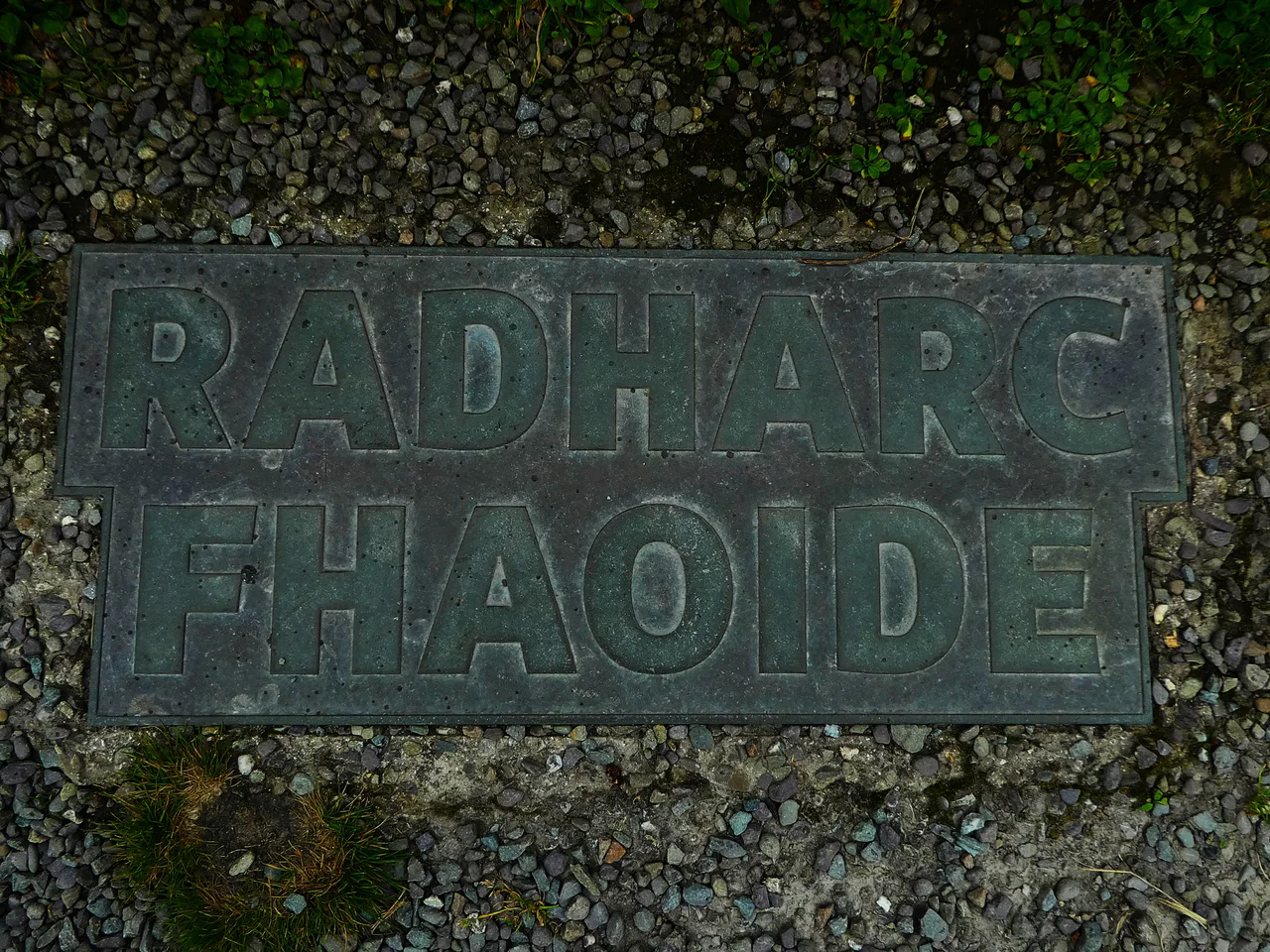

Whiddy Island
Thirty-one people live on Whiddy Island today. A century and a half ago there were 450, working pilchard fisheries and small farms on the gently rolling glacial till that makes the island unexpectedly fertile for its latitude. The local goats - feral, casual - sometimes wander along the road near the oil terminal that dominates the south shore. The same island that hosted American seaplanes hunting U-boats in 1918 became, fifty years later, the place where the largest oil tankers in the world made landfall in Europe. And then on a January night in 1979, that history changed permanently.
A White Island for Norse Sailors
The name's origin is uncertain. One persistent theory derives it from the Old Norse Hvit-oy - white island - a reminder that Bantry Bay was within reach of the Norse longships that ranged the Irish coast in the ninth and tenth centuries. In the early seventeenth century, the place had a different reputation: a haven where pirates traded, taking advantage of the deep anchorage and the island's distance from any centre of authority. After the failed French Armada arrived in Bantry Bay in 1796, the British recognized that whoever held Whiddy held the head of the bay, and built fortified batteries there in Napoleonic times. The redoubts, dated to 1806 or 1807 and designed for 100-150 men with 8-12 guns, still stand at Reenavanny. So does the ruined O'Sullivan Bere tower house, which collapsed in a storm in 1920.
Curtiss Seaplanes and a Single Death
In the last months of the First World War, the US Navy established a seaplane base on the eastern end of Whiddy. The first two Curtiss Model H aircraft arrived on 25 September 1918. The base eventually flew five planes - long, twin-engined boats with four-man crews and Lewis machine guns, patrolling the shipping lanes around Fastnet Rock, close to where the Lusitania had been torpedoed in 1915. On 22 October 1918, three weeks before the Armistice, a Curtiss H-16 numbered A1072 crashed. One airman died: Walford August Anderson. The station closed in January 1919 when the war ended. In 2014, nearly a century after his death, a memorial to Anderson was unveiled near the Whiddy pontoon. The American Embassy's Defence Attache and members of the Irish Air Corps attended. He was 96 years late to his own funeral, but he was finally home.
Pilchards, Then Supertankers
Around 1900, the pilchard - what English speakers more often call the European sardine - was the islanders' main income. The ruins of Pilchard Palaces, the curing sheds where the fish were salted and pressed, stand near the bank. Fishing declined; the island emptied; population fell. Then in the late 1960s, Gulf Oil arrived. The Suez Canal had closed in 1967, and tankers heading from the Persian Gulf to Europe now had to round the Cape of Good Hope, making it economic to build truly enormous ships - ultra large crude carriers - and a small number of terminals capable of receiving them. Whiddy offered deep, sheltered water far from population centres. The terminal opened in 1969. The first generation of supertankers had been launched. The Clancy Brothers wrote a song to celebrate, called Bringin' Home the Oil. It became the theme to a two-minute Gulf television commercial.
The Night of the Betelgeuse
On 8 January 1979, the French tanker Betelgeuse was unloading her cargo at the offshore jetty when she broke apart and exploded. Fifty people died - 42 French sailors, seven Irish terminal workers, and the wife of one of the French officers who had joined her husband for the voyage. A Dutch diver was lost later during salvage. The fire burned at temperatures above 1000 degrees Celsius. Local families on the island fled for their lives. The disaster ranks among the worst in Irish maritime history. The terminal was never fully repaired in its original form; the jetty was eventually replaced with an unloading buoy in 1996. The site is now used to hold one-third of Ireland's national strategic petroleum reserve. Ownership has passed in turn from Gulf Oil to the Irish government, to Tosco, ConocoPhillips, Phillips 66, Zenith Energy in 2015, and finally to Sunoco, which acquired it in 2024.
Living There Now
Today's Whiddy Island has 31 residents, one pub - the Bank House, offering food and live music in summer - and a hackney service. Bike hire is available; walking trails form part of the Sheep's Head Way long-distance route. The mild winters mean the island has a local reputation for producing the area's earliest potato crop. Holiday visitors come in summer for tours of the bay, which incorporate the local history and the flora and fauna. The townlands - Close, Crowangle, Gorraha, Kilmore, Reenaknock, Reenavanny, and Tranaha - still appear on maps, marking the way an island that once held hundreds organized its land. Beneath the bay's surface, somewhere not far from the island's southern shore, lies the wreck of the French frigate Surveillante, scuttled in 1796 and found in 1979 in the searches that followed the Betelgeuse explosion. Three centuries of history sleep here, in 23 metres of cold water, with the goats wandering by on the shore above.
From the Air
Whiddy Island sits at 51.69 degrees north, 9.50 degrees west, near the head of Bantry Bay in West Cork, Ireland. The island appears from the air as a distinct gently-rolling landmass about 5.6 km long and 2.4 km wide, set against the surrounding sheltered waters. The oil storage tanks on the south shore are visible from considerable height; the wreck of the original jetty appears as small dark points in the water about 400 metres offshore. Nearest international airport is Cork (EICK), about 80 km east; Kerry (EIKY) is roughly 90 km northwest. Bantry town and pier sit at the far southeast end of the bay; the wreck of HMS Surveillante lies somewhere in the bay's central deep water.
Nearby Stories
- Dingle Bay 4.2 km away
- Dunmanway 5.5 km away
- Eurovision Song Contest 1993 6.4 km away
- Ballinskelligs Abbey 7.5 km away
- Aghadoe Cathedral 9.3 km away
- Dunlough Castle 11 km away
- The Sinking of the Lusitania: The Torpedo That Changed the War 43 km away
- Sao Miguel 1940 km away