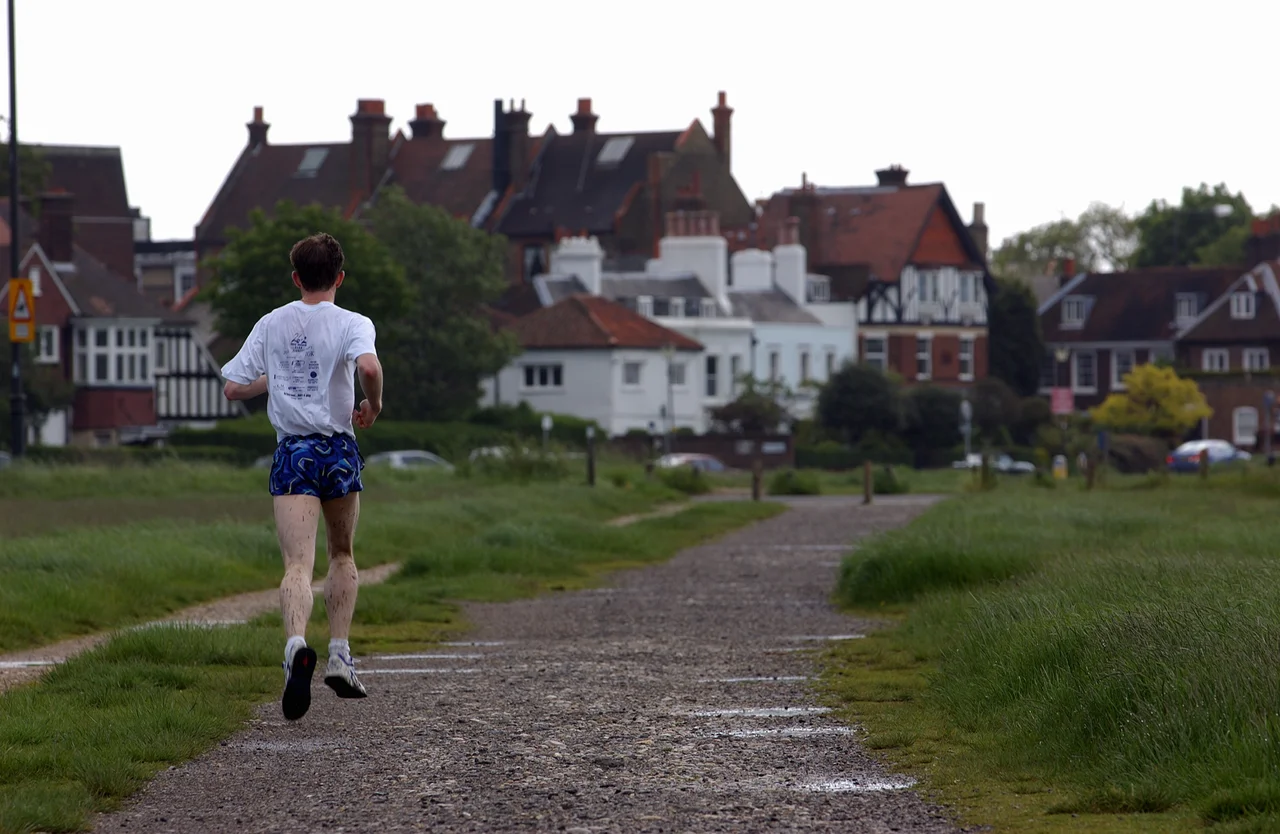

Wimbledon Common
In 1908, Robert Baden-Powell sat down inside a windmill on Wimbledon Common and wrote parts of Scouting for Boys. The windmill is still there. So is the heathland, the bog, the woodland, and the Iron Age hill fort the Victorians decided to call Caesar's Camp - 1,140 acres of open land in southwest London, the largest expanse of heath in the capital, defended by an act of Parliament passed in 1871 against any future attempt to enclose, build on, or otherwise civilise it. Most of it is a Site of Special Scientific Interest. Some of it is a Special Area of Conservation under European law. All of it has been kept, for more than 150 years, in something close to its natural state.
The Iron Age and the Roman Push
At the southern end of the common, on land now used by the Royal Wimbledon Golf Club with a public footpath running through it, lie the remains of an Iron Age hill fort. The 19th-century antiquaries called it Caesar's Camp. Whatever Caesar called it, the main period of use as an oppidum appears to have been the 6th to 4th centuries BC. There is evidence the Romans stormed it - possibly during the Claudian invasion of Britain in AD 43, possibly by Vespasian and the Second Legion pushing west in AD 44. The site may go back further, to the Bronze Age, but in 1875 a landowner named John Erle-Drax deliberately destroyed the hill fort earthworks and the surrounding barrows, removing in a single act of vandalism what archaeology has spent the next 150 years trying to recover from LiDAR scans and surface features.
Duels, Telegraphs, and a Prime Minister
Putney Heath, the northern portion of the Commons, was historically the spot for things London preferred to keep out of sight. Charles II reviewed his forces here in 1684, George III did the same in 1767. Many duels were fought - including one in May 1652 in which Colonel Henry Compton was killed by the third Lord Chandos, and one in May 1798 in which the sitting Prime Minister, William Pitt the Younger, exchanged bloodless shots with the MP William Tierney. Pitt lived nearby at Bowling-Green House. Between 1796 and 1816 the heath hosted a shutter telegraph station - part of the chain that connected the Admiralty in London to the fleet at Portsmouth - replaced by a semaphore station that operated from 1822 to 1847. A stone obelisk erected in 1770 still stands, marking the 110th anniversary of the Great Fire of London and the spot where the inventor David Hartley demonstrated his fireproof building plates, repeatedly setting fire to the lower floor of his house in the presence of George III, Queen Charlotte, and assorted Members of Parliament.
Thomas Cromwell and the Highwayman
Thomas Cromwell, the 1st Earl of Essex and Henry VIII's chief minister, was born on the north side of Putney Heath circa 1485. Tradition placed his birthplace at a spot now occupied by the Green Man public house, where a 17th-century manor survey describes 'an ancient cottage called the smith's shop... being the sign of the Anchor.' A few hundred yards away, on a rise still known as Jerry's Hill, the highwayman Jerry Abershaw was hung in a chain gibbet after his 1795 execution at Kennington, as a warning to other road agents. Abershaw had frequented the nearby Bald Face Stag Inn. The inn was later knocked down to make way for the KLG factory of Kenelm Lee Guinness, the racing driver who developed the spark plugs that bore his initials. The factory site is now an Asda supermarket. Layers on layers.
The Windmill and the Scouts
Near the centre of the Common - though the unmarked parish boundary with Putney Common runs past it - stands Wimbledon Windmill, built in 1817 as a hollow-post mill, one of only a few surviving in Britain. In the 19th century it served as headquarters for the National Rifle Association, which held its national championship - the Imperial Meeting - on Wimbledon Common every July, drawing 'the elite of fashion' to the open-air shooting ranges. The NRA outgrew Wimbledon and moved to Bisley in 1890. Robert Baden-Powell wrote parts of Scouting for Boys in the windmill in 1907, the year before publication. The book launched the Scouting movement worldwide. Baden-Powell first noticed the interest of girls in scouting at a Boy Scout meeting at Crystal Palace in 1909 - an observation that led to the Girl Guides and Girl Scouts. The windmill is now a small museum.
Cricket, Wombles, V-1s, and the Pen Ponds
Wimbledon F.C., which would win the FA Cup in 1988, started in the late 19th century as a former-pupils' team called The Old Centrals, playing on Wimbledon Common with the Fox and Grapes pub as their changing room. Putney Lower Common hosted Fulham F.C.'s home games in the 1885-86 season. The Roehampton Cricket Club has played continuously on its village green since 1859. In 1900, J. P. Morgan was made an honorary member; ten years later, the polar explorer Sir Ernest Shackleton presided at the club dinner. Four German V-1 flying bombs hit the area in 1944. One destroyed the cricket pavilion in July. The common's three ponds - Kingsmere, Rushmere, and the deeper, more remote Queensmere - sit among the heath and woodland. American servicemen during the war used to stop their jeeps to 'taste this crazy cricket game.' A modern parkrun starts and finishes at the windmill every Saturday morning with more than 300 runners. The Wombles - the burrowing recyclers of Elisabeth Beresford's children's books - lived under the common, in fiction. Visit on a quiet weekday and you can almost believe in them.
From the Air
Wimbledon Common lies at 51.4297 N, 0.2383 W in southwest London, straddling the boroughs of Merton and Wandsworth. View from 2,000-3,000 ft AGL to see the open heath, the windmill near the centre, the ring of mature woodland on the western slopes, and the line of Beverley Brook along the western edge. Nearest airports: London Heathrow (EGLL) 10 nm northwest, Biggin Hill (EGKB) 9 nm southeast, RAF Northolt (EGWU) 9 nm north. The All England Lawn Tennis Club is 1 nm north-northeast.
Nearby Stories
- Battle of Britain, Northfleet 1.1 km away
- Bayham Old Abbey 5.4 km away
- Catharine Macaulay 6.4 km away
- Hatfield rail crash 8.8 km away
- Chequers 8.9 km away
- Chelmsford Cathedral 10 km away
- Queen Victoria Hospital 13 km away
- Fishbourne Roman Palace 36 km away