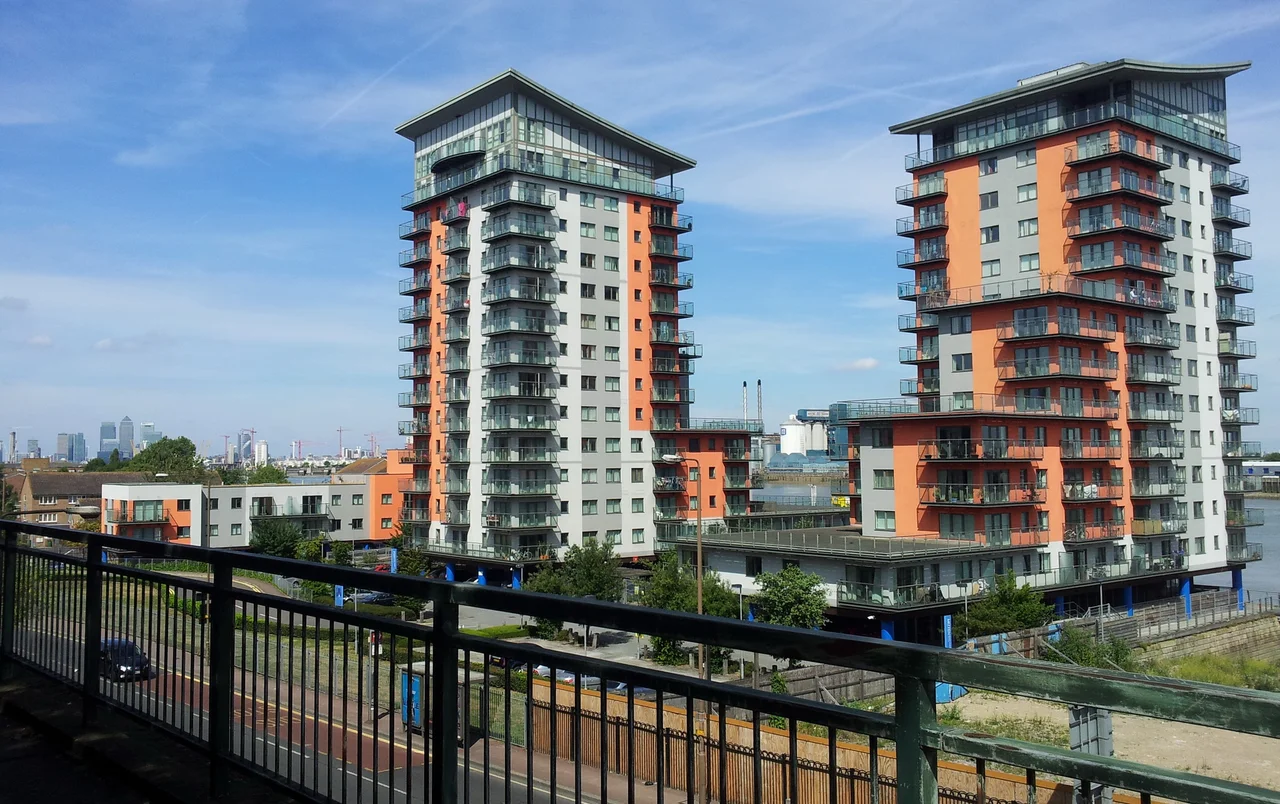

Woolwich Dockyard
William Camden called it the Mother Dock of all England. Henry VIII founded it in 1512 to build his colossal flagship Henri Grâce à Dieu, the Great Harry, and chose Woolwich because it sat on the south bank of the tidal Thames close to his palace at Greenwich and reached out to deep water. For the next three and a half centuries, the dockyard launched ships that won wars, mapped the world, sank with most of their crew aboard, and carried Charles Darwin into history. By the late seventeenth century the Thames had silted up enough to start strangling it. By 1869 the Navy had given up.
Great Harry and the Mother Dock
Walk through the surviving Georgian gates on Woolwich Church Street and you are passing the spot where, between 1512 and 1514, Henry VIII's shipwrights laid the keel of Henri Grâce à Dieu. The ship was the largest English warship of her age, deliberately built to outdo France. After that single project the new dockyard nearly stalled - the original site flooded and shipbuilding shifted further west to higher ground around a pair of older dry docks called Boughton's Docks. The Crown bought the new ground outright in 1546. By the second half of the sixteenth century the yard was launching the Elizabeth Jonas, which fought against the Spanish Armada in 1588 and was finally broken up in 1618. The 1610 launch of the Prince Royal and the 1637 launch of Sovereign of the Seas, Charles I's first-rate ship of the line, cemented Woolwich's status. By the early 1700s more ships were being launched here than from any other English yard.
The Royal George and the Beagle
Two ships built at Woolwich tell the dockyard's range. HMS Royal George, launched in 1756, was a first-rate ship of the line that capsized at her moorings at Spithead in 1782 while undergoing routine repairs. Around 800 lives were lost. It remains one of the worst single-day disasters in the history of the Royal Navy. The other ship is HMS Beagle, launched in 1820. She was a small ten-gun brig that nobody noticed at the time, and she would have been forgotten entirely except that in 1831 the Admiralty assigned her to a five-year survey voyage and gave a young naturalist named Charles Darwin space on board. The keel that Woolwich laid in 1820 ended up carrying the observations that became the Origin of Species. Between those two ships, Woolwich also launched HMS Ocean, Lord Collingwood's flagship in 1805, and in 1814 HMS Nelson, a 126-gun monster named after the admiral who had died at Trafalgar nine years earlier.
The Second Golden Age and the Clock House
By 1688 the yard's annual work was valued at £9,669, well behind Chatham's £44,940. But the first half of the eighteenth century brought a renewal. The site doubled in size, the workforce doubled with it, and many of the wooden buildings were rebuilt in brick. A huge new sail and mould loft went up alongside the Great Storehouse in 1740. Officers' houses followed in the 1750s on newly acquired land to the west. Then in the 1780s the yard doubled again, this time westwards, with two new mast ponds, vast wooden seasoning sheds for storing timber, and at the centre of it all a clock house containing the offices of every department. That clock house from 1778 still stands today as the Clockhouse Community Centre, a piece of the working dockyard absorbed into the neighbourhood it served.
Steam, Iron, and the End
From 1831 Woolwich found a second life as the Navy's specialist marine steam engineering yard. A boiler shop, brass and iron foundries, an erecting shop for assembling steam engines: all of it was integrated by 1843 into a single factory complex with one tall chimney drawing the smoke of every furnace through underground flues. Two of the eighteenth-century mast ponds were converted into steam basins where ships could moor alongside the factory while their engines and boilers were fitted. The chimney still stands. In 1852 the yard launched HMS Agamemnon, the first British battleship designed and built from the keel up with installed steam power. But the Thames kept silting up, the basins were not deep enough for the new ironclads, and after the Crimean War the writing was on the wall. Woolwich Dockyard closed in 1869, three and a half centuries after Great Harry.
What the Yard Left Behind
More than 90 percent of the site stayed with the War Office, used for army stores, harness-making, and forage compression for overseas garrisons. From 1942 to the 1960s it served as a central repair depot for the Royal Army Ordnance Corps. The western half was sold to the Royal Arsenal Co-operative Society in 1926 and the Co-op still occupies several buildings. The Royal Electrical and Mechanical Engineers left in 1966, taking the muster bell with them. The eighteenth-century guard house, the Clock House, the gateway, the rebuilt granite dry docks of the 1830s and 40s, two surviving shipbuilding slips, and the steam factory chimney all remain. The Dockyard Church by George Gilbert Scott was dismantled in 1932 and rebuilt in Eltham as St Barnabas's. In 2023 Greenwich Council ordered Comer Homes to demolish the controversial Mast Quay towers built on the site with 26 deviations from planning permission - a fight only partially resolved by January 2025, with the demolition order conditionally suspended and millions ordered in compensation.
From the Air
Woolwich Dockyard sits at 51.49 degrees N, 0.06 degrees E on the south bank of the Thames in southeast London. London City Airport (EGLC) is roughly 3 km north across the river. Approaches into EGLC pass directly overhead. From the air the surviving slipways and preserved dry docks show as dark notches in the riverbank, with the Thames Path tracing the foreshore between them.
Nearby Stories
- Hampton, London 1.1 km away
- Queenborough Castle 3.2 km away
- Groombridge Place 4 km away
- North Weald Airfield 4.9 km away
- Kings Langley Palace 8.3 km away
- White House Farm murders 11 km away
- Port Lympne Mansion 22 km away
- Amberley Museum & Heritage Centre 31 km away