
Woolwich Foot Tunnel
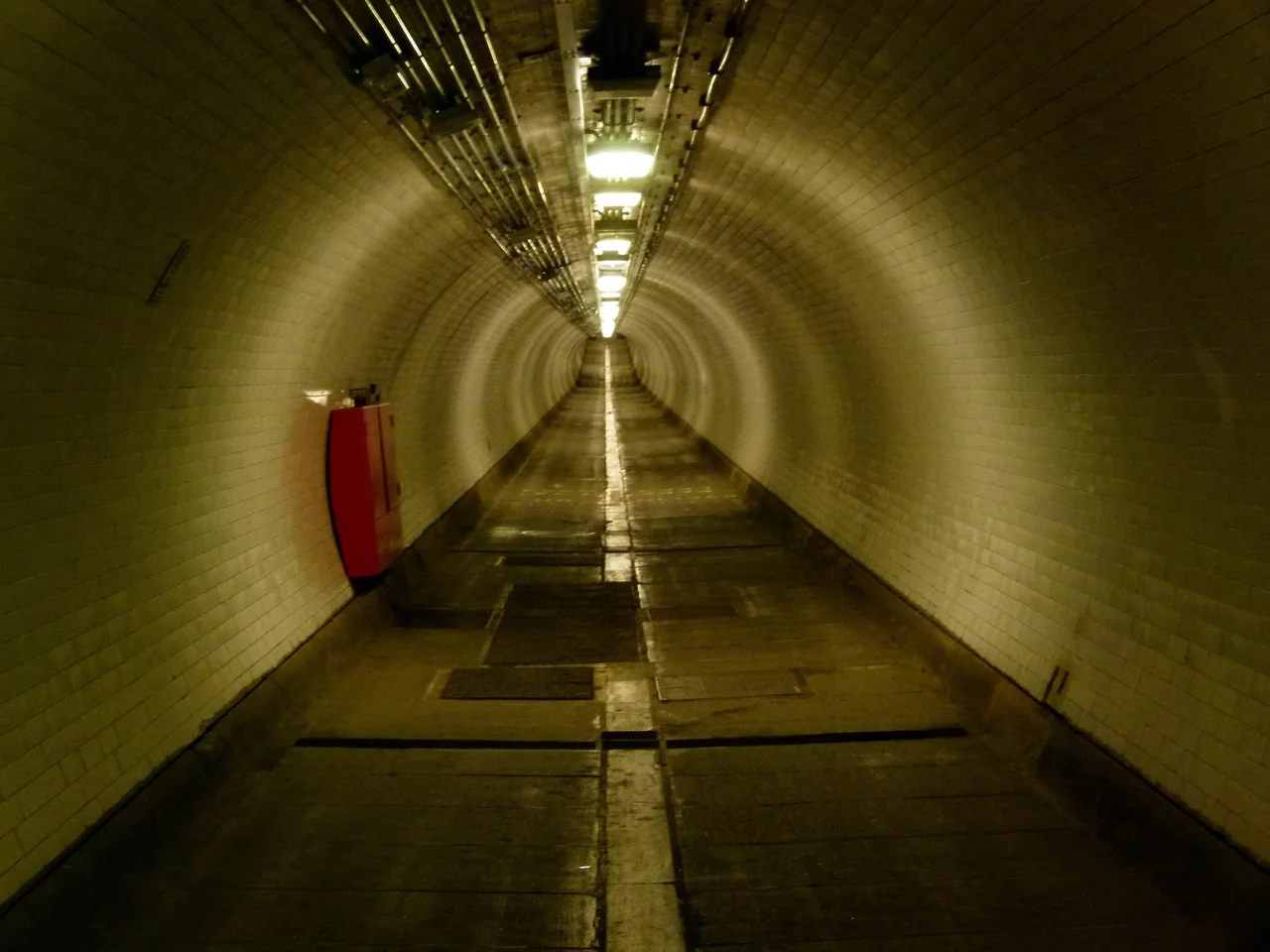
Will Crooks worked on the Thames docks before he became one of the first Labour MPs in Britain. He knew what it was like to need to be on the other side of the river when the Woolwich Free Ferry was not running, and he chaired the London County Council's Bridges Committee long enough to make sure something got built. On Saturday, 26 October 1912, Lord Cheylesmore opened the Woolwich Foot Tunnel, a 504-metre brick-lined cylinder running three metres below the riverbed of the Thames. It is still open 24 hours a day, every day. Around a thousand people walked through it each day at last count.
The Politician Who Came from the Docks
Will Crooks is the reason the tunnel exists. Born poor in Poplar, he worked in the East End docks before entering politics, eventually becoming Labour MP for Woolwich. He understood from experience that the Woolwich Free Ferry, while it ran during working hours, left people stranded after dark and on bad-weather days. The tunnel was designed by Sir Maurice Fitzmaurice and built by Walter Scott and Middleton for the London County Council. Its two entrance rotundas, north on the Newham side and south behind what is now the Waterfront leisure centre on the Greenwich side, are both Grade II listed buildings. The south rotunda is the oldest surviving building in the riverside area of Old Woolwich. Crooks did not get to ride in style. He got something more useful: a tunnel that would still be working a century later for people walking to night shifts.
Three Metres Below the Riverbed
The tunnel runs 504 metres from bank to bank under the deep-water shipping channel of the Thames. At its deepest the brick roof sits about three metres below the silt of the river bottom, with the dark mass of the river moving overhead. Stand inside and you can hear nothing of London, only your own footfalls echoing along the curved walls. The lifts at each end mean you can take a bicycle or a pushchair down, though cycling inside the tunnel itself is not permitted - cyclists are supposed to dismount and walk. The system was retrofitted in 2010 to 2011 with a leaky feeder, an antenna run along the length of the tunnel that lets mobile phones work, an upgrade no one in 1912 could have imagined needing.
The Long Closure
In April 2010 Greenwich Council started a refurbishment of both the Woolwich and Greenwich foot tunnels: new lifts, drainage, CCTV, signage. The job was meant to take less than a year. On 24 September 2010 the council closed Woolwich entirely after discovering structural weaknesses in the stairways and the tunnel itself. Reopening kept slipping. The original August 2011 target became December 2011, and even then only the stairs were open while the lifts were finished. Through the closure people did what they had done before 1912: queued for the ferry, walked the longer route around, accepted the longer journey. The Friends of Greenwich and Woolwich Foot Tunnels, known as FOGWOFT, kept pressure on the councils to finish the work. The group disbanded in March 2021 after years of stalemate over whether cycling could be allowed.
The Computer-Vision Experiment
In 2016 the council installed the Ethos Active Mobility system in both Thames foot tunnels. Cameras counted pedestrians and cyclists, measured the speed at which bikes moved through, and displayed live messages on electronic signs. Red text reading 'No cycling allowed' came on during busy periods; green text reading 'Please consider pedestrians' lit up during quiet ones. It was a small experiment in nudging behaviour in a shared space rather than enforcing a flat rule. Greenwich Council backed it. Tower Hamlets refused to update its bylaws, the sign system was discontinued, and the underlying ambiguity has never quite been resolved. Some cyclists still ride. Walking remains the only formally permitted use.
Who Uses It Now
A 2016 survey put the daily use at around a thousand people. That includes commuters who work on the Newham side at the Royal Docks or near London City Airport, residents shopping or visiting family across the river, and walkers exploring the Thames Path which crosses through here as one of its few river-spanning links in this stretch. The tunnel is one of two pedestrian crossings under the Thames - the other, the Greenwich Foot Tunnel two miles upriver, is the more famous and tourist-friendly. Woolwich is the working tunnel. The sound inside is the sound of footsteps and quiet conversation and occasionally a busker, with the river moving silently overhead and the small lift cages dropping and rising at either end.
From the Air
The Woolwich Foot Tunnel runs between 51.50 degrees N, 0.06 degrees E (north entrance, Newham) and the south entrance on the Greenwich bank. London City Airport (EGLC) lies about 1 km west of the north entrance, with approach paths passing directly over the river here. The two small circular rotundas of the entrances mark each end and are visible from low altitude as paired domed cylinders flanking the Thames.
Nearby Stories
- Hampton, London 1.1 km away
- Queenborough Castle 3.2 km away
- Groombridge Place 4 km away
- North Weald Airfield 4.9 km away
- Kings Langley Palace 8.3 km away
- White House Farm murders 11 km away
- Port Lympne Mansion 22 km away
- Amberley Museum & Heritage Centre 31 km away