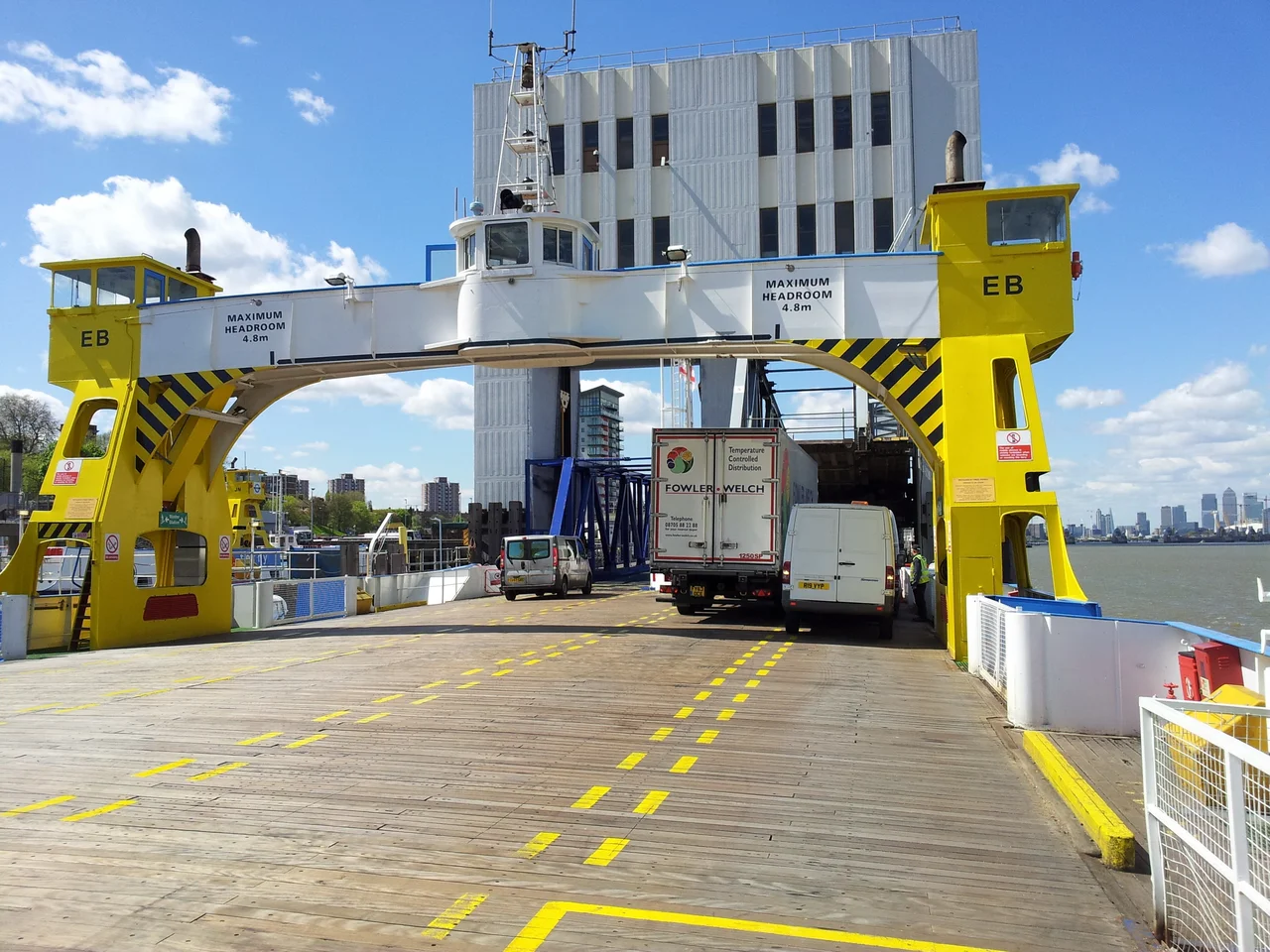

Woolwich
Henry VIII founded a dockyard here in 1512 to build the biggest warship England had ever seen. The town has not really stopped working since. A gun yard followed in the 1540s, a ropeyard in the 1570s, and from the 1650s the Board of Ordnance was proving guns in the grounds of an old riverside mansion. By 1805 King George III had given the sprawling complex its grand name: the Royal Arsenal. For most of three centuries Woolwich made the ships and the cannons and the gunpowder that ran the British Empire. When that work ended, the town hollowed out hard, and is still finding its way back.
Older Than the Wool Trade That Named It
The name probably comes from an Anglo-Saxon phrase meaning 'trading place for wool', which is more about a path through a settlement than a particular industry. But Woolwich was here long before the Saxons. Iron Age people built a defensive earthwork around a riverside settlement here sometime between the third and first century BCE, the only fortified Iron Age riverside settlement so far found in the London area, possibly an early port that mattered before London did. The Romans re-used it. A connecting path ran south to Watling Street up on Shooter's Hill. In 2015, archaeologists working ahead of the Waterfront development uncovered 76 skeletons from the late seventh or early eighth century: an early Christian Saxon burial ground, no grave goods, just the bodies of people who had lived and died on this riverbank twelve hundred years ago.
The Great Harry and the Arsenal
Henry VIII founded Woolwich Dockyard in 1512 to build Henri Grâce à Dieu, the Great Harry, the largest warship England had ever launched. From that one royal commission the town became something different. The dockyard launched Sovereign of the Seas in 1637, HMS Beagle in 1820, HMS Agamemnon in 1852. East of it, the gun yard at the Warren grew into an empire of its own. Twenty years after the Board of Ordnance was first permitted to prove cannons there in the 1650s, they bought the whole place. The Warren became a sprawl of armament factories, gunpowder magazines, foundries, laboratories, and research establishments, formally christened the Royal Arsenal by George III in 1805. The Royal Brass Foundry, opened in 1717, still stands as a Grade I listed building. The Dial Arch and the Old Royal Military Academy of 1720 and the Grand Store of 1806 to 1813 are Grade II* listed. The arsenal's apprentices, drinking together in 1886, founded a football club they called Dial Square. It became Royal Arsenal, then Woolwich Arsenal, and finally just Arsenal, a name now known worldwide.
A Garrison Town and Its Heritage
The military expanded around the riverside industries. The Royal Regiment of Artillery and the Corps of Royal Engineers were established in Woolwich in the eighteenth century. The Royal Military Academy followed, mirrored across Woolwich Common from James Wyatt's vast Royal Artillery Barracks, the longest building façade in London at 320 metres. Other military institutions filled in the picture: the Royal Herbert Hospital, the Royal Horse Infirmary, Cambridge Barracks for the Marines. By the early nineteenth century Woolwich had become, in the proper sense, a garrison town. The Royal Arsenal Co-operative Society, founded in 1868, grew into one of the biggest consumer cooperatives in the country, with department stores along Powis Street, manufacturing plants, a building society, even a funeral service. The Co-op still occupies parts of the old dockyard site.
Decline and the Slow Return
The dockyard closed in 1869. The Royal Arsenal kept going through both World Wars but contracted steadily afterwards, with most production ending in the 1960s. The Royal Artillery formally left Woolwich in 2007. With the work gone, the population that had served it left or fell into harder times, and through the late twentieth century Woolwich went through real economic and social difficulty. The town remained on the map mostly for its military history. Then in 2013 the Crossrail station broke ground here, and in May 2022 it opened as Woolwich on the Elizabeth line, putting the town less than fifteen minutes from Canary Wharf. The DLR had arrived in 2009. Woolwich Polytechnic, the institution that became Thames Polytechnic and then the University of Greenwich, has come back in scaled form, its drama school now based in the Bathway Quarter.
What Still Stands
Walk along the river path and the working past is still here in stone. The eighteenth-century clock house at the dockyard, now a community centre. The 1840s dockyard chimney as a landmark on the skyline. The round south entrance of the Woolwich Foot Tunnel from 1912. The Thames Barrier just to the west, modern Britain's monument to the river. The Royal Arsenal complex, much of it restored, with Verbruggen House and the twin pavilions of Laboratory Square dating from 1696, the oldest structures on the site. Beresford Square's market, chartered in 1618 and tolerated illegally for half of the nineteenth century until it was legalised in 1879. A large mural by the artist Michael Craig-Martin tiled across one of the entrances to Woolwich Arsenal DLR station. The town is rediscovering itself, slowly, as one of the most heritage-dense corners of working London.
From the Air
Woolwich sits at 51.49 degrees N, 0.07 degrees E on the south bank of the Thames in the Royal Borough of Greenwich, about 14 km east of Charing Cross. London City Airport (EGLC) lies 3 km north across the river, with frequent approach paths passing overhead. From the air Woolwich is identifiable by the bend in the Thames, the long line of the Royal Arsenal complex, and the silver fins of the Thames Barrier just downstream of the town centre.
Nearby Stories
- Hampton, London 1.1 km away
- Queenborough Castle 3.2 km away
- Groombridge Place 4 km away
- North Weald Airfield 4.9 km away
- Kings Langley Palace 8.3 km away
- White House Farm murders 11 km away
- Port Lympne Mansion 22 km away
- Amberley Museum & Heritage Centre 31 km away