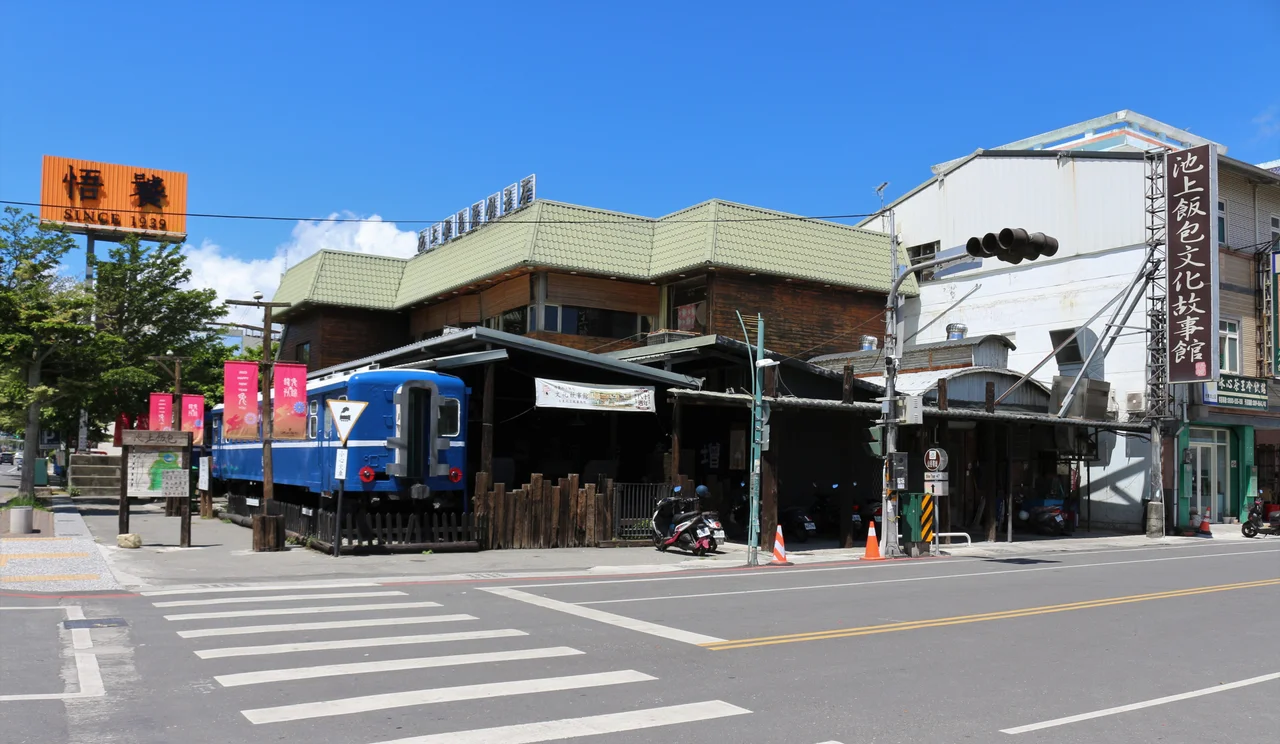

Wu Tao Chishang Lunch Box Cultural History Museum
Few meals in Taiwan carry as much cultural freight as the Chishang bento. Since the 1930s, travelers on the mountain railway reaching Chishang Station would lean out train windows — or sprint along the platform — to grab a lacquered box packed with the region's prized rice, a slice of braised pork, pickled vegetables, and a glistening egg. The Wu Tao Chishang Lunch Box Cultural History Museum, opened in 2002, is where that tradition comes to explain itself.
A Box That Became a Legend
Chishang sits in Taiwan's East Rift Valley, cradled between the Central Mountain Range to the west and the Coastal Range to the east. The valley's mineral-rich irrigation water, wide day-to-night temperature swings, and clean mountain air produce rice widely regarded as Taiwan's finest — a grain with a natural sweetness and firm, slightly sticky texture that holds together beautifully in a bento box. When Japanese colonial administrators extended the railway into this remote valley in the early twentieth century, local vendors quickly understood the opportunity. Trains stopped at Chishang, passengers got hungry, and the perfect rice was already there. The lunch box was almost inevitable. It became so closely identified with the station that Chishang bentos entered the national food lexicon as a distinct category, not just a meal but a memory of travel.
Two Carriages and a Second Floor
The museum building itself offers a first surprise before you even go inside: parked at the entrance are two vintage rolling stock cars, weathered to a warm rust-and-cream, that serve as an outdoor foyer. They anchor the experience immediately in the railway era — the particular world in which the bento box mattered most. Step past them and upstairs, and the second floor opens into the museum proper, devoted to the culture of Chishang rice. Photographs, packaging, and artifacts trace the evolution of the lunch box from simple wooden containers to the cheerful plastic trays of the postwar decades. The museum was established jointly by the Chishang Township Office and local lunchbox vendors, a collaboration that keeps living practitioners connected to the historical record. The building also functions as a working restaurant, so visitors can eat a proper Chishang bento on-site — history made edible.
Rice as Identity
To understand why a lunch box merits a museum, it helps to understand what Chishang rice means to people who grew up eating it. Taiwan's National Rice Quality Competition has recognized Chishang rice repeatedly over the decades. Farmers here have resisted shortcuts — the paddy fields visible from the train window are managed with a care that borders on the ceremonial. The museum makes this argument visually, tracing the agricultural roots beneath every bento. A box of rice is not just calories; it is a specific place, a specific watershed, a specific season. The Chishang bento compressed all of that into something you could hold in one hand while watching the green valley scroll past the train window.
Arriving on Foot from the Station
The museum sits within easy walking distance southeast of Chishang Station on the Taiwan Railways network, which feels exactly right. The short walk from the platform retraces the steps of generations of vendors who would carry stacks of boxes to meet arriving trains. Today the station area is quieter — the frantic platform commerce has mostly moved indoors — but the geography still makes sense of the story. Chishang Township is a gentle, agricultural place, and arriving on foot through the surrounding paddies and small streets puts visitors in the right frame of mind before they reach those two old train cars waiting at the museum entrance.
From the Air
The Wu Tao Chishang Lunch Box Cultural History Museum sits at approximately 23.124°N, 121.221°E in Chishang Township, deep in Taiwan's East Rift Valley. At 3,000–5,000 feet, the valley's geometry becomes clear — a narrow green corridor flanked by two parallel mountain ranges, with the Xiuguluan River system glinting to the south. The nearest airport is Taitung Airport (RCFN), roughly 30 kilometers to the southwest. Approach from the south along the valley gives the best orientation: the flat paddy fields of Chishang appear in contrast to the steep ridgelines on both sides. Visibility is often excellent in the dry season (October–April); typhoon season (June–September) brings cloud cover and turbulence over the mountain ranges.
Nearby Stories
- Peinan Site Park 6.4 km away
- 1941 Chungpu Earthquake 11 km away
- Yujing District 12 km away
- Fo Guang Shan Buddha Museum 18 km away
- Yushan 19 km away
- 1951 East Rift Valley Earthquakes 58 km away
- 2021 Hualien Train Derailment 123 km away
- Mavulis Island 196 km away