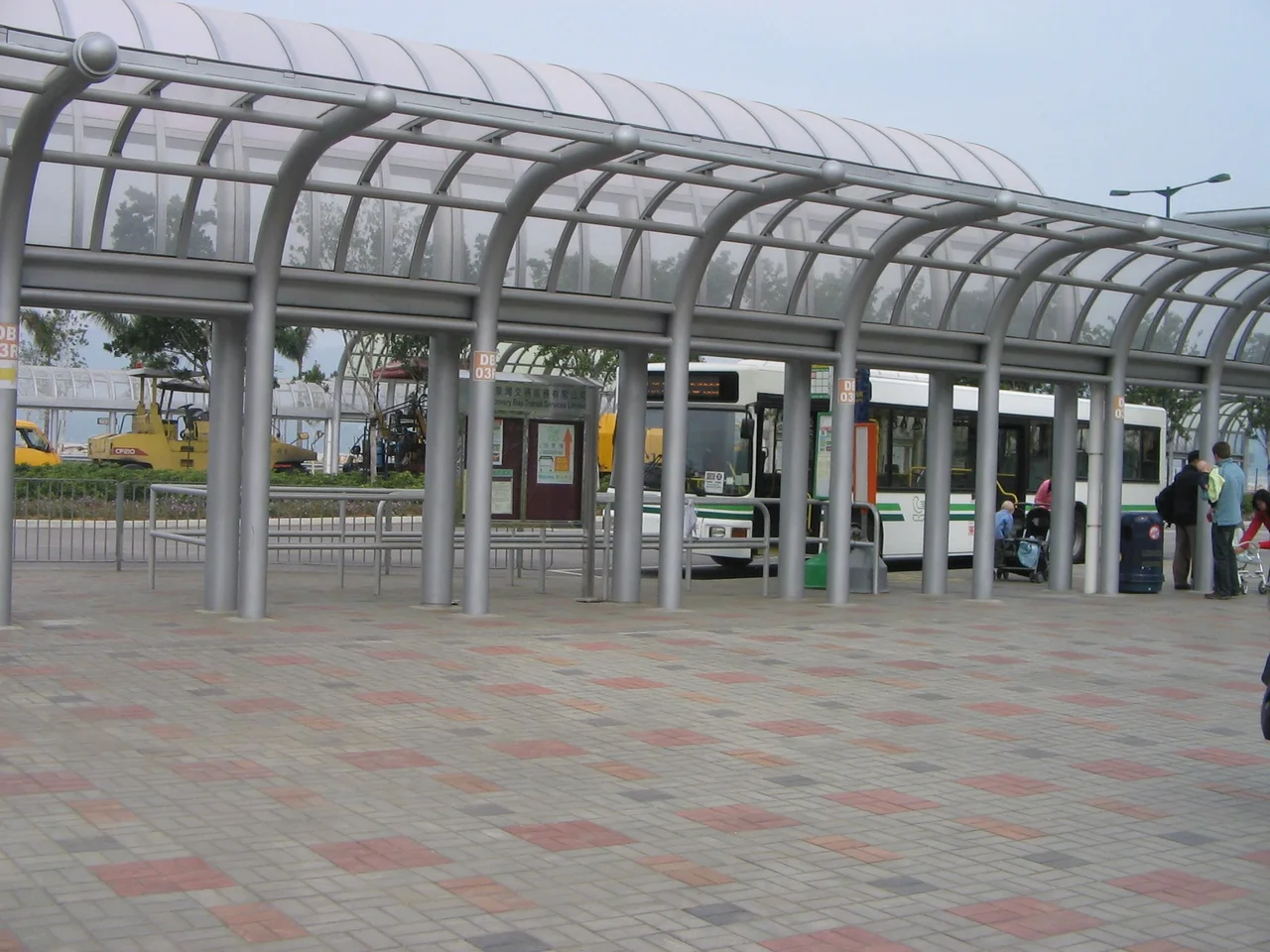

Yam O
The name meant darkness — or more precisely, the shadowed north face of a hill. For centuries, Yam O sat quietly on the northeast coast of Lantau Island, its Cantonese name carrying the same character as the yin of yin-yang: 陰, shade, the cool side, the place where direct light does not reach. Then Disney arrived, and the Hong Kong government decided darkness was no name for a tourism gateway. The bay became Sunny Bay. The linguistic debate that followed — over whether the renaming erased genuine geographical meaning — outlasted the controversy over the theme park itself. Yam O's story is, in the end, a story about what places are called and who gets to decide.
Timber on Stilts
Before reclamation changed its shoreline, Yam O held a distinction that set it apart from every other bay in Hong Kong: it was the territory's only natural timber preservation zone. Lumber was stored on stilts above the water, where the salt air and shade inhibited decay while keeping the wood accessible for use. The practice gave the bay a visual character unlike anywhere else — wooden beams and planks elevated above the tidal margin, reflected in the still water. Even after development transformed much of the surrounding area, travellers passing through Yam O could still glimpse remnants of this arrangement: natural lumber on stilts persisting as an echo of a working bay that pre-dated the MTR, the theme park, and the reclaimed land that now defines the area.
The Plans That Changed the Shore
Hong Kong's rapid expansion in the late twentieth century caught up with Yam O through a series of strategic plans. In 1989, the Port and Airport Development Strategy — known as PADS — identified the bay as a candidate for reclamation to support ancillary port facilities. That particular plan did not proceed immediately, but the principle of reclaiming the bay remained alive in government thinking. When Hong Kong Disneyland was proposed for nearby Penny's Bay on Lantau, the northeast shore needed a transit node: somewhere passengers could transfer between the MTR's Tung Chung Line and the dedicated Disneyland Resort Line. Yam O, with its sheltered position and proximity to the development site, was the answer. The bay was reclaimed in the 2000s under the Northeast Lantau Development Strategy, and Sunny Bay station rose on the new land.
The Renaming and Its Discontents
The Hong Kong government's decision to rebrand Yam O as Sunny Bay provoked genuine pushback from residents and Chinese language scholars. The objection was not merely sentimental. According to the classical Chinese text Shuowen Jiezi — one of the earliest systematic analyses of Chinese characters — yam (陰) in geographical usage originally described a specific topographical condition: the north side of a hill, or the south side of a body of water. It was a precise geographical term, not a mood. Renaming the location because its Cantonese sound matched the yin of yin-yang — and because yin might seem inauspicious to a theme park audience — struck critics as a misreading of the character's meaning and a subordination of local culture to commercial calculation. Disney, for its part, preferred a name that translated as happy rather than dark. The station opened as Sunny Bay. The bay lost its old name on the maps, though not in the memory of those who knew it.
Hub of the Northeast Shore
Whatever one makes of the renaming, Sunny Bay station has become a genuine transit interchange. It serves the Disneyland Resort Line to Hong Kong Disneyland and functions simultaneously as a connection point for Discovery Bay residents, with bus routes DB03P and DB03R linking the station to that community on Lantau's north coast. After the Hong Kong–Zhuhai–Macao Bridge opened, Citybus Route B5 was introduced to serve travellers needing to connect at Sunny Bay for onward destinations, and the route observes Hong Kong Disneyland during designated periods. The station anchors a corner of Lantau that has transformed more rapidly than almost any other part of the island — from a quiet bay with stilted timber to one of Hong Kong's busiest transit transfer points in the span of a few decades.
From the Air
Yam O lies at approximately 22.3293°N, 114.0230°E on the northeast shore of Lantau Island, roughly 4 km north of Hong Kong Disneyland and Penny's Bay. The nearest major airport is Hong Kong International Airport (VHHH), approximately 8 km to the northwest — making this bay one of the closest populated areas to the airport. At 1,000–2,000 feet approaching from the north, the reclaimed land of Sunny Bay station is visible as a flat projecting apron on the Lantau shoreline, with Tung Chung to the west and the Ma Wan Channel to the east.
Nearby Stories
- Chapel of St. Francis Xavier 3.5 km away
- Cuiheng 4.1 km away
- 2015 Shenzhen Landslide 16 km away
- Shunde 31 km away
- Wanshan Archipelago 37 km away
- Nanxiong Formation 96 km away
- Heyuan 149 km away
- Checheng Fu'an Temple 629 km away