.jpg)
Yeager Airport
Yeager Airport sits on a flattened ridge top 947 feet above the Kanawha Valley, the kind of strip a pilot remembers because the ground falls away abruptly at both ends. The crews who built it in the 1940s removed something like 9 million cubic yards of dirt to flatten the mountain. Today the runway ends in beds of crushable concrete - Engineered Materials Arresting System, an FAA-mandated equivalent to the 1,000 feet of runway safety area the airport simply does not have room for. Most travelers do not know any of this. They notice the name. The airport is named for a Lincoln County farmboy who became the first pilot to break the sound barrier.
A Runway on a Mountaintop
Charleston's original Wertz Field closed during World War II when the federal government built a synthetic rubber plant across its approach path. The city began work on a replacement in 1944 - not down by the river where flat land was scarce, but on top of Coonskin Ridge east of downtown. Construction crews dynamited and graded the ridge into a usable 6,715-foot runway, then opened the airport in 1947 as Kanawha Airport. American Airlines started service in December. The Tucker and Silling-designed terminal followed in 1950. The mountaintop site solved one problem and created others, mostly to do with not running out of pavement, which is why both ends of the runway now feature EMAS beds that will crush under a heavy aircraft and bring it to a controlled stop.
Named for the Right Pilot
In 1985 the airport took the name of Chuck Yeager, who grew up in Hamlin in nearby Lincoln County. On October 14, 1947 - the same year Kanawha Airport opened - Yeager flew the Bell X-1 to Mach 1.06 over Muroc Dry Lake in California, becoming the first human to fly faster than sound. He flew with two broken ribs from a horseback riding accident he had hidden from his commanders. The airport renaming put a West Virginia pilot's name on the West Virginia ramp where his career might have started. In 2021 the board added International to the title - West Virginia International Yeager Airport - after the U.S. Customs Building came online to handle cross-border general aviation.
The 130th Airlift Wing
The military side of the field hosts the 130th Airlift Wing of the West Virginia Air National Guard, an Air Mobility Command-gained unit flying eight C-130 Hercules transports. The C-130 is the kind of aircraft that makes a Charleston airport useful far beyond Charleston - troops, equipment, and humanitarian relief have flown out of Yeager to deployments around the world. In 2008 the airport closed its short secondary runway 15-33 to build more hangar space for additional C-130s and to expand the general aviation area. The boom of a Hercules engine in run-up is part of the ambient soundtrack for anyone living east of downtown.
Hard-Earned Lessons
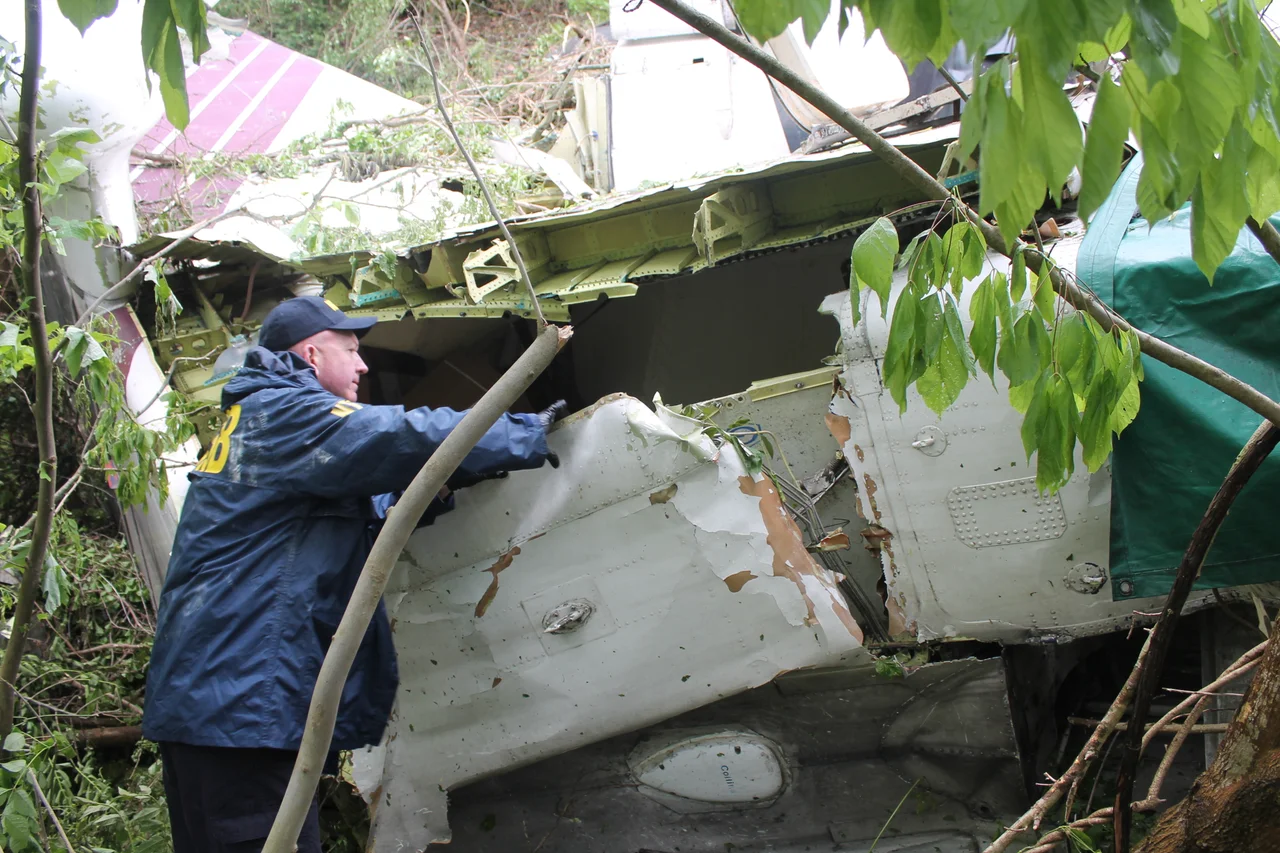
A mountain airport accumulates its share of accident history. In 1959 a Capital Airlines Constellation skidded down an embankment after a landing groundloop, killing two of 44 on board. In 1968, Piedmont Airlines Flight 230 hit trees on a fog-shrouded ILS approach to Runway 23 and crashed short of the threshold; 35 of 37 people aboard died. In 2010, a PSA Airlines CRJ-200 overran the runway on a rejected takeoff and was caught safely by the new EMAS - exactly what the system was designed for. In 2015 a landslide tore away part of the Runway 5 overrun, depositing dirt and debris into the valley below. In 2017 an Air Cargo Carriers Short 330 cartwheeled off Runway 5 on a circling approach, killing both pilots. The flight crew Johnathan Alvarado and Anh K. Ho left behind families in Texas and West Virginia. Each accident has shaped how pilots brief Yeager - the EMAS, the displaced thresholds, the steep drop-offs, and the standing reminder that landing on a mountain top requires its own kind of patience.
From the Air
ICAO KCRW, IATA CRW. Located at 38.376 N, 81.593 W on Coonskin Ridge about 3 miles east of downtown Charleston, West Virginia. Field elevation 947 feet MSL. Single runway 5/23, 6,715 feet asphalt, with Engineered Materials Arresting System beds at both ends. Home to the 130th Airlift Wing's C-130 Hercules fleet. The mountaintop location with abrupt drop-offs makes for dramatic approaches; expect tight pattern work and respect the EMAS displaced thresholds. Best viewed from cruising altitude on clear days, when the runway plateau stands out against the surrounding forested ridges.
Nearby Stories
- Mystery Hole 6.5 km away
- West Virginia Colored Children's Home 9.4 km away
- Clay, West Virginia 13 km away
- Staats Mill Covered Bridge 14 km away
- Hobet Coal Mine 23 km away
- Appalachia 23 km away
- Fred M. Vinson Museum and Welcome Center 30 km away
- Ponn Humpback Covered Bridge 43 km away