
Yerba Buena Island
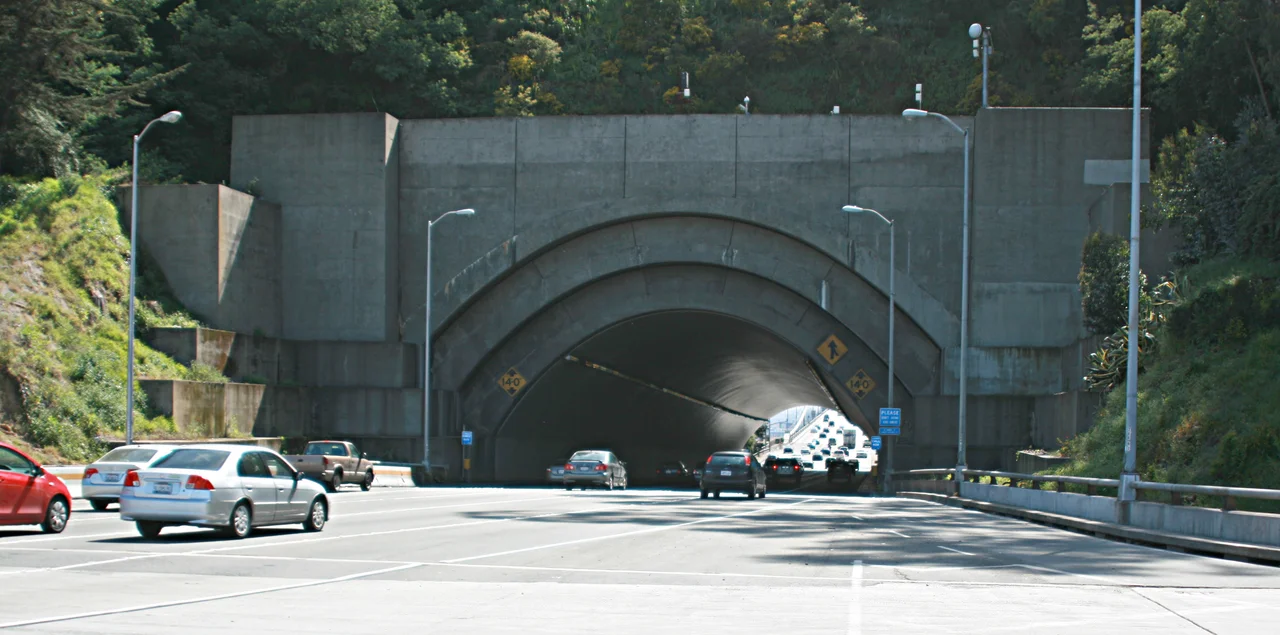
The Bay Bridge threads through the center of Yerba Buena Island via a tunnel that separates the western and eastern spans, and most of the millions of drivers who pass through each year never give the island a second thought. But Yerba Buena has lived more lives than almost any piece of land in the Bay Area. It was an Ohlone fishing village called Tuchayune. It was a refuge for goats during the Gold Rush. It was a Civil War-era fortress, a torpedo station, and a naval training base. Admiral Chester Nimitz died here in 1966. Now it is becoming an 8,000-unit residential neighborhood, the latest chapter in a story that stretches back centuries.
The Good Herb Island
The island's name comes from yerba buena -- literally 'good herb' in Spanish -- referring to Clinopodium douglasii, a native mint-family plant that grew abundantly around the bay. The name first appeared on a 1775 chart by Ayala, though the island was initially labeled 'Isla de Alcatraces' for its abundant pelicans (that name eventually migrated to the neighboring rock). During the Gold Rush, goats were pastured on the island in such numbers that it became known as Goat Island, a name that stuck officially from 1895 until 1931, when the U.S. Board on Geographic Names restored the original. Richard Henry Dana mentioned anchoring near it in Two Years Before the Mast, noting the 'small island, called Yerba Buena' and the gravel beach in a cove of the same name.
Military Island
Fear of Confederate raiders during the Civil War prompted plans for a military post on the island, though it was not completed until the 1870s. An octagonal lighthouse was built in 1875. In 1891, the Army Corps of Engineers constructed a torpedo station -- the 'torpedoes' being floating mines that could be deployed via cable to defend the bay against enemy ships. The building still stands today, hidden under the Bay Bridge, listed on the National Register of Historic Places. Just before 1900, the Navy established its first Pacific Coast training station on the island's northeast side. Quarters One, built around 1900 in Classic Revival style, later became the residence of Admiral Nimitz, who moved there in 1963 and died there three years later. His funeral was held at the base chapel on adjacent Treasure Island.
From Naval Base to Neighborhood
Treasure Island, built on the shoals of Yerba Buena Island as a WPA project in the 1930s, hosted the 1939 Golden Gate International Exposition before the Navy commandeered it for World War II. After the war, the combined Yerba Buena-Treasure Island installation continued as a naval station until decommissioning in 1996. In 2011, San Francisco's Board of Supervisors approved a 20-year development plan for up to 8,000 residences, with 25 percent designated as affordable housing. A 69-foot sundial sculpture by Hiroshi Sugimoto opened on a Yerba Buena hilltop in 2023. The island that has been an Ohlone fishing ground, a goat pasture, a torpedo station, and an admiral's final home is becoming something it has never been before: a neighborhood.
From the Air
Yerba Buena Island sits at approximately 37.81N, 122.36W in the center of San Francisco Bay, connected by the Bay Bridge tunnel. The island is clearly visible from any approach to the Bay Area. Nearest airports: KOAK (5nm east), KSFO (12nm south). Best viewed at 2,000-4,000 ft AGL.
Nearby Stories
- Rockaway Beach, Pacifica, California 2.1 km away
- The Sixpence in the Soil 4.5 km away
- Niles Canyon Railway 9.4 km away
- The Last Five-Cent Fare 12 km away
- From Ammunition Bunkers to Cattle Country 13 km away
- The Hole in the Head 18 km away
- Cordell Bank: The Invisible Island 35 km away
- ʻAkaka Falls State Park 3673 km away