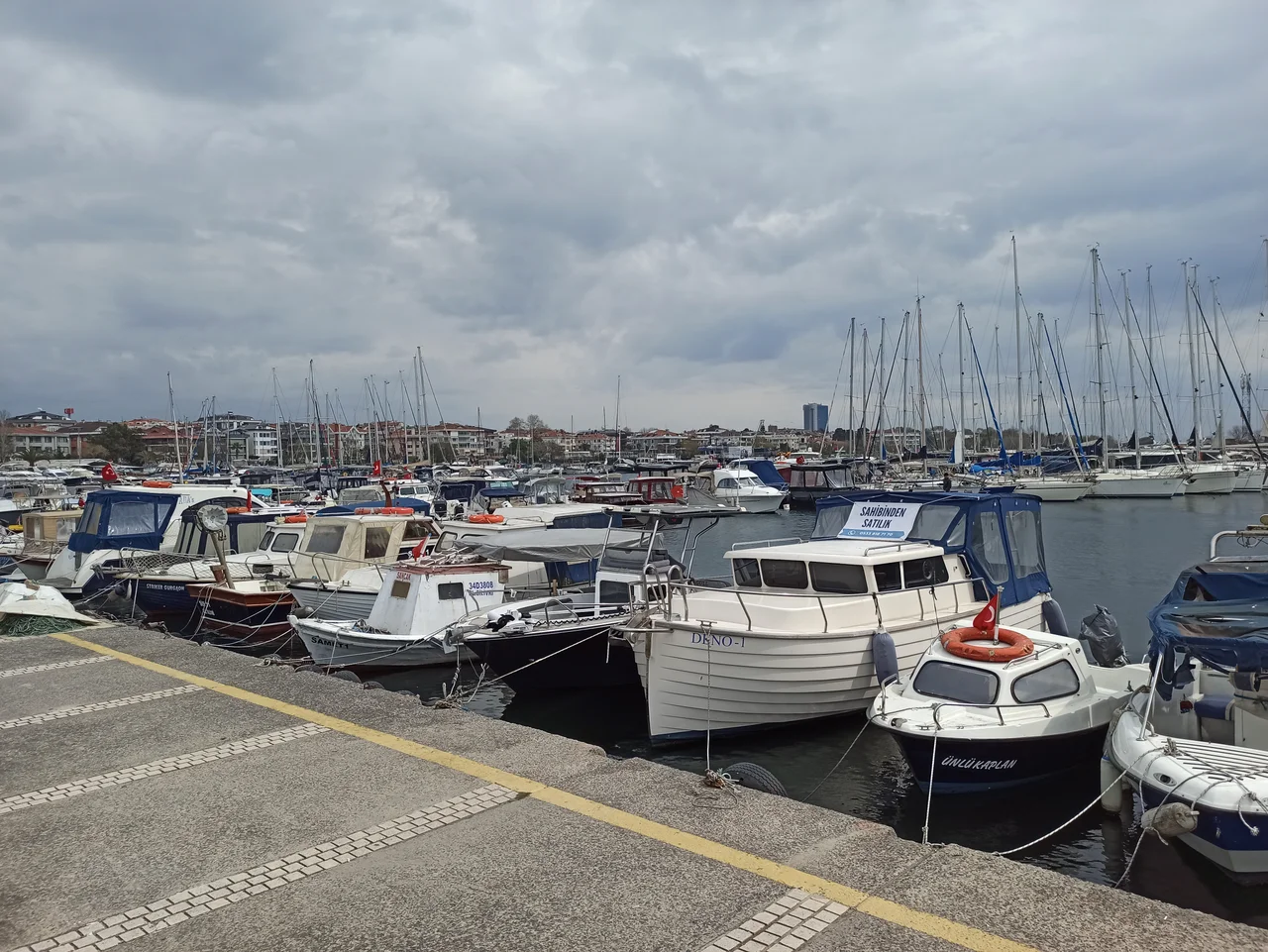

Yeşilköy
The name changed in 1926, and it took history with it. Before that year the place was called San Stefano — a name that carried the weight of a treaty signed there in 1878 after Russian troops reached the edge of Constantinople, a monument built to the Russian dead, and a film made of that monument's demolition. The renaming to Yeşilköy, meaning Green Village in Turkish, was practical and symbolic at once, part of the broader Turkification of place names after the founding of the Republic. But the new name is genuinely apt: Yeşilköy lies along the Marmara shore 11 kilometers west of Istanbul's historic center, and it is, in fact, green — gardens, sea breezes, the quieter pace of a neighborhood that was once a summer resort for Constantinople's upper classes and still carries something of that ease.
A Name Born from a Storm and a Legend
The original name San Stefano traces to a legend from the early thirteenth century. After the crusaders of the Fourth Crusade sacked Constantinople in 1204, a ship carrying the relics of Saint Stephen to Rome was forced to put in here during a storm. The relics rested in a local church until the weather calmed, and the church — and then the village — took the saint's name. It is the kind of origin story that accumulates to places over centuries, part fact, part devotion. The name held for seven hundred years before the new Republic replaced it. The writer Halit Ziya Uşaklıgil, who lived in the village at the time, is credited by local tradition with proposing the replacement name Yeşilköy. He was a novelist, a stylist, and he apparently had opinions about what a village beside the sea should be called. Green Village it became.
Resort, Diplomacy, and the Weight of 1878
By the late nineteenth century, San Stefano had become the favored coastal retreat of Constantinople's upper classes — Turks, Greeks, Armenians, Levantines of Italian and French descent, all drawn by the Marmara shore and the relative cool of the sea breezes. The first railway station here opened in 1871, connecting the village to the city by the suburban line to Sirkeci and accelerating its popularity as a resort. Into this fashionable backdrop came war. The Russo-Turkish War of 1877–1878 ended with Russian troops standing at San Stefano, close enough to see the minarets of Constantinople. The peace treaty signed in the village in March 1878 imposed severe terms on the Ottoman Empire — terms subsequently revised at the Congress of Berlin, but the military and psychological shock of Russian armies on the Bosphorus was not revised away. The Russian Empire then built a monumental memorial on a hill above the village, which stood until 1914, when it was demolished as the Ottomans entered World War I. British bombs reached Yeşilköy during that war as well. The resort had become a place where history arrived uninvited.
A Village of Many Churches
Yeşilköy carries its religious diversity in stone. The Greek Orthodox Church of Agios Stephanos — Saint Stephen, the village's original patron — stands on Mirasyedi Sokak, its current structure built in 1845 incorporating parts of an earlier Byzantine-era church. The building collapsed in the earthquake of 1894 and was rebuilt, and the congregation still gathers on 26 December each year for the Thysias, the feast of the saint. Nearby, an aghiasma — a sacred spring — dedicated to Aghia Fotini dates to the Byzantine period, tucked into the basement of a house along a covered pedestrian street. There is also the Surp Stepanos Armenian church, the Santo Stefano Roman Catholic church serving the old Levantine community, and the Mecidiye Mosque. Most recently, in 2023, the Mor Ephrem Syriac Orthodox Church opened here — the first new church built in Turkey since the founding of the Republic, consecrated in the same neighborhood that once housed all these other congregations. Yeşilköy has always been a place where different communities built their places of worship in proximity. That fact has not changed.
The Airport That Carried the Village's Old Name
For much of the twentieth century, Yeşilköy was synonymous with aviation in Istanbul. What became Istanbul Atatürk International Airport began as the Yeşilköy Airport, and for decades the neighborhood's name appeared on the departure boards of airlines worldwide. The airport closed to commercial flights in 2019 when the new Istanbul Airport (LTFM) opened to the north. Turkish Airlines still maintains its headquarters on the airport property. The Marmaray commuter rail line now connects Yeşilköy to both sides of the city, running between Gebze and Halkalı, continuing a tradition of transportation links that goes back to that 1871 suburban railway station. The marina at Yeşilköy Burnu and the sandy beaches remain. The population is around 25,000 (as of 2022). It is still a neighborhood that people choose for the shore, for the relative quiet, for the gardens — the things that drew Constantinople's upper classes a century and a half ago.
From the Air
Yeşilköy sits at approximately 40.959°N, 28.822°E on the European shore of the Sea of Marmara, about 11 km west of central Istanbul. The former Istanbul Atatürk Airport (LTBA) occupies the ground immediately to the north — the runway complex is unmistakable from the air and orients the approach to the neighborhood. At 1,500–3,000 feet from the south over the Marmara, the coastline, marina, and church spires of Yeşilköy are clearly visible. LTFM (Istanbul Airport) lies approximately 25 km to the northeast. The Marmara Sea is calm and usually visible in clear conditions; the Sea of Marmara shelf here is shallow and the water near shore often shows an aquamarine cast.
Nearby Stories
- Istanbul Canal 5 km away
- Polonezköy 8.1 km away
- MV Struma 8.9 km away
- Sea of Marmara 11 km away
- HMAS AE2 42 km away
- Bandırma 75 km away
- Sangarius Bridge 101 km away
- Edirne 135 km away