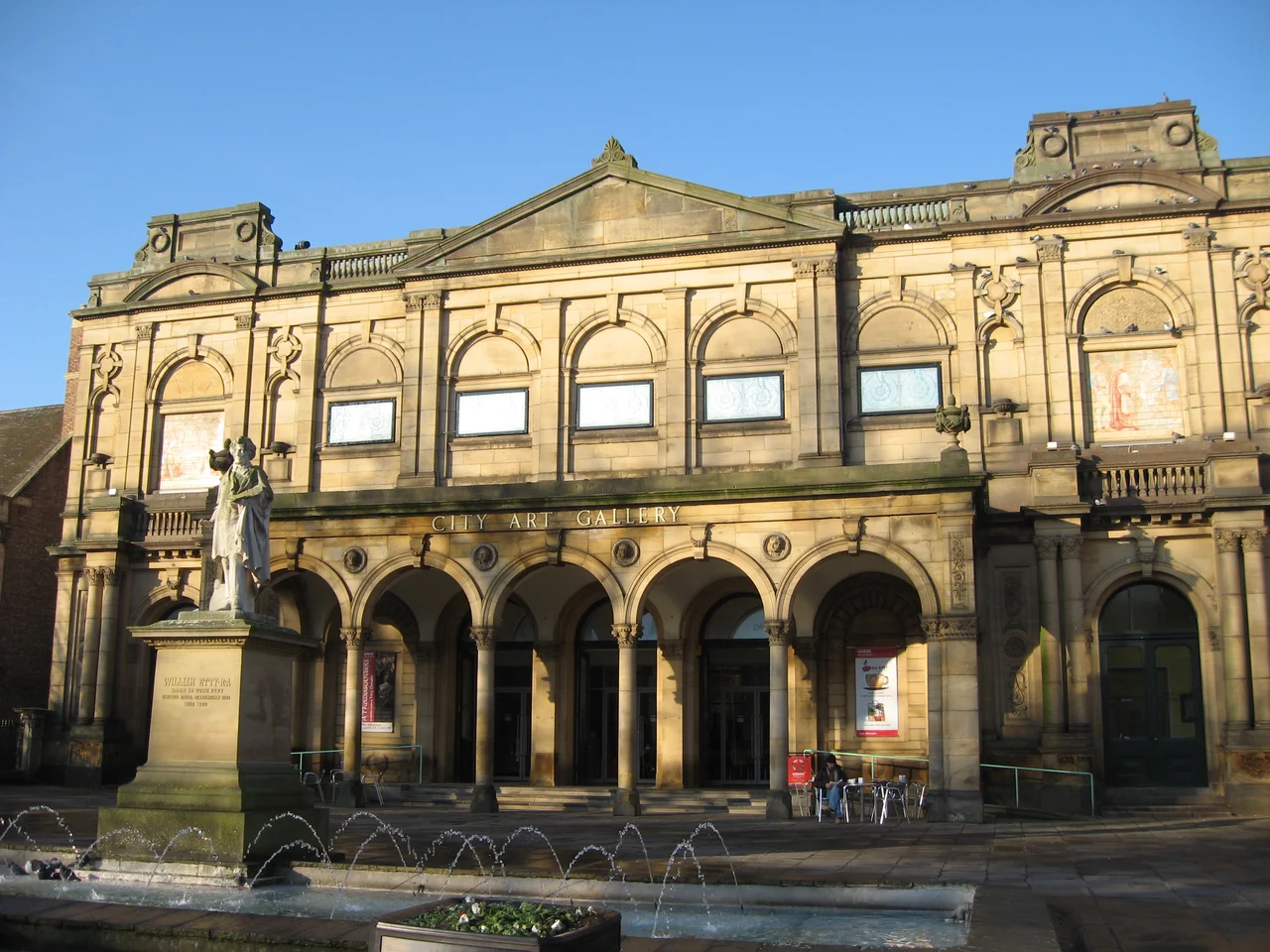

York Art Gallery
In the summer of 1866, an exhibition tent on the grounds of the Bootham asylum drew over 400,000 visitors to look at fine art and industry. It made the organisers £1,866 in profit - the year and the sum a curious coincidence. They voted at a committee meeting the following April to spend that surplus on a permanent building, and 13 years later York had an art gallery. A century and a half on, that gallery holds more British studio ceramics than any other in the country, and is still puzzling over how to balance free entry against keeping the lights on.
Italian Style, English Stone
The gallery building opened on 7 May 1879, designed by a York architect named Edward Taylor. Between 1874 and 1878 he produced 189 drawings, watercolours, and sketches working out what the building should look like - moving from an 'Elizabethan' style to an 'Italian' one, neither fully realised in the result. The hall was meant to last only three years. York City Council bought it in 1892, and the gallery settled into being permanent. In 1888 the north wing was leased to York Art School (which added another storey in 1905). The school eventually moved on, and the wing housed the city archives from 1977 to 2012. William Etty - York-born, a successful 19th-century painter of nudes that scandalised some and delighted others - got a major exhibition here in 1911, and his statue by local sculptor George Walker Milburn was erected outside the gallery the same year. He is still there.
Bombs and Burglars
The 20th century gave the gallery two violent interruptions. On 29 April 1942, the building was hit during the Baedeker Blitz - the German bombing raids targeting historic English cities listed in the Baedeker travel guide as worth seeing. York Art Gallery was already closed and requisitioned for military use. The bomb damage was repaired after the war. In January 1999, the gallery was robbed at gunpoint. Staff were tied up and threatened; paintings worth over £700,000 were stolen. The main perpetrator, Craig Townsend, was arrested by armed police at an arranged meeting with an art dealer who was supposed to fence the paintings. He got 14 years at York Crown Court in February 2000. Separately, a 15th-century Nuremberg School altar panel stolen from the gallery in 1979 was finally recovered nearly 45 years later, when an auction house in Dorchester spotted it in a Southampton house contents sale in 2023 and matched it against the Art Loss Register.
The Ceramics
What sets York Art Gallery apart from other regional galleries is the studio pottery collection - over 5,000 pieces of British studio ceramics, the largest such collection in the country. The names are the canon of 20th-century pottery: Bernard Leach, Shoji Hamada, William Staite Murray, Michael Cardew, Lucie Rie, Hans Coper, Jim Malone, Michael Casson. The collection was built around two major bequests - W.A. Ismay (a Wakefield librarian who spent his salary on pots and donated them at his death) and Henry Rothschild. The upper floor of the gallery, opened after the 2015 refurbishment, displays the ceramics in soft natural light. They are arranged thematically rather than chronologically, and you can walk through a century of British pottery in twenty minutes - or stop in front of a single Lucie Rie bowl and not move for ten.
Paintings
The painting collection is small by London standards and remarkable by any other: over 1,000 works ranging from 14th-century Italian altarpieces through 19th-century French pre-Impressionists to mid-20th-century British modernism. Annibale Carracci's early 17th-century Portrait of monsignor Giovanni Battista Agucchi is among the older pieces. There are vedutas by Bernardo Bellotto, Camden Town Group paintings around Walter Sickert, work by Paul Nash, L.S. Lowry, and Ben Nicholson. The William Etty holding is the largest anywhere. Harland Miller - the York-born contemporary artist whose 'Bad Weather Paintings' parody Penguin book covers with comic gloom about northern England - had a celebrated 2020 show here ('York, So Good They Named it Once') and donated three new versions of the series in 2025. The gift-shop posters from that 2020 show were resold online for up to £1,000.
The Charging Question
The gallery has gone back and forth on admission fees more than most British museums. It charged before COVID. It went free after the first lockdown in 2020. A 2023 review found that free entry was costing £200,000 a year in lost income, and in January 2024 the gallery announced it would charge again. The decision triggered local debate about whether art should be a public good or pay its way. Visitor numbers had been strong - the gallery won Visit York's Visitor Attraction of the Year for 2016, Kids in Museums' Family Friendly Museum Award the same year, and received a special commendation from the European Museum of the Year jury in 2017. In 2025 it added another Visit York award, for Event, Festival or Cultural Experience of the Year. The 2013-15 restoration that increased display space by 60% cost £8 million. Keeping it open keeps costing.
From the Air
York Art Gallery stands at 53.963°N, 1.086°W on Exhibition Square, immediately east of the Museum Gardens and within sight of York Minster. From altitude, look for the gallery's classical facade beside the open square, with the medieval city walls and Bootham Bar to the immediate north. Leeds Bradford (EGNM) is about 22 nm southwest. The gallery sits in the same museum precinct as the Yorkshire Museum and the ruins of St Mary's Abbey, all within a few minutes' walk of each other.
Nearby Stories
- Scampston Hall 3.5 km away
- Salts Mill 4.7 km away
- Newburgh Priory 6 km away
- Brodsworth Hall 6.2 km away
- Coverham Abbey 16 km away
- RAF Leconfield 17 km away
- Macclesfield Canal 27 km away
- RAF Scampton 35 km away