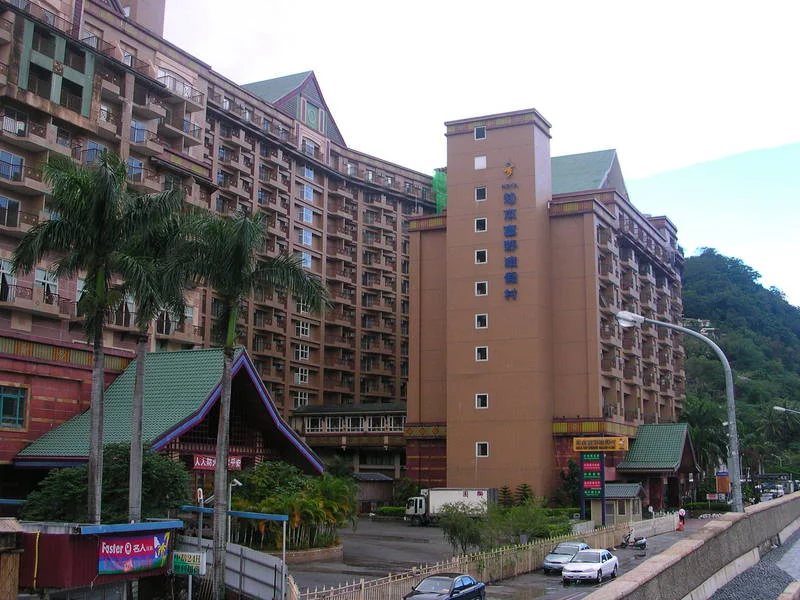

Zhiben Hot Spring
The world watched the hotel fall. On 8 August 2009, as Typhoon Morakot battered southeastern Taiwan, an eyewitness with a camera captured the moment a riverside hotel at Zhiben Hot Spring collapsed into floodwaters that had undermined its foundations. The footage went viral, making international headlines and briefly making Zhiben famous for all the wrong reasons. But the hot springs had been famous for the right reasons long before the typhoon - and they would be again, remarkably soon. Within months, Zhiben's infrastructure was restored, its spas reopened, and visitors returned to soak in the same waters that the Puyuma people had discovered centuries before any hotel stood on the riverbank.
Waters the Puyuma Knew
The Puyuma people, the earliest inhabitants of the Taitung area, were the first to discover the hot springs at Zhiben. After long days of hunting or working the land, they dug trenches in the earth, filled them with the naturally heated water, and soaked their tired muscles. The springs are carbonic, colorless, and odorless, with temperatures that can exceed 100 degrees Celsius - boiling point and beyond. The Puyuma recognized the therapeutic qualities of these waters generations before modern science would confirm what they knew by instinct: that mineral-rich hot springs ease joint pain, relax muscles, and restore energy. Their simple trenches were the first spas, predating the elaborate bathhouses that would follow by centuries.
Bathhouses of the Colonial Era
When Japan colonized Taiwan in 1895, the new rulers brought with them a deep cultural reverence for bathing. Japanese administrators recognized Zhiben's potential immediately. The colonial government constructed public bathhouses using the spring water, establishing Zhiben as one of Taitung County's first developed hot spring areas. The bathhouses transformed a wilderness site into a destination, drawing visitors from across Taiwan and establishing patterns of use that persist to this day. Japanese bathing culture emphasized communal soaking, seasonal rituals, and the aesthetic arrangement of pools within natural landscapes - traditions that shaped how Zhiben's springs were presented and experienced throughout the colonial period and beyond.
A Resort Valley Emerges
After the retrocession of Taiwan from Japan in 1945, Zhiben evolved from a colonial-era bathhouse into a full-fledged resort area. Hotels sprouted along the riverbanks and hillsides of the Zhiben valley, each tapping the underground springs to fill their pools and tubs. The beneficial effects of the hot spring baths were actively promoted, and Zhiben became one of Taiwan's most popular and well-known hot spring destinations. The springs' reputation rested on the quality of the water itself - classified as sodium bicarbonate springs with exceptional mineral content. By the early 2000s, the valley hosted dozens of resort hotels ranging from budget to luxury, all drawing from the same geothermal source that had warmed the Puyuma's trenches.
After the Typhoon
Typhoon Morakot struck Taiwan with devastating force in August 2009, dumping record rainfall across the south and east of the island. In Zhiben, floodwaters swelled the river far beyond its normal banks, scouring the foundations of buildings that had been constructed too close to the waterline. The collapse of the Jin Shuai Hotel, captured on video by a bystander, became one of the most widely shared clips of the disaster. Behind the doomed hotel, the Hoya Resort remained standing - a reminder that not all structures were equally vulnerable. The recovery that followed was remarkably swift. Within weeks, the main spas had reopened. By October, Zhiben was hosting its annual Hot Springs Cuisine Festival, the steam rising from the pools as if nothing had happened. The earth, after all, had not stopped heating the water.
From the Air
Located at 22.69N, 121.02E in Beinan Township, Taitung County, southeastern Taiwan. Zhiben sits in a narrow river valley on the western edge of the Coastal Range, with forested mountains rising steeply on both sides. Nearest airport: Taitung Airport (RCFN), approximately 10km northeast. Zhiben Railway Station on the Taiwan Railway provides ground access. The hot spring resort area is visible as a cluster of multi-story buildings along the Zhiben River. Recommended viewing altitude 3,000-5,000 feet; the valley is narrow with rising terrain on both sides. Steam may be visible from the springs on cooler days.
Nearby Stories
- Jiadong 8.7 km away
- Bunun Cultural Museum 10 km away
- Liudui Hakka Cultural Park 12 km away
- Yujing District 16 km away
- Shouka Mountain Pass 40 km away
- 1951 East Rift Valley Earthquakes 97 km away
- Mavulis Island 157 km away
- 2021 Hualien Train Derailment 162 km away