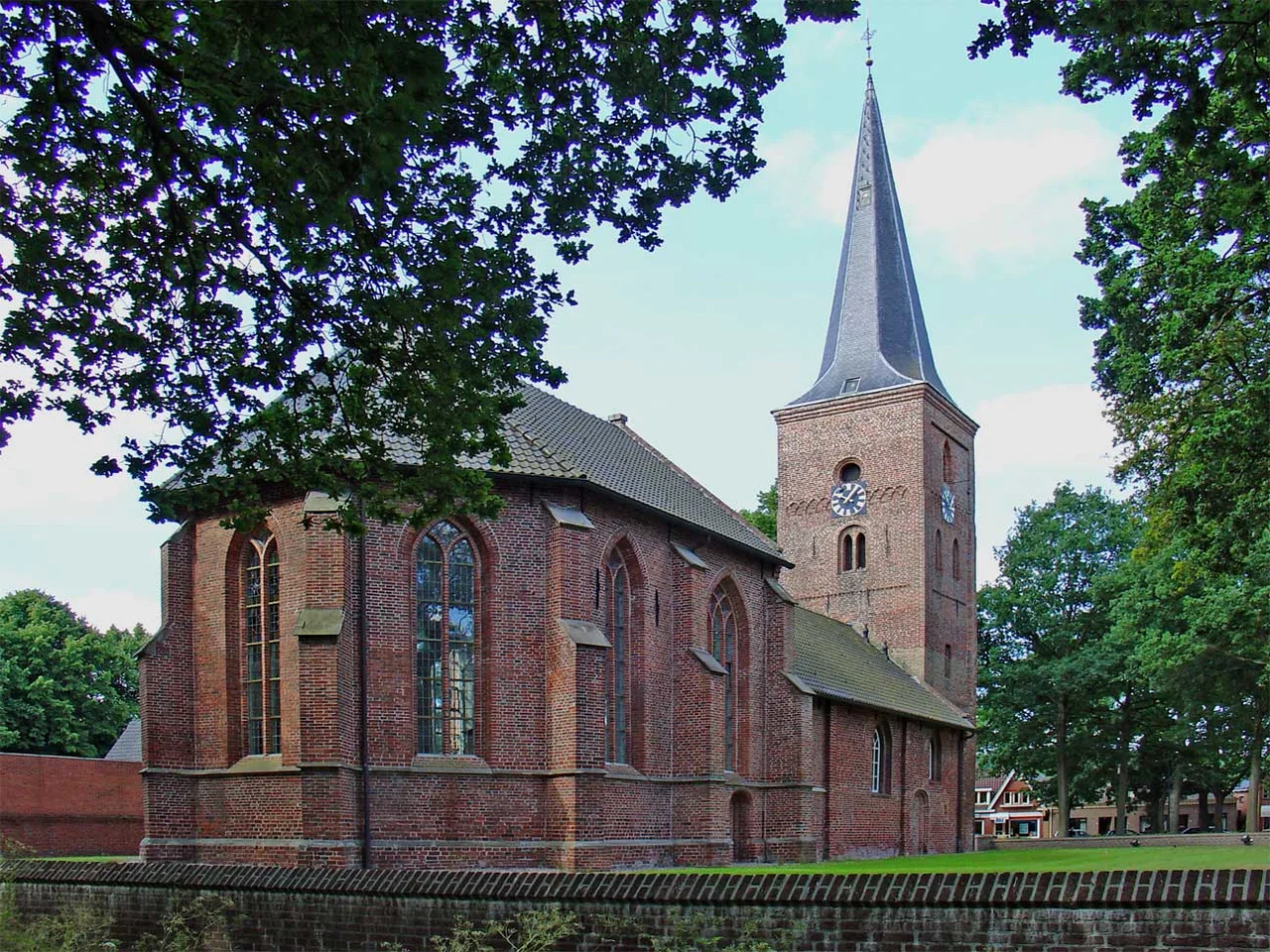

Zuidlaren
On the third Tuesday of October the streets of Zuidlaren fill with horses. Not a few horses for show - hundreds of horses, traded between dealers, farmers, and breeders who have come from across the Netherlands and beyond, in a market that has been happening on roughly this date for some eight hundred years. The Zuidlaardermarkt is considered one of the largest horse fairs in Western Europe, and despite the now-obligatory funfair attached to it, the core business of the day remains what it has always been: looking a horse in the mouth, walking it up and down the street, and shaking hands on a price. In 2010 Crown Prince Willem-Alexander - now King of the Netherlands - unveiled the bronze statue in the village center that commemorates the fair: a horse and two horsetraders, frozen mid-deal.
On the Hondsrug
Most of Drenthe is flat. The Hondsrug, where Zuidlaren sits, is the exception - a low, narrow ridge running roughly northwest to southeast from the city of Groningen down into the heart of the province. The name translates as 'dog's back' and the shape fits: a long, slightly sinuous spine of slightly higher ground, deposited by the last ice age. The ridge has been settled continuously for thousands of years because it offered the same thing the wierden offered farther north - dry ground in a landscape where dry ground was not guaranteed. Zuidlaren is one of three villages anchoring the western edge of the modern municipality of Tynaarlo. The other two are Eelde and Vries. All three lie along old north-south travel routes that used the ridge to stay above the surrounding peat and marsh.
The Market Day
The Zuidlaardermarkt has roots going back to the thirteenth century, when livestock fairs began rotating through the larger villages of the northern Netherlands on fixed feast days. Most of those medieval fairs eventually died. The Zuidlaardermarkt did not. It grew, mostly because the village was well-placed on the trade routes between Groningen city, the Drenthe interior, and the northern German plain. Horses, cattle, pigs, sheep, geese: anything that could walk to market was driven here. Over the centuries the cattle component shrank as agriculture industrialized, the pig and sheep markets faded, and the horse trade, paradoxically, grew - partly because the surviving horse market began drawing buyers and sellers who used to scatter across half a dozen smaller events. A modern country market, a substantial funfair, and the international horse-riding competition NIC Zuidlaren now form a constellation of events around what is still, at its center, a market for live horses.
Statues in the Square
Zuidlaren takes its sculpture seriously for a village its size. Beside the horse-and-traders statue stands a bronze of Berend Botje, the title character of a Dutch children's song so well known it is taught in kindergartens nationwide. The Berend Botje figure is actually based on Lodewijk van Heiden, a real eighteenth-century Dutch naval officer born here in 1773, who eventually entered Russian service and earned the rank of admiral. Generations of Dutch toddlers have sung about him without quite knowing it. A third statue stands in front of the Prins Bernhardhoeve exhibition complex - 'Vriendschap Vereeuwigd,' Friendship Immortalized - commemorating the 1986 fire that destroyed much of the building. The statue was paid for by a Rotary club in Achim, Germany, which is why the local Rotary gave it that name.
The Brinken and the Mill
Drentse villages are famous for their brinken - village greens, usually small, mostly tree-shaded grass commons that historically served as gathering places, market sites, and overnight rest areas for livestock being driven to fairs like the one Zuidlaren still hosts. Zuidlaren has more of them than most villages, including a large one in the center next to the main square, where the horse market spills out every October. On the eastern edge of the village stands De Wachter, a working windmill that still grinds corn and presses oil and runs its own small bakery and museum. The Tynaarlo municipality has, since the 1999 reorganization, been administered from a different village - Vries - but Zuidlaren remains the population center of the three, the one with the statues, the market, and the brinken.
From the Air
Zuidlaren sits at 53.09 north, 6.68 east, along the Hondsrug ridge in northern Drenthe, just south of the city of Groningen and immediately east of the Groningen Airport Eelde (EHGG) approach paths. From altitude the village reads as a green cluster on the slightly elevated ridge, with the Zuidlaardermeer lake visible to the northeast. Recommended viewing altitude 2,000 to 4,000 feet AGL in clear conditions.
Nearby Stories
- Low-Frequency Array 0.9 km away
- Eemshaven Railway Station 2.9 km away
- Nuis, Netherlands 3 km away
- Upstalsboom 3.4 km away
- Leer, Lower Saxony 7.9 km away
- Schiermonnikoog National Park 8.6 km away
- Börger 9 km away
- Drenthse Veenkolonien 9.9 km away