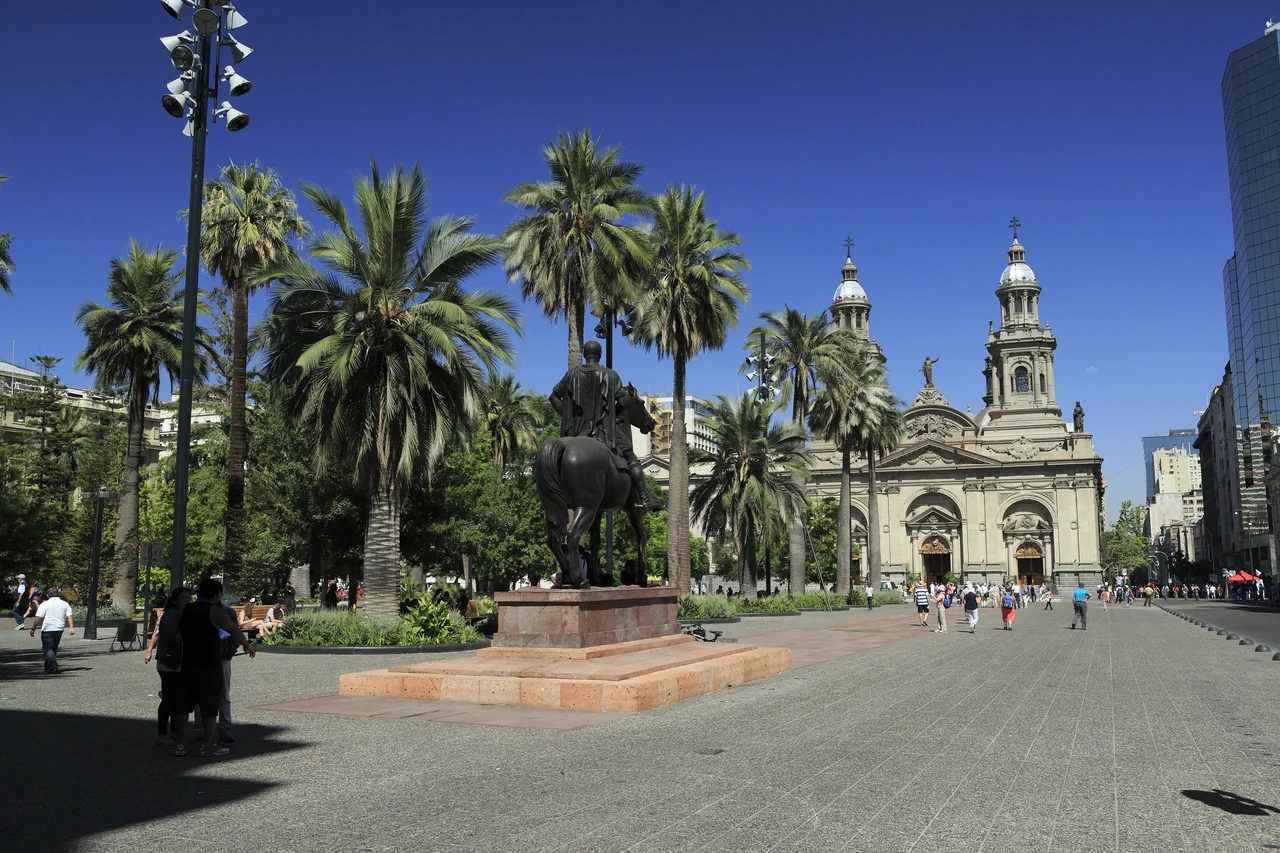

1973 Santiago Gay Protest
On a Sunday evening in April 1973, a few dozen people gathered near the bandstand in Santiago's Plaza de Armas, in the shadow of the bronze conquistador on horseback, and did something no one in Chile had done before. They stood in the open, in the country's most public square, and demanded that the police stop beating them. The gathering on 22 April 1973 was the first LGBT demonstration in Chilean history and one of the earliest anywhere in Latin America. It lasted perhaps an hour. It would take decades for the country to catch up to what happened in that single hour.
The People in the Square
Those who organized and led the protest came largely from the margins of the city - many were travestis and sex workers who lived and worked around the Plaza de Armas and along nearby Huérfanos and the Alameda. Most came from poor and working-class backgrounds, the people with the least protection and the most to lose. They went by chosen names. La Gitana, a travesti of twenty-six who read palms and worked the square, is remembered by several sources as a principal organizer and speaker. Others were known as La Viviana, La Rossana, and La Raquel - the last the name used by Luis Troncoso Lobos. These were not abstractions or a movement's footnotes. They were specific people, standing up under their own names, in front of cameras, when doing so was genuinely dangerous.
What They Were Protesting
The grievance was concrete and physical. The protesters denounced relentless harassment by the carabineros - the raids, the arrests for vague crimes against "morals and good customs," and worst of all the violence that came with them. Detentions routinely included beatings. They also included a particular humiliation: the forced shaving of heads, hair cut off entirely as a mark of shame. To stand in the Plaza de Armas and name this abuse aloud was to invite exactly the brutality being protested. The courage of the act lay in that arithmetic - the people most likely to be beaten by the police were the ones who chose to confront them in public.
The Verdict of the Press
The newspapers covered the protest, and their coverage is its own historical document - a record of how the era spoke about these citizens. The magazine Vea put it on the cover under the jeering headline "Homosexual Rebellion: the 'weirdos' want to get married," and reported that of perhaps a hundred who arrived, only about twenty faced the reporters and cameras while others watched covertly, afraid of being recognized. Papers like Clarín and Puro Chile reached for cruder slurs still. What is striking is that these were left-leaning outlets, supporters of Salvador Allende's government - proof that the contempt cut across Chile's bitter political divide. In 1973, hostility toward queer people was one of the few things the left and right agreed on.
A First That History Caught Up To
The authorities moved quickly to ensure there would be no encore. When a second demonstration was announced for the Plaza Lo Castillo in the wealthier Barrio Alto, the governor of Santiago province, Julio Stuardo, vowed to use "the public force and all the resources" his office allowed to stop it. That second protest never took place, and within months the September 11 coup led by General Augusto Pinochet would plunge Chile into a dictatorship far harsher toward dissent of every kind. Pinochet's regime escalated criminalization of queer people, deploying Article 373 of the penal code - the same "morals and good customs" statute the protesters had marched against - as a tool of systematic persecution. For years the Plaza de Armas gathering was nearly forgotten. Today it is preserved in Chile's national memory archives and honored as the seed of the country's LGBT rights movement - a single hour of defiance that the rest of Chilean history would take half a century to grow toward.
From the Air
The Plaza de Armas, Santiago's founding square and the site of the protest, lies near 33.44°S, 70.65°W in the dense colonial heart of the city. From 9,000 to 11,000 feet the plaza reads as a green rectangle within the tight street grid of the historic center, ringed by the cathedral and the old government buildings, with the Andes rising to the east. Nearest airport is Comodoro Arturo Merino Benítez (SCEL), roughly 15 km to the northwest; Eulogio Sánchez / Tobalaba (SCTB) sits east toward the foothills. Clearest views come on smog-free mornings before the central valley's haze thickens through the day.
Nearby Stories
- Paine Memorial 21 km away
- 1947 BSAA Avro Lancastrian Star Dust accident 23 km away
- Battle of Chacabuco 31 km away
- La Campana National Park 36 km away
- Puente del Inca 44 km away
- Casa de Isla Negra 62 km away
- Santa Cruz, Chile 103 km away
- Pierre Auger Observatory 172 km away