_%D8%B1%D9%88%DB%8C_%D8%AF%D8%A7%D8%AF.jpg)
1987 Mecca incident
On Friday 31 July 1987, after midday prayers at the Masjid al-Haram, Iranian pilgrims on their annual political demonstration during the hajj were chanting 'Death to America, Death to the Soviet Union, Death to Israel' when they encountered a cordon of Saudi police and the Saudi Arabian National Guard blocking their planned route. What happened next killed more than 400 people. The Iranian government put the death toll at 400, with thousands more injured; the Saudi government reported 402, of whom 275 were Iranian pilgrims, 85 were Saudi police, and 42 were pilgrims from other countries. The dead, most of them pilgrims who had traveled great distances to complete a sacred obligation, became the dead of a political rupture. Their families grieved in different languages.
How the Tensions Built
The Iranian Revolution of 1979 reshaped the politics of the hajj almost immediately. Ayatollah Khomeini, the new Iranian leader, encouraged pilgrims to carry revolutionary politics into Mecca and Medina, calling their demonstrations 'Distancing Ourselves from Mushrikin,' an appeal to reject polytheism that his rivals read as an attack on Saudi authority over the holy cities. In 1981, chanting political slogans inside the Masjid al-Haram and the Prophet's Mosque led to violent clashes with Saudi security; one person died. That same year, King Khalid of Saudi Arabia wrote to Saddam Hussein during the Iran-Iraq War using language that reflected how sharply Saudi Arabia had already aligned with Iraq against the new Iranian state. The two sides attempted compromises: Iranian pilgrims would demonstrate in prescribed routes, the Saudis would reopen the al-Baqi cemetery for Shia pilgrims, and in 1986, Khomeini's representative formally thanked the Saudi king for the gesture.
A Friday Afternoon
By 1987, the Iran-Iraq War had been grinding on for seven years, the United States Navy had entered the Persian Gulf in response to Iranian attacks on shipping, and Saudi authorities had grown deeply suspicious of Iranian intentions even as Iranian officials, including Mehdi Karrubi, Khomeini's pilgrimage representative that year, tried to assure them the demonstration would follow agreed routes. Saudi and Iranian officials reviewed the route together. It did not matter. Saudi security personnel denied firing at the demonstrators. Saudi ambassador Prince Bandar bin Sultan, addressing reporters in Washington, claimed that 'not one bullet was fired' and blamed the Iranian pilgrims for 'brandishing knives, clubs and broken glass drawn from beneath their cloaks.' Martin Kramer, citing American intelligence sources, wrote that the National Guard first fired tear gas shells into the crowd and then opened fire with pistols and automatic weapons. The Israeli political scientist Ami Ayalon wrote that most of the Iranian dead had apparently been shot.
The Rupture
On the same day, Khomeini called on Saudis to overthrow the House of Saud to avenge the dead pilgrims. Ayatollah Hussein Ali Montazeri, another senior Iranian cleric, urged Muslim leaders to 'wrest control of Islam's holy sites in Saudi Arabia from the royal family.' Saudi Arabia severed diplomatic relations with Iran and slashed the permitted number of Iranian hajj pilgrims from 150,000 to 45,000. Iran banned its citizens from making the pilgrimage for three years, from 1988 through 1990. Approximately 20,000 Pakistani troops then stationed in Saudi Arabia were sent home because, as Riyadh put it, the kingdom had become uncomfortable with the presence of Shia soldiers. The diplomatic break was not repaired until 1991, when Iran and Saudi Arabia agreed on a new pilgrim quota of 115,000 and restricted Iranian demonstrations to a single designated compound in Mecca.
The Arithmetic of the Hajj
The hajj has seen periodic mass casualty events, not all of them political. In 1990, a tunnel tragedy killed hundreds. In 1994, 1998, 2001, 2004, and 2006, stampedes killed more. In 2015, the Mina stampede killed an estimated 2,400 pilgrims, including more than 400 Iranians, producing another 'war of words' between Tehran and Riyadh. The sheer density of the event, two million or more people trying to perform the same rituals in the same places on the same days, speaking dozens of languages, creates hazards that crowd engineers have spent decades trying to mitigate. But 1987 was different from those other tragedies. It was not primarily a crush. It was a collision between Saudi security forces and demonstrators whose movements had become, in Riyadh's view, a political challenge to Saudi custodianship of Islam's holiest sites. How many of the Iranian dead were shot, and how many suffocated, remains disputed.
Remembering the Dead
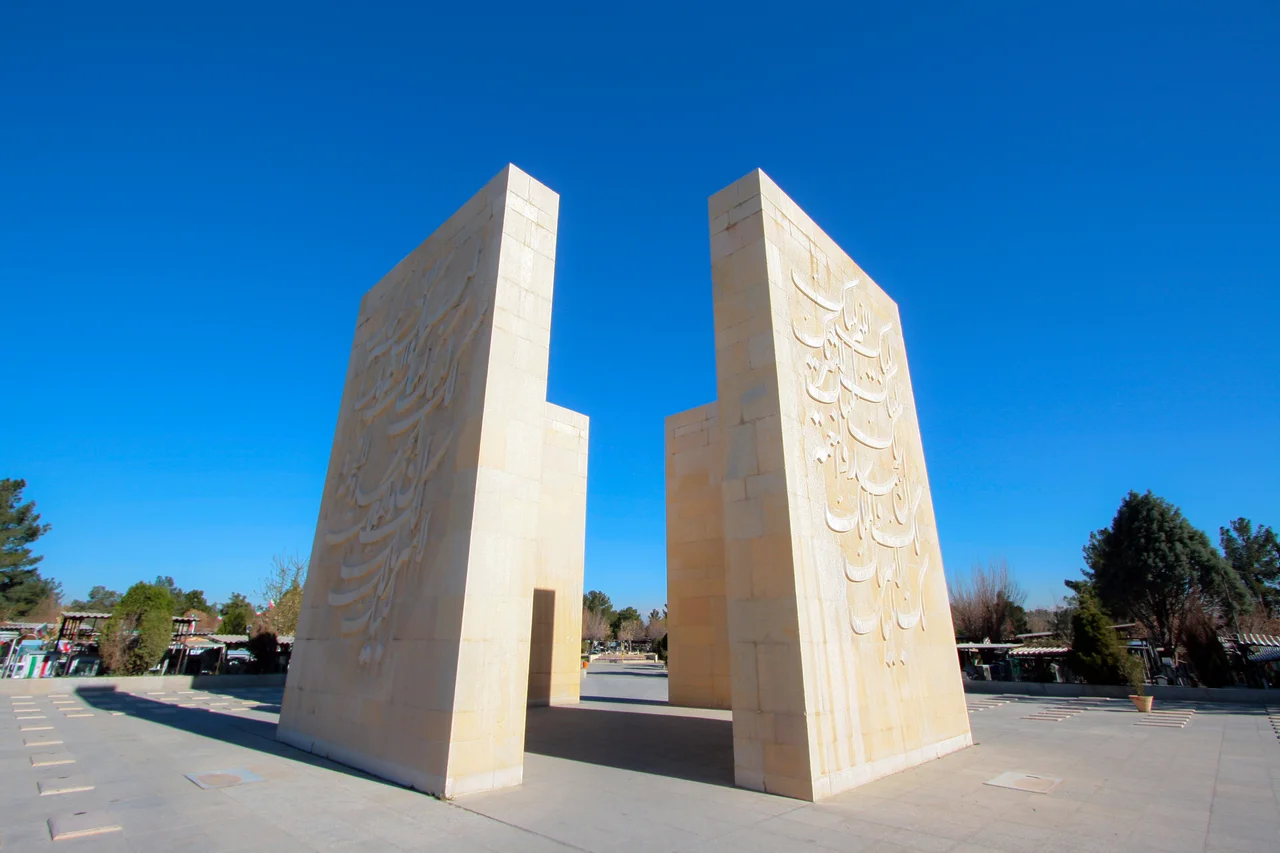
Martin Kramer observed that 'as no independent investigation will ever be conducted, important details will remain in doubt.' Neither Saudi Arabia nor Iran ever produced evidence that the other side acted with premeditation. What neither side disputed was the dead: more than 400 human beings, most of them on the Saudi side's count Iranian pilgrims, who had traveled to Mecca intending to complete the fifth pillar of Islam. Their names were recorded by Iranian authorities, their bodies returned to families in Tehran and Isfahan and the provinces. Mothers buried sons. Wives became widows. The pilgrims were not symbols, though they became them. Iran continues to mark the anniversary of the incident each year. Saudi Arabia does not. The dead, whatever the governments said, had traveled to Mecca not to make war but to perform a rite their religion had asked of them.
From the Air
Coordinates: 21.44°N, 39.83°E. Mecca lies in the Hejaz region of western Saudi Arabia. The Masjid al-Haram sits at the heart of the city. King Abdulaziz International Airport (OEJN) in Jeddah is the nearest major airport, 74 km west. Recommended viewing altitude: 8,000-12,000 feet AGL during approved overflights. Mecca airspace is restricted to Muslim operators; non-Muslims cannot enter the city or fly low over it. Hot and dry conditions year-round; sandstorms possible in summer.
Nearby Stories
- Al-Balad, Jeddah 23 km away
- Jeddah Tower 33 km away
- Battle of Turubah 123 km away
- Red Sea Rift 143 km away
- Ghadir Khumm 159 km away
- Al-Baha 162 km away
- Thee Ain 206 km away
- Hejaz 214 km away