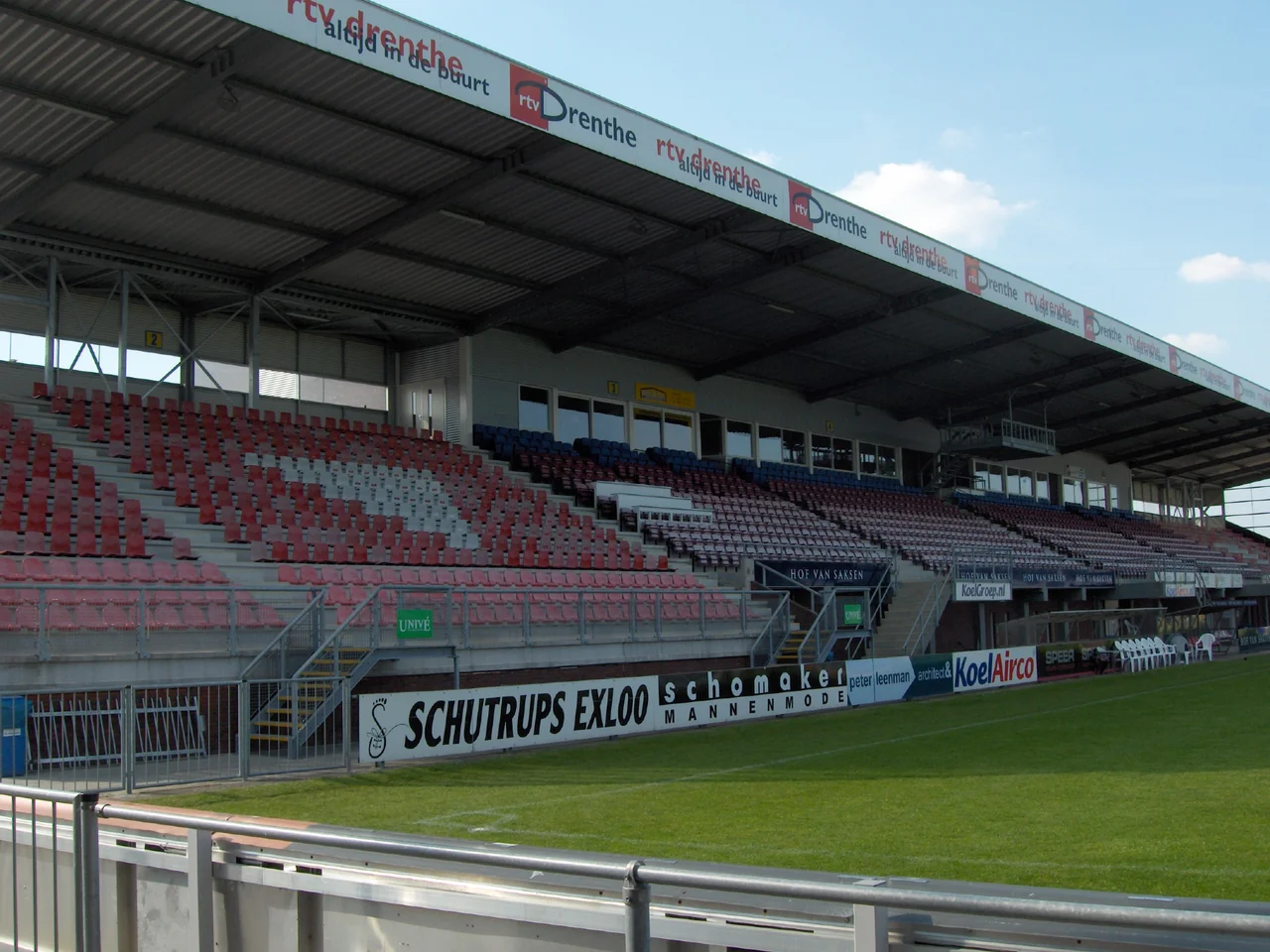

2011 CPISRA Football 7-a-side World Championships
On 17 June 2011, sixteen national football teams arrived in the Netherlands for a tournament that would end two weeks later with a London 2012 ticket on the line. The players were professionals and elite amateurs in the version of the sport called football 7-a-side - football played on a smaller pitch by seven players a side, with no offside and a one-handed throw-in allowed. All of the players were ambulant athletes with non-progressive brain injuries: cerebral palsy, traumatic brain injury, or stroke. They had trained for years. Some had played at previous world championships. Some were trying to win one for the first time. None of them had come to be inspirational. They had come to win matches.
The Sport Itself
Football 7-a-side is recognizable football, but its rules are tuned to its athletes. Two thirty-minute halves with a fifteen-minute break. A pitch smaller than a full international. No offside, which encourages a more direct attacking game. A throw-in can be taken with one hand, which spares players who have asymmetric use of their arms from a rule that would otherwise sideline them. Within the squad, a classification system spans C5 through C8 - C5 players experience difficulty walking or running but can stand and strike a ball cleanly; C7 athletes have hemiplegia; C8 players have minimal disability. To prevent teams from stacking the line-up with the least affected players, the rules require at least one C5 or C6 on the pitch at all times and limit C8s to two. The result is a varied, fast game that rewards organization, vision, and the kind of one-touch passing that all good football rewards.
Two Weeks, Sixteen Nations
The format followed the familiar shape of a World Cup. Sixteen teams were drawn into four groups of four for a round-robin opening stage; the top two from each group advanced to a knockout bracket for positions one through eight, and the bottom two played off for nine through sixteen. Wins were three points, draws one, and to keep blowouts from skewing goal difference the scoreline counted a maximum of ten goals per match. Russia, Ukraine, Iran, Argentina, the Netherlands, Australia, Brazil, the United States, and others all sent squads. The Championships doubled as a qualifying tournament for the London 2012 Paralympic Games, which gave every group-stage fixture - and especially every match in the lower bracket - an edge of consequence.
Goals and Names
Wikipedia's record of the tournament is, in the end, a record of names. Eleven goals in the tournament for Michael Barker. Eleven for Brian Vivot. Nine for Wanderson Silva de Oliveira of Brazil. Gary Messett scored eight. Moslem Akbari, Fabio da Silva Bordignon, and Sam Larkins scored seven each. Down the list - six goals, five goals, four goals, three goals, two goals, one goal - the names continue: Lasha Murvanadze of Georgia, Daragh Snell of Ireland, Volodymyr Antonyuk of Ukraine, Iljas Visker of the Netherlands, Lars Conijn, Matthew Dimbylow, John Swinkels, James Richmond, Taisei Taniguchi, Ryuta Yoshino. Each name is a player who flew to the Netherlands, trained for years to be there, and finished a match in the box score. The CPISRA Championships have since been renamed and reorganized under the International Federation of Cerebral Palsy Football, but the 2011 tournament remains in the record as a single, busy fortnight when sixteen national squads met in the Dutch summer to settle a world championship and a place at the Games.
From the Air
The tournament was hosted at multiple venues in the Netherlands, with the central coordinates falling near 53.00°N, 6.57°E in the province of Drenthe. From altitude the area shows the geometric green polder pattern of northeastern Holland, with the city of Groningen visible to the north and Assen and its TT circuit visible to the south. Nearest airports: Groningen Airport Eelde (EHGG) about 8 km west of the area centre; Schiphol (EHAM) about 175 km southwest.
Nearby Stories
- Hoogeveen 3.2 km away
- Onstwedde 4.2 km away
- Wetsinge 4.7 km away
- Abe Lenstra Stadion 5.2 km away
- De Zwaluw, Burdaard 7.4 km away
- Dollart 8.7 km away
- Twist, Germany 11 km away
- IJssel 19 km away