
Akaa
Arvo Ylppö was born in Akaa on 27 October 1887. When he died in Helsinki on 28 January 1992 at the age of 104, Akaa no longer existed: the municipality had been abolished in 1946, and it would not reappear on Finnish maps until 2007, fifteen years after his funeral. Outliving your own birthplace is a rare trick. Rarer still is spending the intervening century helping drive your country's infant mortality down to among the lowest in the world.
The Man Who Outlived His Birthplace
Ylppö was the fifth of twelve children born to the farmer Heikki Ylppö and his wife Henriikka. He became a professor of paediatrics in 1925, but his most consequential insight came earlier and was almost brutally simple: premature babies were not dying because they were premature. They were dying of conditions that could be treated. That single reframing — from fate to medicine — reshaped how newborns were cared for, and his working threshold of 2,500 grams for a low-birthweight infant became a standard.
In 1922 he opened an advisory clinic for small children, the seed of the neuvola system that still follows every Finnish child from before birth into school. He chaired the Mannerheim League for Child Welfare from 1920 to 1960. Crucially, he wrote for parents and not only for physicians: his 1919 guide Äiti pikkulapsensa hoitajana carried the new science into ordinary kitchens. He is buried at Hietaniemi in Helsinki.
A Name Taken Apart and Put Back
Akaa's administrative history reads like a family that keeps dividing the farm. It began as a parish in 1483, separated from Sääksmäki, and gained municipality status in 1870. Urjala and Kylmäkoski were carved off it in turn. In 1932 Viiala was constituted as its own municipality from pieces of Akaa, Vesilahti and Lempäälä. Then, in 1946, Akaa was abolished outright and replaced by a new town called Toijala, centred on the old church village.
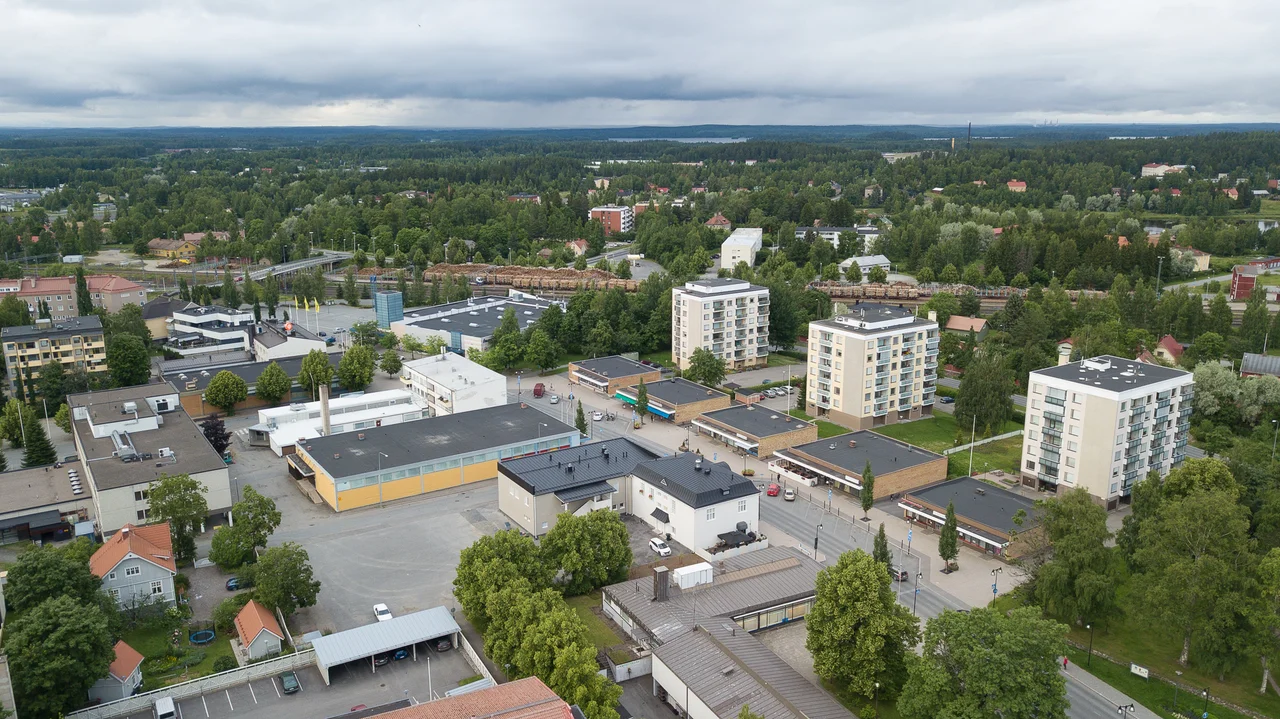
The name returned on 1 January 2007, when Toijala and Viiala merged and chose to revive it. Kylmäkoski rejoined on 1 January 2011. What exists now covers 314 square kilometres and holds 16,429 people as of the end of 2025 — a town with three centres and no single downtown. Toijala's urban core accounts for roughly 8,365 residents, Viiala's church village about 5,087, and Kylmäkoski the rest. The old Akaa church, built in 1816–1817, still stands where the parish began.
Where the Tracks Meet
Toijala station opened on 22 June 1876, and geography did the rest. The main line running north from Riihimäki to Tampere passes through it, the line from Turku joins there, and a branch runs east to Valkeakoski. Junctions make towns. Nearly all long-distance trains between Helsinki and Tampere and between Tampere and Turku still stop here, along with every regional service; Helsinki or Turku to Toijala takes about an hour and twenty minutes, Tampere barely twenty-five.
Industry followed the rails. A wallpaper factory was founded in Toijala in 1903, and wallpaper is still made here — two plants operate alongside metal and machinery works, and the town keeps a wallpaper museum, which is the kind of specialised civic pride that only a place genuinely good at something bothers with.
Viiala's Silent Halls
Viiala grew on wood. A steam sawmill began cutting in 1873 under Akkas Ångsågs Ab and was later absorbed into the Wilh. Schauman company. A veneer factory followed in 1901, a leather works in 1921, and in 1956 Viiala Osakeyhtiö opened the first particleboard plant in Finland. For most of the twentieth century a person could be born in Viiala, work a shift floor their parents had worked, and retire without leaving the village.
The end arrived inside a single decade. The leather works failed in 1995. The veneer operation moved abroad in 1996. UPM-Kymmene closed the plywood factory in 2004. Those were not abstractions about globalisation; they were households recalculating what came next. The buildings are still standing — long brick and timber halls beside the tracks, too solid to knock down and too specific to easily repurpose.
Twenty Million Bees
In 2009 Akaa decided that if it was going to be known for something, it would be honey. The town began branding itself Finland's honey capital, and by 2017 more than twenty million honey bees were working hives across the municipality — a population that outnumbers the human one by a factor of well over a thousand. The honey turns up for sale at the town hall, which is a pleasantly unbureaucratic use of a municipal lobby.
Water offers the other way in. In summer, Hopealinjat runs scheduled cruises on Vanajavesi from Tampere and Hämeenlinna, and from Toijala's harbour you can travel the same lake in reverse — a slower approach to a town that owes almost everything to a faster one.
From the Air
Akaa sits at 61.17°N, 23.87°E in southern Pirkanmaa, about 43 km south of Tampere. From the air the defining feature is the rail junction at Toijala, where the Riihimäki–Tampere main line, the Turku line and the Valkeakoski branch converge in a clear Y visible from 3,000–5,000 ft AGL. Lake Vanajavesi lies to the east, its narrow blue channels threading between forested ridges and open farmland; the three settlement clusters of Toijala, Viiala and Kylmäkoski read as separate light patches rather than one town. Nearest airport: Tampere-Pirkkala (EFTP), roughly 35 km northwest. Helsinki-Vantaa (EFHK) is about 130 km southeast and Turku (EFTU) about 120 km west. Summer brings long light and haze off the lakes; winter locks Vanajavesi under ice and makes the rail corridor the most legible line in the landscape.
Nearby Stories
- Forssa 5.9 km away
- Hervanta 13 km away
- The Artillery Museum of Finland 14 km away
- St. Olaf's Church, Tyrvää 14 km away
- Church of Loimaa Proper 26 km away
- Kurjenrahka National Park 46 km away
- National Museum of Finland 81 km away
- Petajavesi Old Church 112 km away