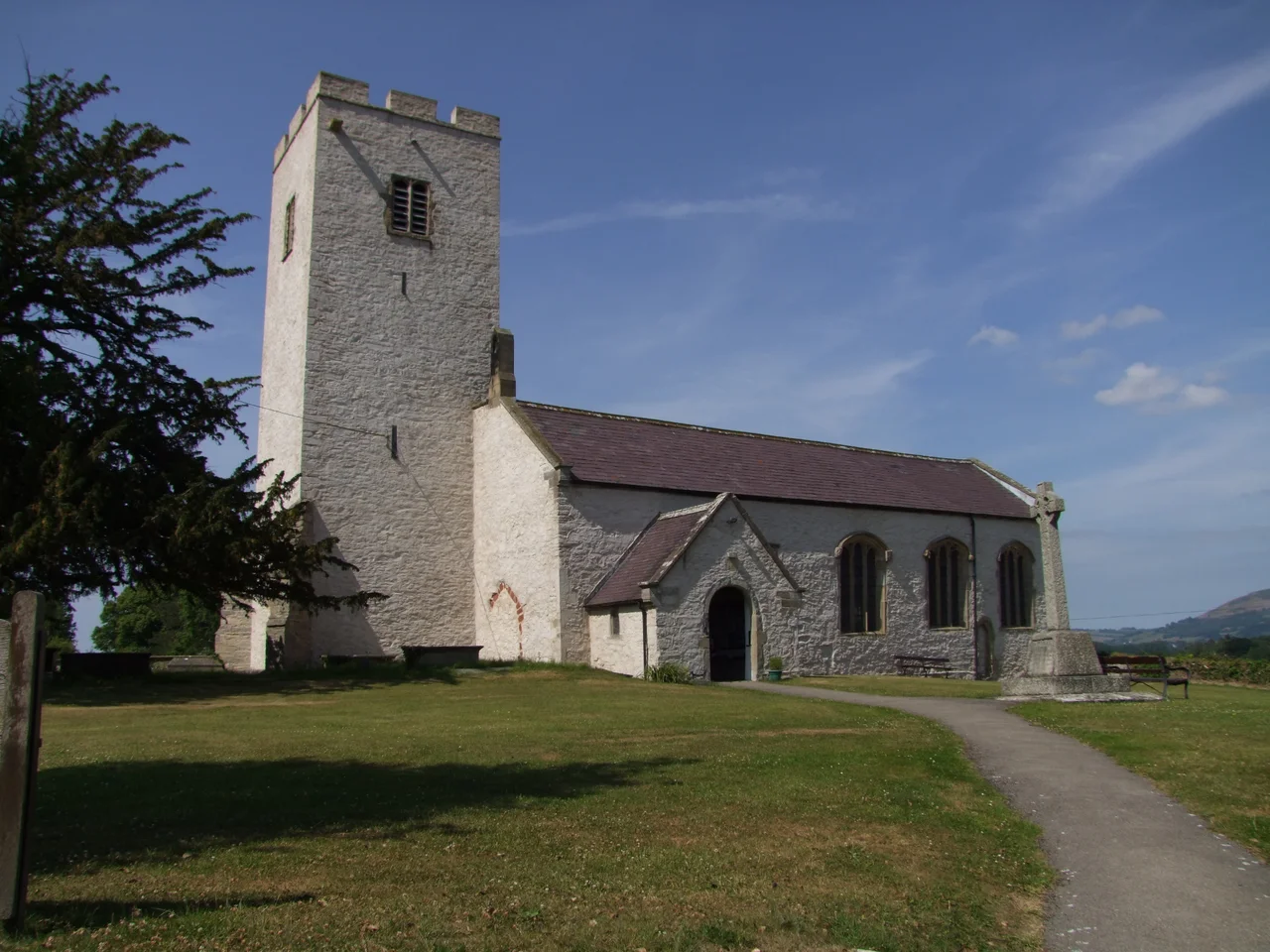

Battle of Denbigh Green
Scarce a tenth man hath a pistol. The phrase comes from a Parliamentarian report on Sir William Vaughan's Royalist cavalry as they gathered in late October 1645. The king's supply lines had collapsed. The last great field army had died at Naseby four months earlier. Chester was under siege and would not survive without relief. Vaughan was Charles I's last hope of breaking that siege, and he was trying to do it with men who in many cases did not have firearms. The Battle of Denbigh Green is the only action in the entire North Wales theatre of the Civil War that contemporary writers thought deserved the word 'battle.' Everything else was skirmish. This one mattered.
The Last Chance to Relieve Chester
After Naseby in June 1645 destroyed Charles I's main field army, the Royalist cause shrank rapidly into a series of besieged garrisons in the West and Wales. The king pinned his remaining hopes on reinforcement from Ireland - troops, supplies, anything that might let him fight on into 1646. Reinforcement from Ireland required the port of Chester, and Chester had been intermittently blockaded since December 1644. Lord Byron's garrison was holding out. In September 1645 Sir William Brereton resumed the siege in earnest. A relief attempt on 24 September failed at Rowton Heath. Charles then ordered Sir William Vaughan - a Welsh cavalryman who had served in Ireland until 1644 - back to Wales to gather what forces he could and try again. Vaughan began assembling men at Ludlow in early October, drawing on garrisons from Bridgnorth, High Ercall, and a dozen smaller posts. The remnants of at least ten regiments came together. By mid-October he had perhaps 2,000 to 3,000 horse, though the report on their armament was grim. They marched north over Corndon Hill toward Denbigh.
Vaughan's Decision to Stand
By 31 October Vaughan was encamped on Denbigh Green, a four-mile tract of common land outside the town. The Royalist garrison under William Salesbury still held Denbigh Castle, the great Edwardian fortress on the hilltop above the town. Most of the North Wales contingents Vaughan had ordered to the rendezvous had not yet arrived. The diarist Richard Symonds, who volunteered with Vaughan and kept a private record of the campaign, counted just 700 cavalry on the eve of battle. There may have been several hundred lightly armed Irish infantry as well. Brereton, hearing of Vaughan's position, detached 1,500 horse and a similar number of infantry from the Chester siege and sent them west under Colonel Michael Jones and Adjutant-General James Lothian. At Ruthin on 30 October they joined Thomas Mytton, the Parliamentarian commander for North Wales, who assumed overall command. By the afternoon of 31 October Vaughan knew Mytton had left Ruthin and was coming. He could have withdrawn to the Royalist stronghold of Rhuddlan on the coast. He chose instead to stand and fight - a decision later historians have called suicidal.
Three Charges and a Forlorn Hope
The alarm sounded at noon on 1 November. Vaughan positioned his musketeers and dragoons along the hedges by the road, near St Marcella's Church (locally called Whitchurch). His main cavalry drew up on open ground to the west of the Ruthin road. Mytton detached a forlorn hope of 40 musketeers ahead of his advance guard - the suicide volunteers whose job was to draw the first fire and break the defensive position. They could not. Symonds wrote that 'their approach was handsomely disputed by our horse and foot above an howre in the hedges and lane.' Frustrated by an hour of stalemate, Mytton left his advance guard in place and made a flanking march of several miles around to reach the Green from a different angle. When his column appeared on the cavalry's flank, Vaughan was forced to pull men back to face the new threat. His infantry, dislodged from the hedges, broke and fled toward Denbigh Castle. The Warwick and Derbyshire Horse charged. Vaughan rallied his cavalry two miles from the church. Mytton charged again. High Ercall dragoons and Prince Maurice's Lifeguard countercharged, briefly checking the Parliamentarian advance, but on the third charge the Royalists broke for good.
The Pursuit and the End
Mytton's pursuit ran for eight miles. Over 100 Royalists were killed and 400 captured. One scattered party was finally brought to bay at Llangernyw, where the dead were buried in a mass grave in the churchyard - the village graveyard still containing them centuries later. Vaughan himself escaped with a large group as far as Llanrwst, then quartered at Gwydir Castle, the home of Sir Richard Wynn, which they pillaged. Mytton occupied Denbigh town but, lacking siege equipment, could not take the castle. Salesbury held out until October 1646. Mytton returned to the siege of Chester. Lord Byron capitulated in January 1646 - Vaughan having proved unable to relieve him - and the king's Irish-reinforcement strategy collapsed. Vaughan joined Sir Jacob Astley for one last attempt to assemble a Royalist field army. That force was destroyed at Stow-on-the-Wold in March 1646. The First English Civil War was effectively over. The 700 cavalry who stood on Denbigh Green on 1 November 1645 represented the king's last operational cavalry brigade in the British Isles. Their defeat closed the file on Charles I's military hopes.
From the Air
The battlefield sits at 53.18N, 3.39W on the open commonland that ran west of the Ruthin road outside Denbigh. The action centred on St Marcella's Church (also called Whitchurch) and ran across roughly four square miles of what is now a mix of pasture, hedgerow and scattered houses. From the air Denbigh Castle on its hilltop above the town is the most prominent landmark - the same fortress that William Salesbury was holding for the king through the battle below. Nearest airports are Hawarden (EGNR, ~18nm east) and Caernarfon (EGCK, ~30nm west). Cruise at 2,000-3,000 ft AGL to see the Vale of Clwyd north toward Rhyl.
Nearby Stories
- Carnedd Llewelyn 7 km away
- Tarporley 9.7 km away
- Battle of Winwick 14 km away
- RAF Shawbury 16 km away
- Cymer Abbey 17 km away
- New Brighton Lifeboat Station 19 km away
- Battle of Oswestry 20 km away
- Celtic Array 52 km away