
Battle of Marathon
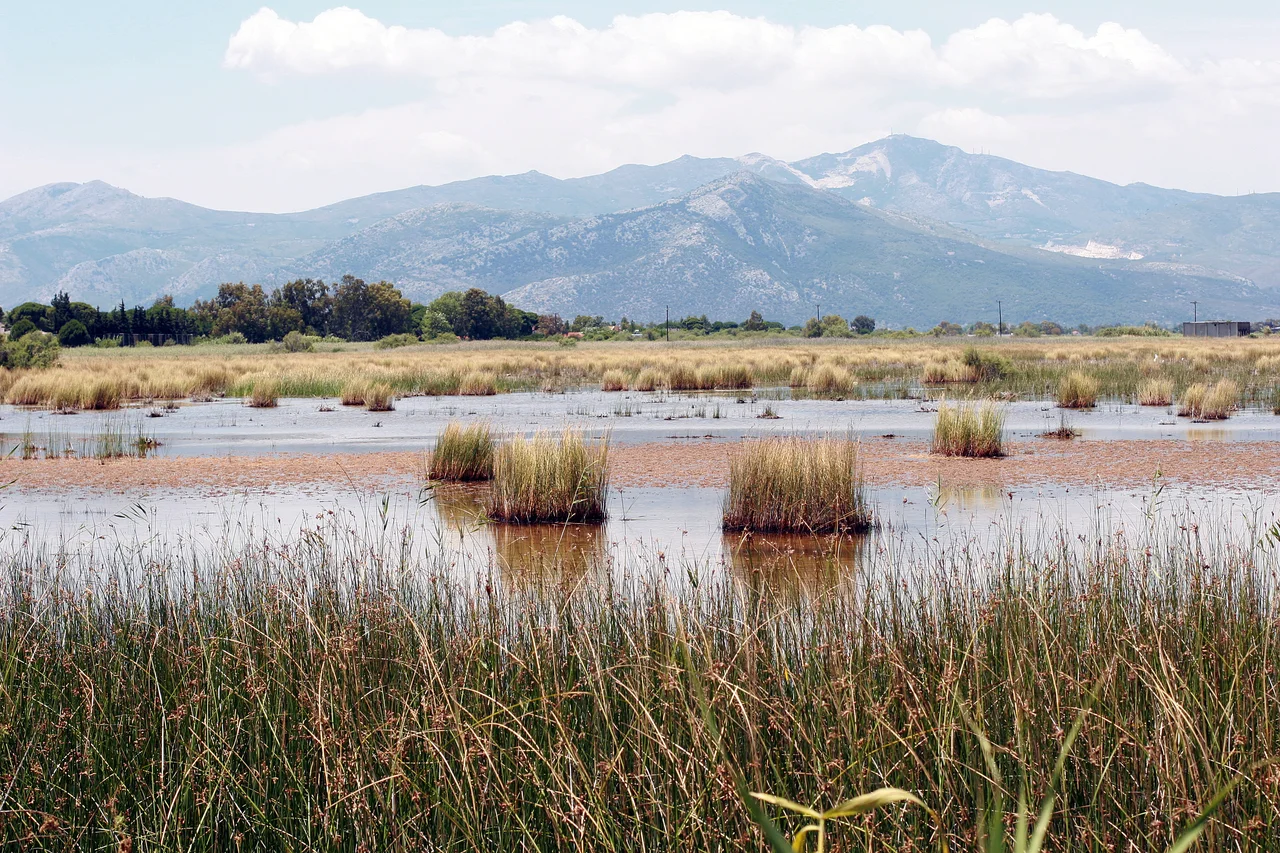
The two mounds are still there. One is a long low rise by the road, holding the bones of one hundred ninety two Athenians; the other, a smaller tumulus a short walk away, covers the eleven Plataeans who died beside them. Twenty five hundred years of farming, draining, road building, and tourism have not removed them. Stand at the top of the larger mound today and you can see out over the plain to the bay, and you can see why a Persian fleet, thinking strategically, would beach there. You can also see why nine thousand Athenian citizens, looking at the same ground, decided to fight.
Why the Persians Came
Darius I had not forgotten. Years earlier, Athens and Eretria had sent troops to support the Ionian Revolt against Persian rule, and a Greek raiding force had marched inland and burned the lower city of Sardis. Herodotus says Darius had a servant whisper 'Master, remember the Athenians' three times before dinner each day. By 490 BC, the punishment was assembled: a fleet under Datis and Artaphernes, several hundred triremes carrying probably twenty five thousand soldiers, and the elderly exiled tyrant Hippias along to point out the way. They had island-hopped across the Aegean, taken Eretria and burned it, and then, on Hippias's advice, beached at the bay of Marathon, about seventeen miles northeast of Athens, where the ground was suitable for cavalry.
The Runner
Before the battle, Athens sent its best long-distance runner, Pheidippides, to Sparta to ask for help. He covered roughly two hundred and twenty five kilometers - a number to make modern ultrarunners take notice - and arrived in time to be told politely that Sparta was in the middle of the festival of Carneia and could not send troops until the full moon. Athens would have to hold for at least ten days. The little city of Plataea sent its full muster of one thousand hoplites, a gesture that, Herodotus tells us, did much to steady Athenian nerves. Pheidippides, on the way back, said he had been visited by the god Pan in the mountains. After the battle, Athens built Pan a shrine in gratitude. The famous run from the battlefield to Athens - the one that gave the modern marathon its name and its mythology - is a different story, conflated centuries later. The historical run that mattered was the one to Sparta and back.
Why It Began When It Did
Both armies sat for days at Marathon, the Greeks blocking the two exits from the plain, the Persians holding the beach. Then, suddenly, the Greeks attacked. The reason, modern historians think, was that the Persian cavalry had begun re-embarking on the ships - perhaps to row around Cape Sounion and seize Athens directly while the Greek army was pinned at Marathon. The vanishing of the cavalry removed the Athenians' main tactical fear and made the threat to their unguarded city imperative. Miltiades, the Athenian general with the most experience fighting Persians, ordered the advance. The line was thinned in the center to match the Persian frontage; the wings remained eight ranks deep. According to Herodotus, the Athenians were the first Greeks to charge enemies wearing Median dress without losing their nerve.
What Happened on the Plain
The Greeks broke into a run as they entered the killing range of the Persian archers, perhaps two hundred meters out. The shock of the impact, when it came, broke the Persian wings - composed largely of subject troops - while the elite Persians and Sakae in the center pushed the thinned Athenian middle backwards. Then the Greek wings, having routed their opponents, did something unexpected: instead of pursuing for plunder, they turned inward and crushed the Persian center between them. The Persians broke for the ships through unfamiliar marshland, where many drowned. Cynaegirus, the brother of the playwright Aeschylus, grabbed a departing trireme by the stern and held on; a sailor cut off his hand with an axe and he died in the water. The Athenians captured seven ships. The Persian fleet rowed for Athens; the Athenian army marched the forty kilometers home in armor and arrived in time to see them turn away. Fallen in the battle were one hundred ninety two Athenians and eleven Plataeans, names recorded on the burial mound's monument and including, on the Athenian list, freed slaves who had earned their citizenship by fighting.
The Long Memory
Aeschylus, who had also fought that day, asked that his gravestone in Sicily make no mention of his plays. It records only that he was an Athenian and that he had stood at Marathon. The Athenians built monuments at Delphi from the spoils, dedicated a sculpture group to their tribal heroes, and put up the Stoa Poikile in their agora with a great mural of the battle that visitors could still admire centuries later. They held the festival of Artemis Agrotera every year, sacrificing five hundred goats - the original vow had been one goat for every Persian killed, but the number was so high they switched to an annuity. None of this exaggerated the actual military significance: Marathon barely scratched the resources of the Persian empire, and a far larger invasion came ten years later under Xerxes. What it changed was the Greeks' belief about what was possible. The peak of classical civilization that followed - philosophy, drama, democracy, sculpture, the buildings still standing on the Acropolis - rose on the back of that conviction. John Stuart Mill thought Marathon was more important to British history than Hastings. He may have been right.
From the Air
Marathon battlefield at 38.12N, 23.98E, on the eastern coast of Attica about 40 km northeast of central Athens. Athens International Airport (LGAV) lies just to the south-southwest, making the entire battlefield easy to spot on approach or departure. The bay where the Persian fleet beached opens to the east; the Soros (the burial mound of the Athenian dead) is a clear earthen rise on the inland side of the coastal plain, near the modern Marathon archaeological site. Best viewing 4,000-8,000 ft on a clear day; the relationship between bay, plain, and the marshy ground at the northern end is striking from low altitude.
Nearby Stories
- Elefsina 1.9 km away
- Temple of Aphaia 4.7 km away
- Theatre of Thorikos 6.6 km away
- Battle of Andros (1790) 7.2 km away
- Amarynthos 19 km away
- Siege of Thebes (292–291 BC) 20 km away
- Gyaros 22 km away
- Aegean Sea 63 km away