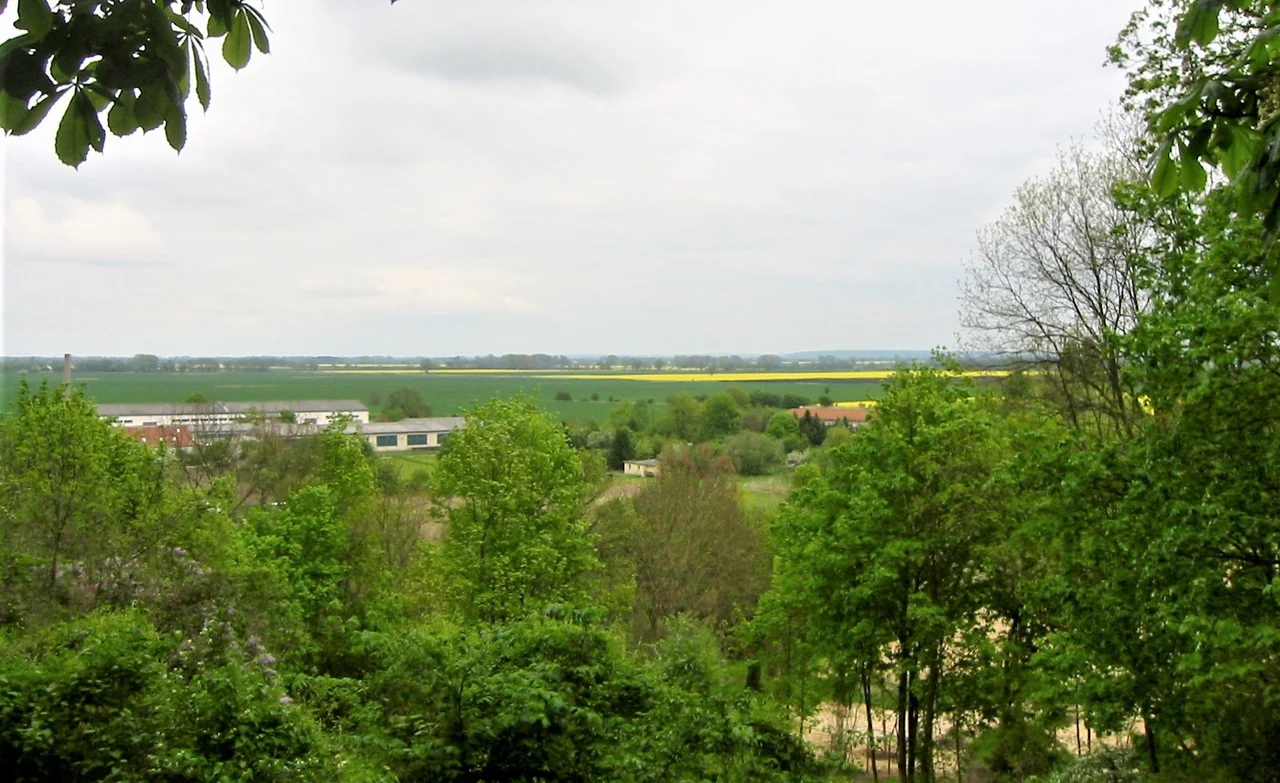

Battle of the Seelow Heights
From the bluffs above the Oder River, on a clear day in April 1945, you could already see Berlin in the distance. The city was ninety kilometers to the west, beyond the floodplain and the forests, and it was where everything was heading. Adolf Hitler was in his bunker. The Western armies were across the Rhine and racing east. Joseph Stalin had ordered Marshal Georgy Zhukov, the commander who had broken Hitler's army at Moscow and Stalingrad and Kursk, to take the German capital before the Americans could. Standing in his way was a single defensive line on a low ridge above the Oder floodplain. The ridge was called the Seelower Hohen, the Seelow Heights, and for three days in mid-April 1945, the men on both sides of it died in numbers that shocked even soldiers who had been killing each other for almost four years.
The Soldiers Who Came East and West
Almost a million Soviet soldiers were assembled along the Oder by the time the offensive began. Most were veterans now, men who had survived Stalingrad and the great drives across Ukraine and Poland; many were in their fourth year of continuous war. Among them were 78,556 Polish troops of the 1st Polish Army, who had pushed across their own occupied country with the Red Army and were now closer to home than they had been since 1939. Facing them, dug into the ridge and the marsh below, were about 110,000 Germans of the 9th Army under General Theodor Busse. They were a thinner army than they had been. The Wehrmacht was scraping the bottom of its manpower by April 1945; the units in the line included regular soldiers worn down by years of retreat, but also Volkssturm militia made up of older men past military age, and increasingly Hitler Youth conscripts, boys of fifteen and sixteen issued one Panzerfaust each and told to stop the Red Army. Their commander, Colonel-General Gotthard Heinrici, was one of the German army's most skilled defensive tacticians. He had correctly predicted Zhukov's main blow and prepared for it carefully.
Heinrici's Trick
Heinrici did something that turned out to matter enormously. Anticipating that Zhukov would open the offensive with a massive artillery barrage on the front-line trenches, Heinrici quietly pulled most of his front-line troops back to the second defensive line in the hours before dawn on 16 April. When Zhukov's 9,000 guns opened fire at three in the morning and threw 500,000 shells into the German positions in the first thirty minutes, much of the metal landed on empty trenches. Soviet POWs captured the previous day had also given away the date of the attack, so the Germans had had a few extra hours to reposition. Then Zhukov made things harder for himself. He had ordered 143 enormous searchlights set up along the line, intending to blind the German defenders by switching them on at the moment of attack. Instead, the lights reflected off the dust and smoke of the bombardment and silhouetted his own advancing infantry against a dazzling glare. The Soviet attack went forward into a swamp the Germans had deepened by releasing a reservoir upstream, then up a ridge his men could not see clearly, against an enemy who had pulled back out of the killing zone. Zhukov, watching from his command post, fed his reserves into the attack hours earlier than planned. The first day cost him heavily and gained him only four kilometers.
Three Days of Grinding
On the second day the Soviet armies bolstered themselves with reserves and slowly chewed through the German second line. By nightfall on 17 April the Stein Stellung had been broken. The third day, 18 April, the heights were bypassed from the north by tanks of the 1st and 2nd Guards Tank Armies. Soviet troops met counter-attacks from the SS divisions Nordland and Nederland, units made up partly of Scandinavian and Dutch volunteers who had cast their lot with the wrong side and were now defending a country that was not their own in the last weeks of a war that was already lost. By the morning of 19 April, the third and final German defensive line had been breached. The road to Berlin was open. The remnants of the German 9th Army were encircled south of the city in the forests around Halbe; most of them would die there in the desperate breakout battle of the next ten days. By the close of 19 April, as the Wikipedia article puts it, "the German eastern frontline had effectively ceased to exist. All that remained were pockets of resistance."
The Cost
Estimates of Soviet losses at Seelow Heights range from under 10,000 killed to over 30,000 killed, with several times that many wounded. German losses are harder to count because so many of those defenders were absorbed into the encircled 9th Army and died at Halbe in the days that followed. Probably 12,000 Germans died on the heights themselves; tens of thousands more died in the encirclement. After the war, Soviet critics argued that Zhukov should have bypassed the heights and let Konev's armies come up from the south, sparing his men the worst of the fighting. Zhukov's defenders argued that he chose the route he did to link up with Konev quickly and cut off the German 9th Army from Berlin. Both sides have a point. What is harder to argue with is that the Soviet soldiers who stormed up that ridge in the spring rain were exhausted men at the end of the longest, most brutal war in modern history, fighting against younger Germans who included old men and boys, and that many of them died within sight of the city that meant the end of all of it. From 19 April, the road to Berlin lay open. Hitler killed himself in his bunker on the 30th. The war in Europe was over within twelve days.
The Heights Today
The town of Seelow lies in the Brandenburg countryside east of Berlin, a quiet place of about 5,500 people, surrounded by farms. On the heights above the Oder floodplain stands the Gedenkstatte Seelower Hohen, one of the oldest war memorials in Germany, opened in 1972 with a Soviet cemetery and a museum that has been expanded and reinterpreted several times since reunification. About 2,500 Soviet soldiers are buried there, including the Polish Captain Hipolit Witalis Kuczewski. The current museum tries to tell both sides of the story: the Red Army soldiers who died and the German conscripts, including the boys of the Volkssturm, who died defending a regime that was already finished. From the lookout above the cemetery you can see the Oder valley spread out below, the floodplain that turned to swamp under the spring melt, the ridge where the SS panzergrenadiers held until they could not, and to the west, on a clear day, the haze that marks where Berlin begins.
From the Air
Located at 52.53N, 14.40E in Brandenburg, eastern Germany, about 70km east of Berlin on bluffs overlooking the Oder River and the German-Polish border. The Seelow Heights rise about 48 meters above the Oder floodplain, with the small town of Seelow on the plateau. Visible from cruising altitude as the abrupt edge between forested ridge and the broad Oder valley. Nearest major airport is Berlin Brandenburg (EDDB) about 65km southwest.
Nearby Stories
- Köpenick 9.5 km away
- Sonnenburg concentration camp 11 km away
- Bogensee 13 km away
- Lituanica 14 km away
- Halbmondlager 16 km away
- Niederfinow Boat Lift 24 km away
- Eisenhüttenstadt 28 km away
- Stalag Luft III 77 km away