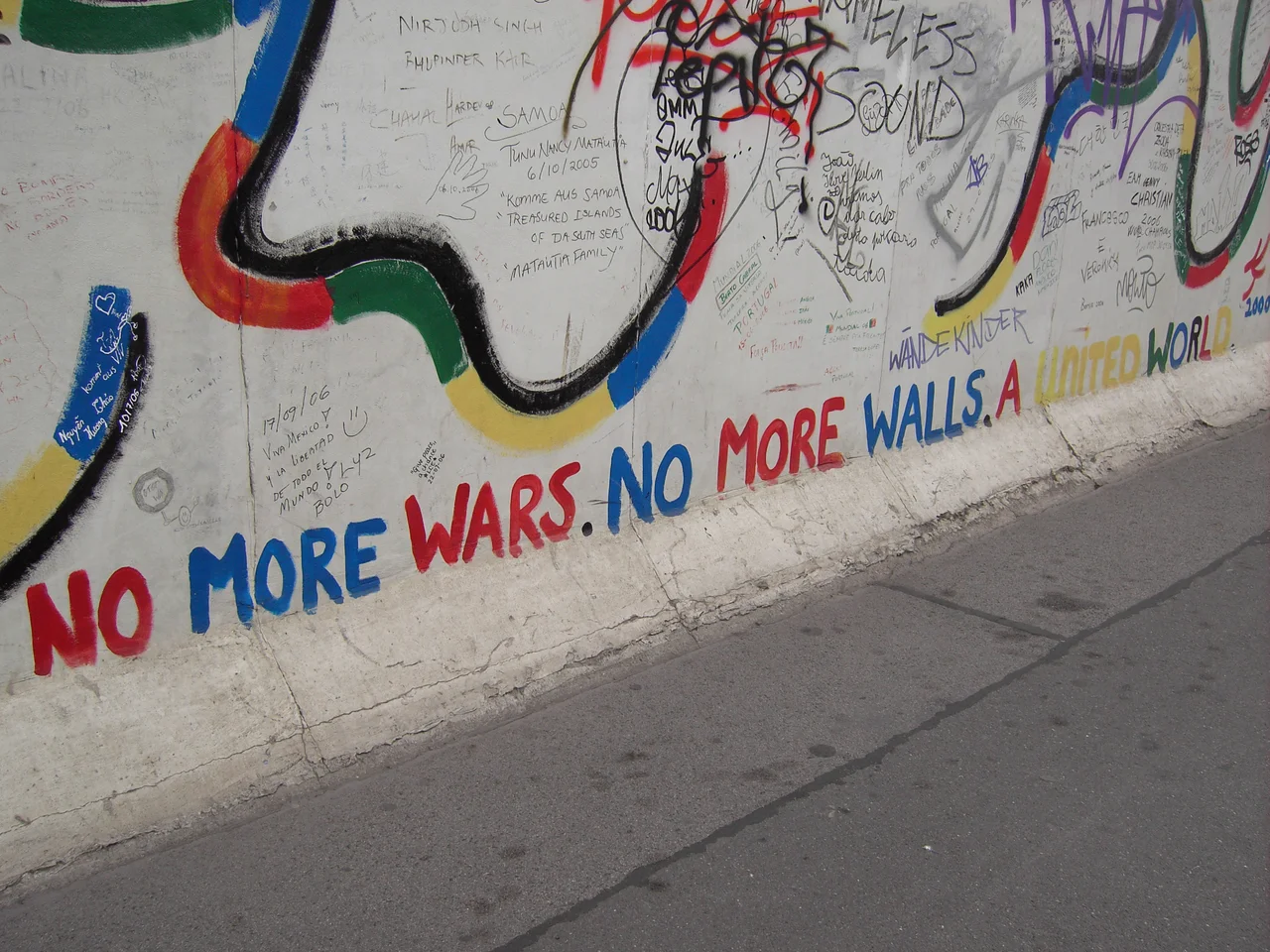

East Side Gallery
At least 140 people died trying to cross the Berlin Wall between 1961 and 1989. They were shot by border guards, drowned in the Spree, or fell from buildings reaching for the West. Most of the wall came down in the months after November 9, 1989 - sledgehammered by Berliners, sold off in chunks to tourists, scraped away by the city wanting to forget it had ever stood. But one section in Friedrichshain stayed up. In the spring of 1990, with German reunification still months away, 118 artists from 21 countries were invited to paint the inner side of a 1.3-kilometer stretch along Muhlenstrasse. They turned the deadliest border in Cold War Europe into the longest open-air mural in the world.
The Wall That Killed
The Berlin Wall was not one wall but two, with a death strip between them - watchtowers, tripwires, raked sand, anti-vehicle obstacles, and guards with orders to shoot. The east-facing inner wall, which is what survives at the East Side Gallery, was thicker and more heavily fortified than the outer one tourists from the West used to photograph. The actual border on this stretch ran along the Spree itself, with the Kreuzberg riverbank already West Berlin. The hinterland mauer that became the gallery existed to seal off East Berliners from their own riverside. People still tried to cross. Chris Gueffroy, the last person shot dead trying to cross the Wall, died in February 1989, nine months before it fell. His name is one of dozens documented at the Berlin Wall Memorial across town. The cheerful murals on the East Side Gallery exist because the Wall they cover did not.
118 Artists, One Spring
When the Kunstlerinitiative East Side Gallery formed in early 1990, the artists who answered the call came from everywhere - Russia, France, the United States, Britain, Iran, Japan, Germany, Hungary, Spain, and a dozen other countries. They painted in a hurry, working with whatever paints they could source, knowing the wall might be torn down at any moment and the political moment would not last. Dimitri Vrubel painted what is now the most famous image at the gallery: My God, Help Me to Survive This Deadly Love, a faithful reproduction of a 1979 photograph showing Soviet leader Leonid Brezhnev kissing East German leader Erich Honecker on the lips - the socialist fraternal kiss made into pop iconography. Birgit Kinder painted a Trabant car appearing to break through the wall. Thierry Noir, who had already been illegally painting on the western face of the wall since 1984, contributed his cartoon heads. Gerhard Lahr painted the panel that would later appear in U2's video for the song One.
Restoration and Conflict
Sun, rain, graffiti, and tourist hands have been rough on the gallery. By the early 2000s two-thirds of the original paintings were so damaged they were unreadable. A non-profit began restoration in 2000, but the project moved slowly. In 2009 the gallery was largely repainted - and the process became enormously controversial. Eight of the original 1990 artists refused to participate, arguing that destroying their original work and asking them to repaint copies violated their rights. The artist Bodo Sperling launched a 2011 lawsuit in Berlin State Court that became a landmark case in European art law. Most of the visible murals today are 2009 replicas, not the 1990 originals. Then in March 2013, with no warning to the artists, demolition crews arrived to remove a 23-meter section to clear space for luxury apartments along the Spree. Protesters physically blocked the bulldozers and the demolition was halted. Berlin had nearly lost the longest surviving stretch of its own wall to a real estate deal.
A Monument With Two Stories
Since 2018 the East Side Gallery has been managed by the Berlin Wall Foundation as part of a unified network of memorial sites. The foundation faces a deliberately contradictory mission: present this place as both a celebration of the peaceful overcoming of the German division and a sober testimony to the GDR border regime that killed people for trying to leave. Both narratives are true. The gallery draws three million visitors a year. Tour groups pose for photographs in front of the Brezhnev-Honecker kiss; couples lean against the painted concrete; teenagers buy postcards of a wall their parents grew up fearing. A few hundred meters away, plaques mark where specific people died. The gallery is what Berlin made of the Wall after the killing stopped - a long, painted, complicated argument about what to remember and how to remember it.
From the Air
The East Side Gallery sits at 52.50 N, 13.44 E on the south bank of the Spree in Friedrichshain, running 1.3 km along Muhlenstrasse between the Berlin Ostbahnhof and the Oberbaumbrucke. The painted wall is too thin to identify directly from typical altitudes, but the corridor along the Spree just east of the historic Berlin Mitte - and the distinctive twin-towered Oberbaumbrucke crossing the river - provide reliable orientation. Berlin Brandenburg (EDDB) is 22 km southeast. The Spree corridor is one of the most photographed waterways in Germany; the river itself is your visual reference.
Nearby Stories
- Battle of the Seelow Heights 24 km away
- Lehnin Abbey 25 km away
- Kingdom of Prussia 43 km away
- Lutherhaus 45 km away
- Lichtenburg Concentration Camp 73 km away
- Szczecin Cathedral 84 km away
- Ludwigslust Palace 121 km away
- Czocha Castle 156 km away