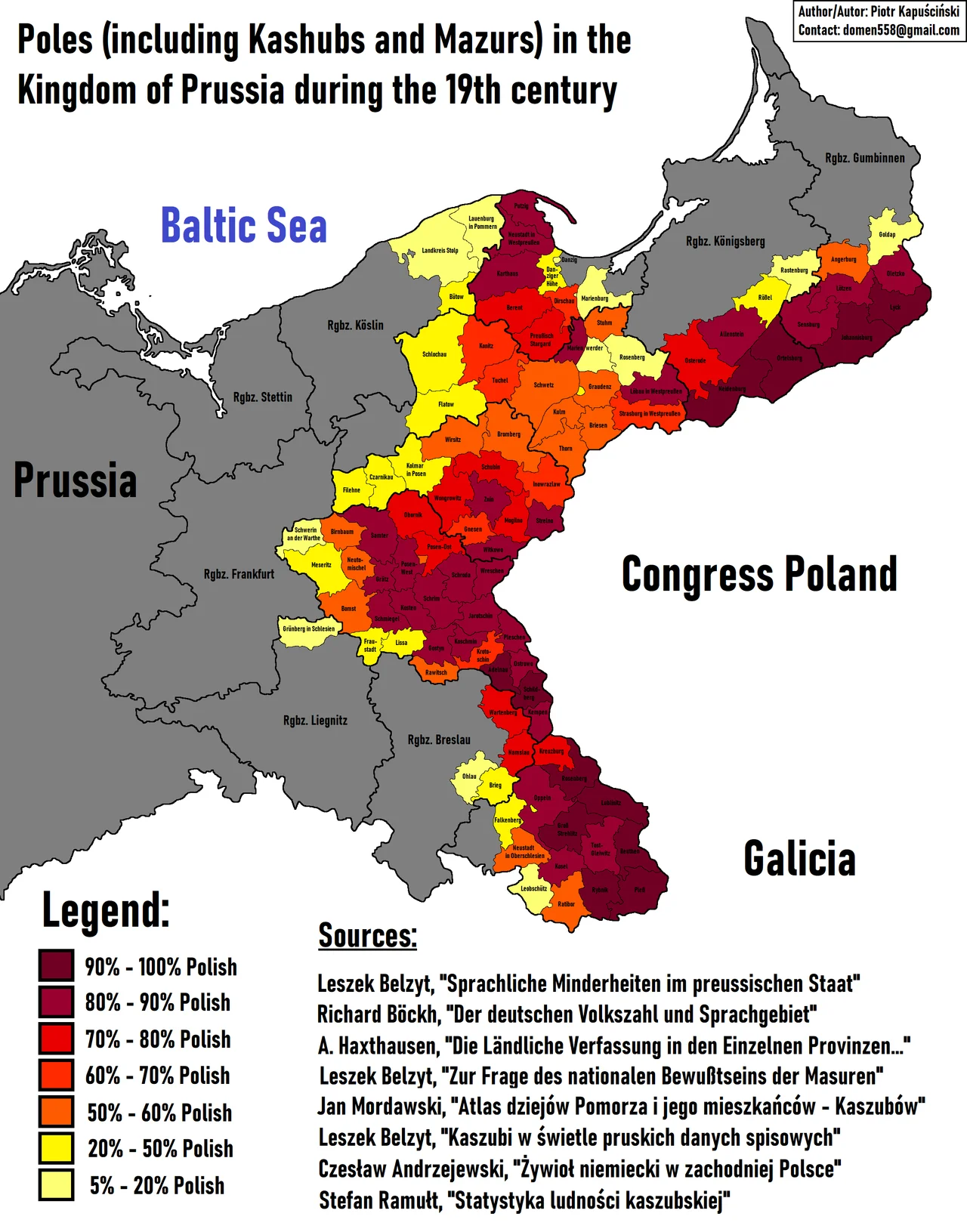

Kingdom of Prussia
There is no Prussia anymore. The Allied Control Council formally abolished it by decree in 1947, declaring that the state which had once dominated Central Europe was "a bearer of militarism and reaction" and would cease to exist. The kingdom that bore the name had already collapsed in November 1918 with the abdication of Kaiser Wilhelm II. But for 217 years before that — from the day Frederick III crowned himself King in Prussia at Königsberg on 18 January 1701 — Prussia was the state that taught Europe what discipline and conscription and bureaucracy could do when they were aimed at a single purpose. By 1871, that purpose was Germany itself.
The Soldier-King and His Sons
Brandenburg-Prussia was a poor, scattered patchwork of territories around Berlin and across the Holy Roman Empire when the Hohenzollern dynasty took it in hand. Frederick William, the "Great Elector," started building the army that would define everything afterwards. His grandson Friedrich Wilhelm I — the soldier-king who introduced compulsory conscription in 1717 and ran the court like a barracks — left his son a treasury and an army out of all proportion to the kingdom's size. That son was Frederick II, the one history calls Frederick the Great. He invaded Silesia in 1740 in his first year on the throne, fought three brutal wars to keep it, and somehow survived the Seven Years' War (1756-63) against Austria, France, Russia, and Sweden combined. By the time he died in 1786, Prussia was a European great power. He had also written flute concertos, hosted Voltaire at Sanssouci, and corresponded with the philosophes. Enlightenment and absolutism in one body.
The Defeat That Made the Reform
In October 1806 Napoleon shattered the Prussian army at the twin battles of Jena and Auerstedt in a single day. The Treaties of Tilsit the following year stripped Prussia of about half its territory and left French troops occupying the rest at Prussian expense. Out of that humiliation came something unexpected: the Prussian Reform Movement led by Karl vom Stein and Karl August von Hardenberg. They abolished serfdom, opened the officer corps to commoners, modernised the bureaucracy, and — at Wilhelm von Humboldt's urging — founded the University of Berlin in 1810 as a symbol that the kingdom would rebuild its mind first. Prussian troops under Marshal Blücher arrived in time at Waterloo in 1815 to help Wellington finish Napoleon. At the Congress of Vienna that followed, Prussia gained the Rhineland, Westphalia, and 40 percent of Saxony. The kingdom now stretched almost continuously across northern Germany.
Bismarck's Three Wars
Otto von Bismarck became Prussian Minister-President in September 1862, in the middle of a constitutional crisis with parliament over the army budget. His method of resolving it was to ignore parliament and proceed. Then he engineered three short wars in eight years: against Denmark in 1864 (over Schleswig and Holstein), against Austria in 1866 (over which power would lead Germany), and against France in 1870-71 (manufactured by Bismarck through a deliberately edited diplomatic telegram). Prussia won all three. On 18 January 1871 — the 170th anniversary of Frederick I's coronation — German princes proclaimed King Wilhelm I of Prussia as Kaiser of a unified German Empire, in the Hall of Mirrors at Versailles, with Paris under siege outside. Prussia held two-thirds of the new empire's territory and three-fifths of its population. The German imperial constitution was essentially Prussia's, scaled up.
The Three-Class Vote
Prussia ran on a famously unequal franchise. Adult men over 25 could vote, but votes were weighted by taxes paid. The richest 4 percent of voters elected one-third of the Prussian House of Representatives. The poorest 82 percent elected another third. The system locked the landowning Junker class — the aristocracy of the eastern provinces — into permanent control of Prussian politics, even as the new Imperial Reichstag elected by universal male suffrage answered to a different electorate entirely. The result was a state with two political nervous systems: a liberalising empire layered on top of a stubbornly conservative kingdom. The contradiction held until November 1918, when the world war broke it.
The End
Defeat in the First World War cost Prussia its monarchy. Wilhelm II abdicated on 9 November 1918 and fled to the Netherlands, where he died in 1941 having seen his cousin's regime overrun his country of refuge. The Free State of Prussia within the Weimar Republic was governed for most of the 1920s by Social Democrats — a strange afterlife for the old militarist kingdom. The Nazis dismembered it administratively in 1934 and 1935. The Allies finished the job in 1947. Today, the name survives only in places: the Prussian state library in Berlin, the Prussian cultural heritage foundation, the Province of Saxony's old Prussian boundaries showing on modern German state maps. The kingdom is gone. The questions it raised about how a small state can shape a continent still are not.
From the Air
The historic Prussian heartland centres on Berlin and Brandenburg at approximately 52.5°N, 13.4°E, with Königsberg (modern Kaliningrad) marking the original eastern coronation site at 54.7°N, 20.5°E. Berlin Brandenburg (EDDB) is the principal airport for Berlin. Other Prussian centres are still served by their own airfields — Hannover (EDDV), Frankfurt (EDDF) for the Rhineland Province, and Dresden (EDDC) for the Province of Saxony. Across modern eastern and central Germany, look from altitude for the brick-Gothic town halls, baroque garrison towns, and the long straight roads laid out for Prussian troop movements that still mark the cultural landscape.
Nearby Stories
- Zehdenick Abbey 2.7 km away
- St. Mary's Church, Chojna 4.1 km away
- Battle of Prenzlau 6.3 km away
- Das Buddhistische Haus 12 km away
- Swiss International Air Lines Flight 850 14 km away
- Chwarszczany 16 km away
- Szczecin Cathedral 20 km away
- Neustrelitz Palace 23 km away