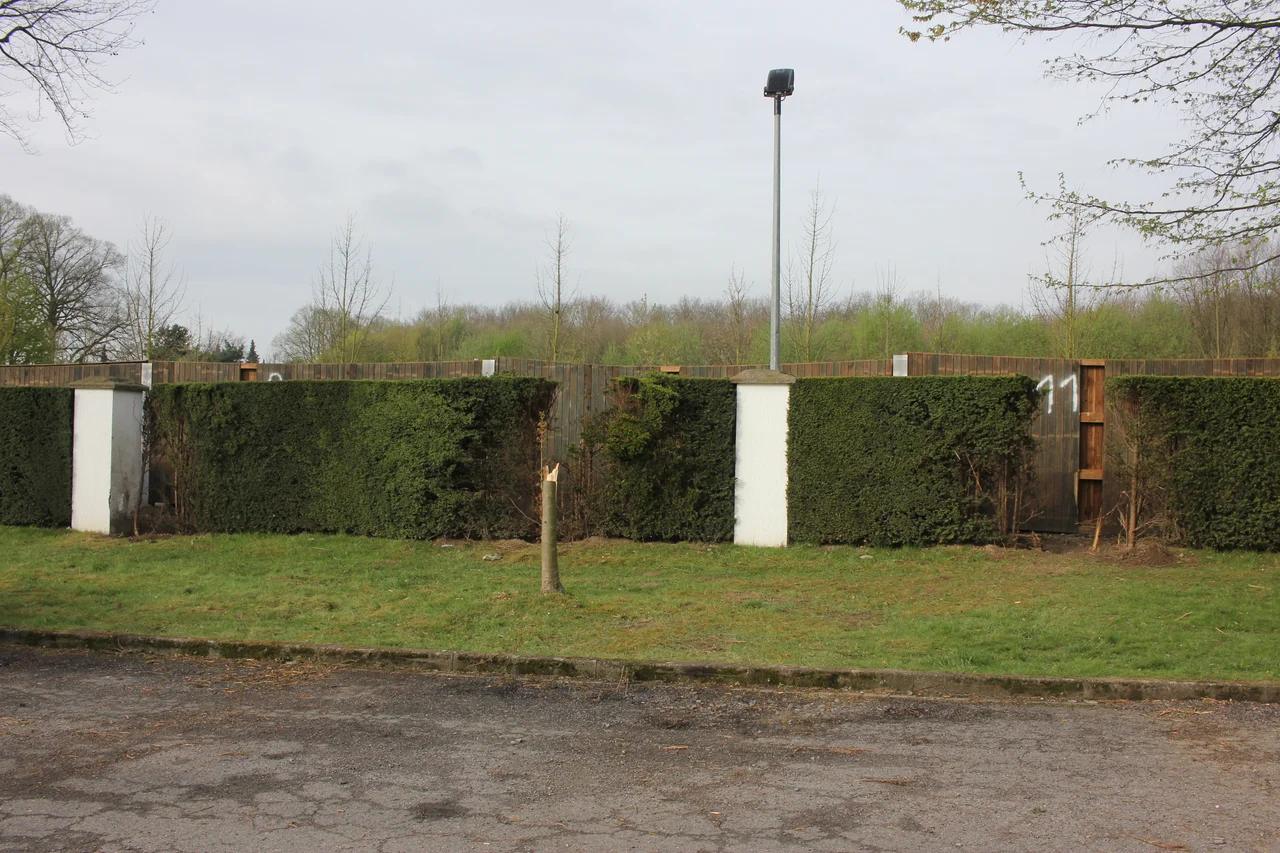

Borussia Dortmund team bus bombing
Marc Bartra felt the blast lift the bus and slam him sideways into the window. The glass shattered into his right wrist and arm. He thought, in the first seconds, that the team had been attacked by a sniper. The real attack was outside, three pipe bombs hidden in a hedge beside the road, detonated by a man watching from a hotel room window. The man was not a terrorist. He was a 28-year-old trader. He had bought put warrants on Borussia Dortmund's share price earlier the same day, and if enough of the team had been killed, those derivatives would have paid him up to 3.9 million euros.
The Bus and the Hedge
It was the evening of 11 April 2017. Borussia Dortmund's first team was on the short ride from their pre-match hotel to the Westfalenstadion for the first leg of the UEFA Champions League quarter-final against AS Monaco. The bus took its usual route along Wittbraucker Strasse. The three pipe bombs, packed with metal pins and built around military-grade detonators, had been hidden in roadside hedges. At about 19:15 local time they exploded almost simultaneously beside the bus. The reinforced windows held back the worst of the blast. Marc Bartra, the Spanish defender, was wounded by flying glass and underwent immediate surgery on his right wrist. A police officer escorting the bus on motorcycle suffered blast injuries and severe shock. The bus was a coach built for VIPs, with strengthened glass. Without that strengthening, investigators later concluded, the attack would almost certainly have produced mass casualties. The 19 other players, the manager, and the support staff all walked off the bus alive.
Three Confessions, None Real
Within hours, three claims of responsibility had surfaced. Three identical letters left at the scene presented an Islamist motive, demanding the closure of the US air base at Ramstein and the withdrawal of German Tornado jets from Syria. A post on the left-wing website IndyMedia claimed the attack was anti-fascist, citing alleged neo-Nazi infiltration of BVB supporter groups. A few days later an email to the newspaper Der Tagesspiegel praised Adolf Hitler and warned against multiculturalism. German investigators noted from the start that the Islamist letter had none of the standard ISIS signatures: no logo, no religious justification, no video, and the strange direct address to the German chancellor. Forensic analysis raised significant doubts. The far-right and far-left claims were also examined and dismissed. The North Rhine-Westphalia Interior Minister called the bombing professional. Federal investigators began to consider whether the false flags themselves were the point: that someone had wanted to make it look like terror without committing terror.
The Banal Truth
On 21 April 2017, a bank's compliance team flagged an unusual transaction. A 28-year-old German-Russian citizen named Sergei Wenergold had bought 78,000 euros' worth of put warrants on Borussia Dortmund's share price on the day of the attack. Put warrants are derivatives that gain value as a share price falls, a mechanism functionally similar to short-selling. Wenergold had used the internet connection in the team's own hotel to make the trade. He had checked into a room facing the road where the bus would later pass, the better to time the detonation. He had written the Islamist letters himself to mislead investigators. The Guardian called it terror fuelled by financial greed. After the attack BVB's share price fell, but only by about 5 percent, and recovered shortly after. The 3.9 million euros never materialised. Wenergold was arrested. In court he claimed he had deliberately reduced the explosive yield from what online instructions suggested, hoping not to kill anyone; prosecutors argued he had built the bombs to kill as many players as possible and asked for life imprisonment. In November 2018 he was sentenced to 14 years in prison.
The Match the Players Did Not Want to Play
UEFA's response was to reschedule the match for the following day, 12 April, at 18:45. Borussia Dortmund CEO Hans-Joachim Watzke, after consulting with the players, announced that the team would play. The manager, Thomas Tuchel, then said publicly that the decision had been forced on his squad against their wishes. The team lost 3-2. Many in German football believe that public disagreement, occurring while Marc Bartra was still in hospital, was the moment that ended Tuchel's tenure at the club, despite winning the DFB-Pokal final at the end of the season. Lothar Matthaus, the former Germany captain, joined the players' union in criticising UEFA's short-term planning. Chancellor Angela Merkel called the attack appalling. The Monaco players had been brought into the stadium without being told the full circumstances, and many of them learned only at the dressing room what had happened to their opponents the night before.
Strangers, Beds, and a Choir
The kindest part of the story does not need much retelling. Monaco's travelling supporters had nowhere to sleep that night, because the postponement had blown their flights and their bookings. Dortmund residents and Dortmund hotels offered free beds. Strangers walked Monaco fans home and gave them their spare rooms. On match day the home and away supporters sang You'll Never Walk Alone together inside the Westfalenstadion. Marc Bartra recovered fully and returned to football. He spoke about the attack publicly for years, describing the long shadow it cast over his sleep. Sergei Wenergold is serving his sentence. The bus has been replaced. On the spot in the hedge where the bombs were hidden, there is now nothing remarkable to see. The story is that 20 men got off a bus alive because someone had once decided to build the windows out of reinforced glass.
From the Air
The attack site was on Wittbraucker Strasse in the Hochsten district of southern Dortmund, near 51.4497 degrees north, 7.5061 degrees east, on the route between the team's hotel and the Westfalenstadion roughly 4 km to the northwest. From the air the area reads as a residential and wooded edge of the city, bordered by autobahn approaches to the stadium. Westfalenstadion is the obvious visual reference. Dortmund Airport (EDLW / DTM) is 9 km east. Recommended viewing altitude 1,000 to 2,000 metres.
Nearby Stories
- Moltkeviertel 3 km away
- Nordkirchen Castle 6.1 km away
- Lembeck Castle 7.4 km away
- Baumberg 11 km away
- Liesborn Abbey 13 km away
- Arnsberg Forest Nature Park 18 km away
- Operation Chastise 21 km away
- Dillenburg 49 km away