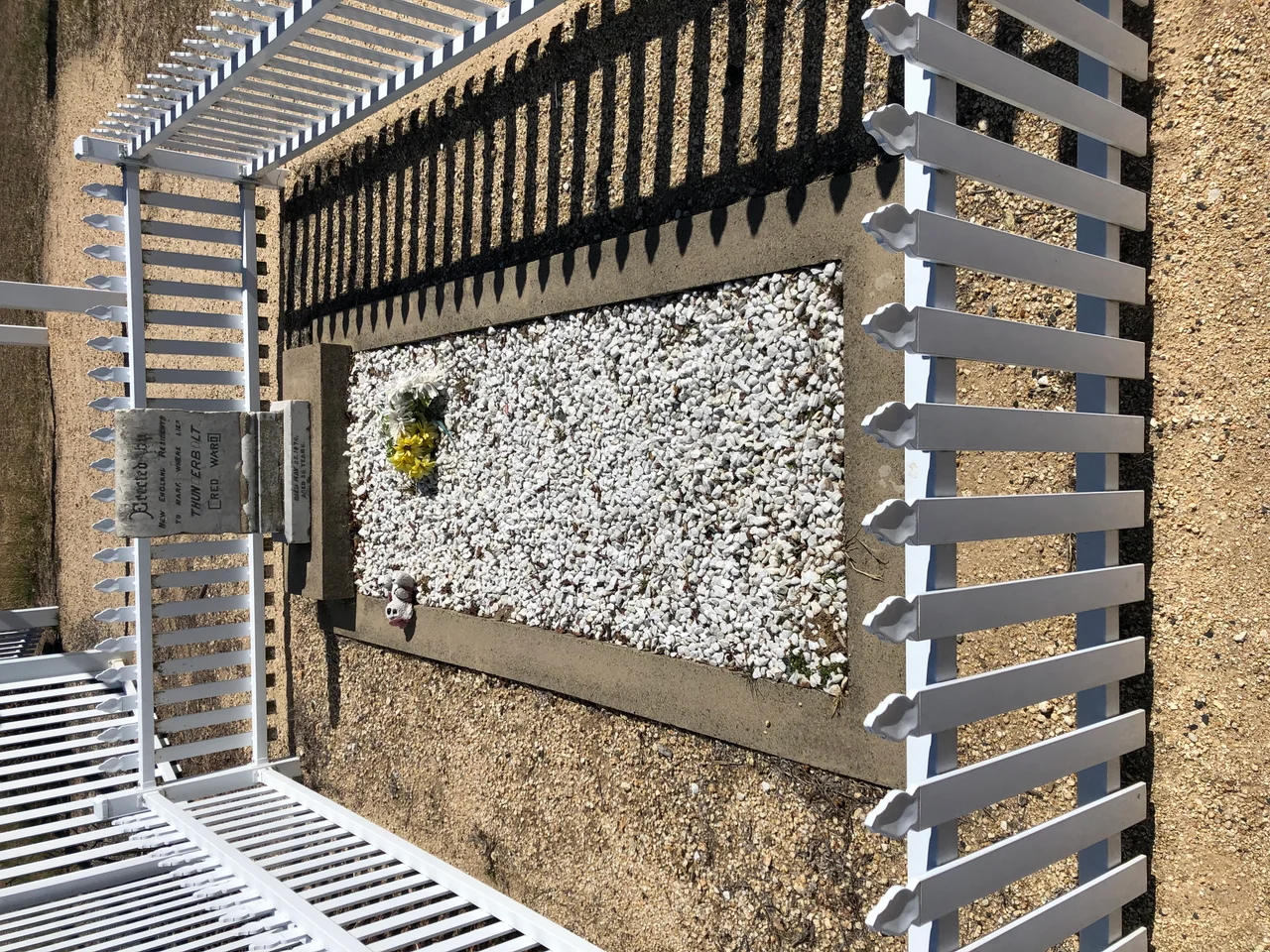

Captain Thunderbolt's Grave
For more than forty years the grave had no marker at all. When Frederick Ward was buried in the old Uralla cemetery on 29 May 1870, four days after a constable shot him dead at Kentucky Creek, he went into the ground without a stone. The bushranger the whole colony knew as Captain Thunderbolt lay anonymous in the New England soil while the legend around his name only grew. Not until 1914 did the people of New England finally raise a marble headstone over the spot, paying for it themselves, choosing to remember an outlaw as one of their own.
An Unmarked Grave
Uralla's cemetery was opened in the 1850s and used into the 1930s, an ordinary country burial ground of pioneers and townsfolk. Into a corner of it, on the afternoon of 29 May 1870, went the body of Fred Ward, with no headstone and no ceremony to mark him out from anyone else. It was a quiet end for a man whose name had filled newspapers for six and a half years. The silence did not last. As the colony moved toward Federation and began telling romantic stories about its bushrangers, Thunderbolt became less a criminal than a folk hero, and an unmarked grave for such a figure came to feel like an omission the district wanted to correct.
A Headstone From the Public
In 1914 New England residents raised a marble headstone over the grave, designed by a monumental mason named Callcott of Armidale. Its inscription is plain and revealing. 'Erected by New England residents to mark where lies Thunderbolt,' it reads, and then, almost as an afterthought in brackets, his real name: Fred Ward. Died May 25, 1870, aged 36 years. That a community would pool its money to honour a man who had robbed travellers across their own roads says a great deal about how thoroughly the outlaw had been folded into local affection. The grave sits at the southern boundary of the cemetery, now ringed by a picket fence added in 2011 and clearly signposted for the many who come looking.
The Woman History Nearly Forgot
No stone in this cemetery records the person who made much of Thunderbolt's freedom possible. Mary Ann Bugg was a Worimi woman, born in 1834, an expert horsewoman and bush navigator whose traditional knowledge of country kept the gang fed and ahead of the police for years. For roughly four years she was his partner and, by one account, his right-hand in everything but name. The romance industry that turned Ward into a hero shrank her to a footnote, yet her story outlasts his by decades. Long after the constable's bullet found Thunderbolt, Mary Ann lived on, raised more children, worked as a nurse, bought land, and died at Mudgee in 1905. She deserves to be remembered as more than the bushranger's shadow.
Questions in the Ground
A faint mystery still hovers over the grave. Almost from the moment of his death, some questioned whether the body Constable Walker brought in was truly Thunderbolt or another man caught up in the day's events. The scar behind the dead man's left knee, from a bullet taken near Uralla in 1863, was used to confirm his identity, and most historians regard the matter as settled. But the heritage assessment notes that the remains themselves could one day yield more, that forensic examination might resolve old doubts and reveal something of how he died and how the times buried their dead. For now the marble simply marks where New England chose to lay its most famous outlaw to rest.
From the Air
The grave lies in the old Uralla cemetery at roughly 30.64 degrees south, 151.49 degrees east, on the southern edge of Uralla township on the New England Tablelands, around 1,000 metres elevation. From the air the cemetery reads as a small fenced rectangle of grass and headstones at the town's edge, with the New England Highway running close by; Thunderbolt's Rock lies about 7 kilometres south and his death site a few kilometres beyond. The nearest airport is Armidale (ICAO YARM), about 25 kilometres north, with Tamworth Regional (YSTW) roughly 75 kilometres south-west. As across the wider tableland, winter mornings bring frost and fog, so clear daytime light is best for picking out the township and its surrounding grid of paddocks.
Nearby Stories
- Wollomombi Falls 22 km away
- Walcha, New South Wales 23 km away
- Guyra, New South Wales 39 km away
- Ebor Falls 45 km away
- Bingara 65 km away
- Roxy Theatre and Peters Greek Cafe Complex 93 km away
- Jervis Bay 458 km away
- SS Elingamite: Gold, Fog, and a Captain Wrongly Blamed 1920 km away