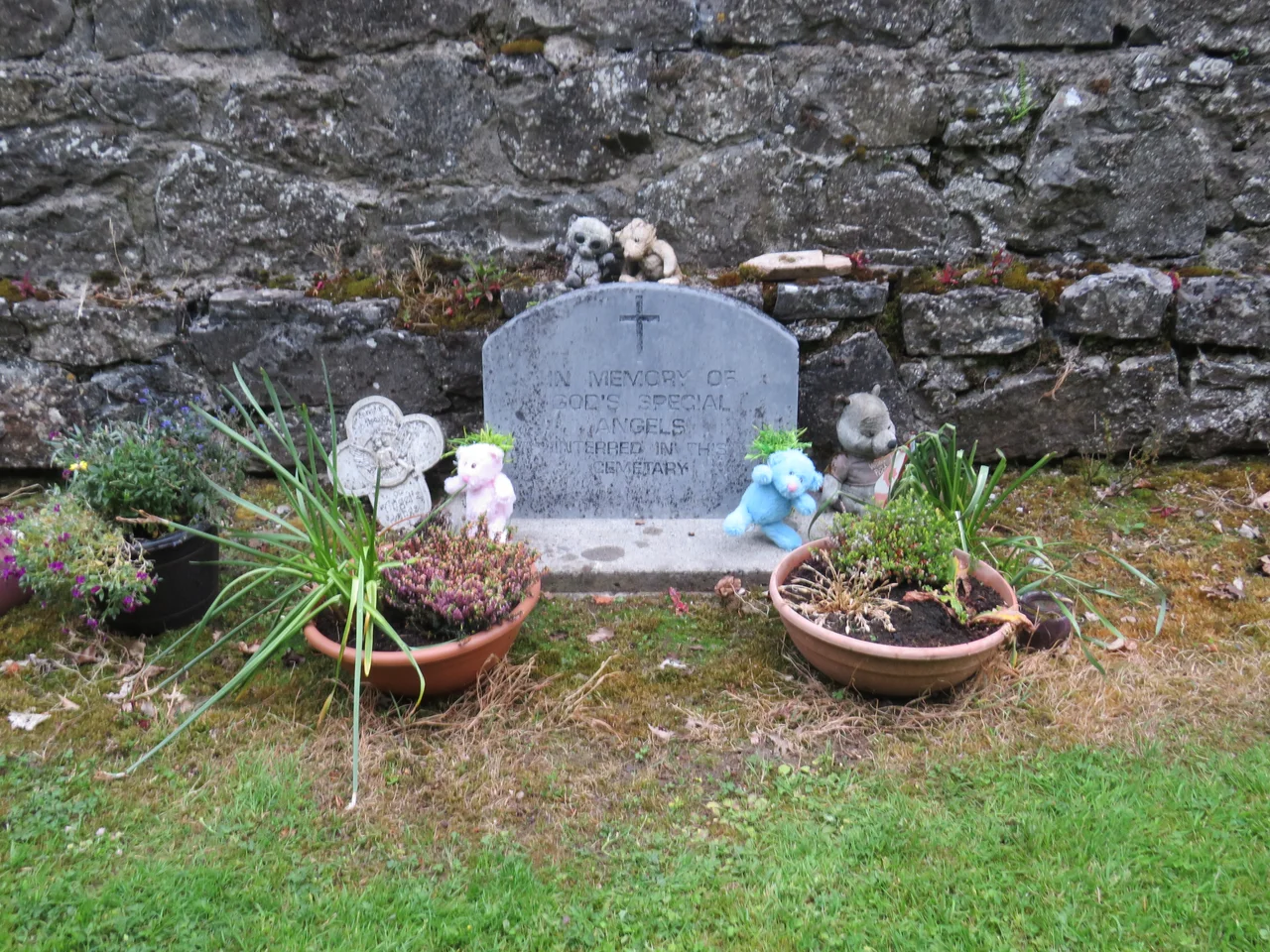

Castlepollard Mother & Baby Home
Four thousand nine hundred and seventy-two women were sent here. Four thousand five hundred and fifty-nine children were born here. The numbers are exact because the Sisters of the Sacred Hearts of Jesus and Mary kept careful records, and because in the past decade an Irish government Commission of Investigation has gone through those records, line by line, to give some account of what happened inside the Kinturk Demesne at Castlepollard between 1935 and 1971. The buildings still stand. The walled garden is overgrown. The 1938 hospital, designed by the architect Thomas J. Cullen and largely paid for by the Irish Hospital Sweepstakes, sits empty. The story of what these walls held is one Ireland has only recently begun to tell.
What the Place Was Built For
The home opened in 1935 in Kinturk Manor House, a Georgian residence built around 1760 by the 'Old English' Pollard family, with wings added in 1821. Its original capacity was modest: 37 women and 20 children. By 1937 there were 56 women and 48 children. By 1941 the population had swelled to more than three times the original capacity, with women forced to sleep in the annexe — the former servants' quarters around the enclosed farmyard. The nuns were running an institution into which Irish society had begun pouring its unmarried daughters. The sisters were responsible for their care. They had little training in midwifery or obstetrics, and there is evidence — interviews recorded by the official investigation — that some of the women were beaten with sticks. At least thirty-four infants are alleged to have died in the period before the new hospital opened in 1942.
Who the Women Were
They came from Westmeath, Meath, Cavan, Offaly — sometimes further. They were usually young, almost always poor. Some had been sent by their families. Some had been sent by their parish priests. Some had been delivered by the Gardaí, who had picked them up on the road and had nowhere else to put them. The system that produced them — the moral economy of post-independence Ireland, in which an unmarried pregnant woman could not be acknowledged at home, could not work, could not show her face in public — was as much the institution's structure as the walls themselves. Once they arrived, they worked. They scrubbed floors, tended the laundry, looked after each other's babies, and waited to give birth. After the birth they nursed their children until the children were taken from them, often without their meaningful consent and sometimes, the records suggest, in exchange for payments from prospective adoptive families in Ireland and the United States.
The Children
Four thousand five hundred and fifty-nine babies were born at Castlepollard between 1935 and 1971. Hundreds of them died there. Infant mortality at the home was significantly above the national average for years at a stretch — partly through overcrowding, partly through inadequate medical care, partly through diseases that ripped through closed institutions full of small children. In 1949, after intervention by Department of Local Government and Public Health inspector Miss Lister, the rate finally dropped to the national average of around 3%, and Miss Lister wrote a letter of praise to the community. By then many years of higher mortality had already passed. No reburials of infants who died at Castlepollard have ever been undertaken; the official investigation concluded that the remains are unlikely to survive in identifiable form after so many decades in unmarked ground.
How the Truth Came Out
For most of the twentieth century, Ireland did not discuss the Mother and Baby Homes. The women who passed through them were warned not to speak of it; many spent the rest of their lives in silence, including from their own later families. The breakthrough came in 2014, when the historian Catherine Corless's research at the Bon Secours home in Tuam, County Galway, revealed that the remains of hundreds of children were buried in a disused sewage chamber on the grounds. The shock prompted a national Commission of Investigation. Castlepollard was one of eighteen institutions examined. The Commission published a 3,000-page report in January 2021. The Sisters of the Sacred Hearts of Jesus and Mary issued an apology shortly afterward. So did the Irish state. Survivors — the women who had been sent there as girls, the children who were adopted out — had been asking for these acknowledgments, in many cases, for decades.
What Remains at Kinturk
The Health Service Executive owns the property now. The 1938 hospital and the older Kinturk Manor House sit empty. A smaller building on the site operates as a public medical centre, and bungalows on the grounds serve as residences for people with disabilities. The walled garden and the enclosed farmyard are slowly going back to nature. A craft workshop is unused. The campus is two kilometres west of Castlepollard village, set back from the road, the same view across pastureland that thousands of women and children once knew from the inside of those buildings. There is no formal memorial yet on the site. The names of the women and the children remain, in many cases, the responsibility of survivors and family members trying to gather them — to make sure that what happened at Castlepollard is not forgotten, and that the people it happened to are remembered as people, not as statistics.
From the Air
The Castlepollard Mother & Baby Home occupies the former Kinturk Demesne at approximately 53.68°N, 7.30°W, two kilometres west of Castlepollard village in northern County Westmeath. From cruise altitudes of 3,000–5,000 ft the layout is visible: the Georgian manor house, the 1938 hospital, the walled garden, the farmyard, set in pastureland on the gentle drumlin landscape that defines this part of the midlands. Lough Lene lies a short distance to the north, Lough Derravaragh to the southwest. The nearest controlled airspace is Dublin (EIDW), about 100 km southeast; Casement Aerodrome (EIME) lies due southeast. Knock (EIKN) is further west. Visibility in the midlands is often marginal; on a clear day the lakes and the small towns of north Westmeath spread out beneath in a green quilt that gives no hint of what the buildings hold.
Nearby Stories
- Mount Temple, County Westmeath 2.9 km away
- St Mel's Cathedral 5 km away
- Athlumney Castle 5.7 km away
- Maynooth University 8 km away
- Cavan 10 km away
- Shannon-Erne Waterway 11 km away
- Kilbeggan Distillery 21 km away
- 1989 Jonesborough Ambush 23 km away