
Chernobyl Exclusion Zone
Wolves walk where buses no longer run. Inside the boundary the Soviets drew around the wound at Reactor 4, a forest of dead Scots pines turned the color of rust and earned a nickname that has outlasted the trees themselves: the Red Forest. Decades later, that contaminated woodland is one of the most accidentally pristine ecosystems in Europe. The exclusion zone covers roughly 2,600 square kilometers of northern Ukraine and a slice of southern Belarus, and the most surprising thing about it is not the abandoned apartment blocks of Pripyat or the rusted Ferris wheel that never turned. It is that life kept moving in.
The Line on the Map
The first boundary, drawn in the panicked spring of 1986, was a 30-kilometer circle around the destroyed reactor. It was meant to be temporary. Forty years later, it is still there, though the shape has grown more complicated as scientists mapped where the cesium and strontium actually settled. The zone is administered by the State Agency of Ukraine on Exclusion Zone Management, headquartered in the town of Chernobyl itself, where workers rotate in and out on shift schedules designed to limit their lifetime radiation dose. Two general stores and a hotel keep the lights on. Beyond the inner perimeter, the road signs simply stop pointing anywhere, because there is nowhere left to go.
The Babushkas
Within months of the evacuation, a small number of older residents quietly walked back to the villages they had been forced to leave. Most were women in their sixties and seventies. They tended kitchen gardens, kept chickens, and outlived the actuarial tables. Officials called them samosely, the self-settlers, and after a brief attempt at enforcement, the state largely left them alone. Their numbers have dwindled to roughly 100 to 150, almost all elderly, but the documentary record they left behind is remarkable. The 2015 film The Babushkas of Chernobyl follows several of them through ordinary days that include forbidden mushrooms, pickled cucumbers, and an unhurried theology of staying put. Asked why they returned, most gave variations on the same answer: this is home, and radiation is invisible, and old age is coming for them anyway.
Wildlife in the Wound
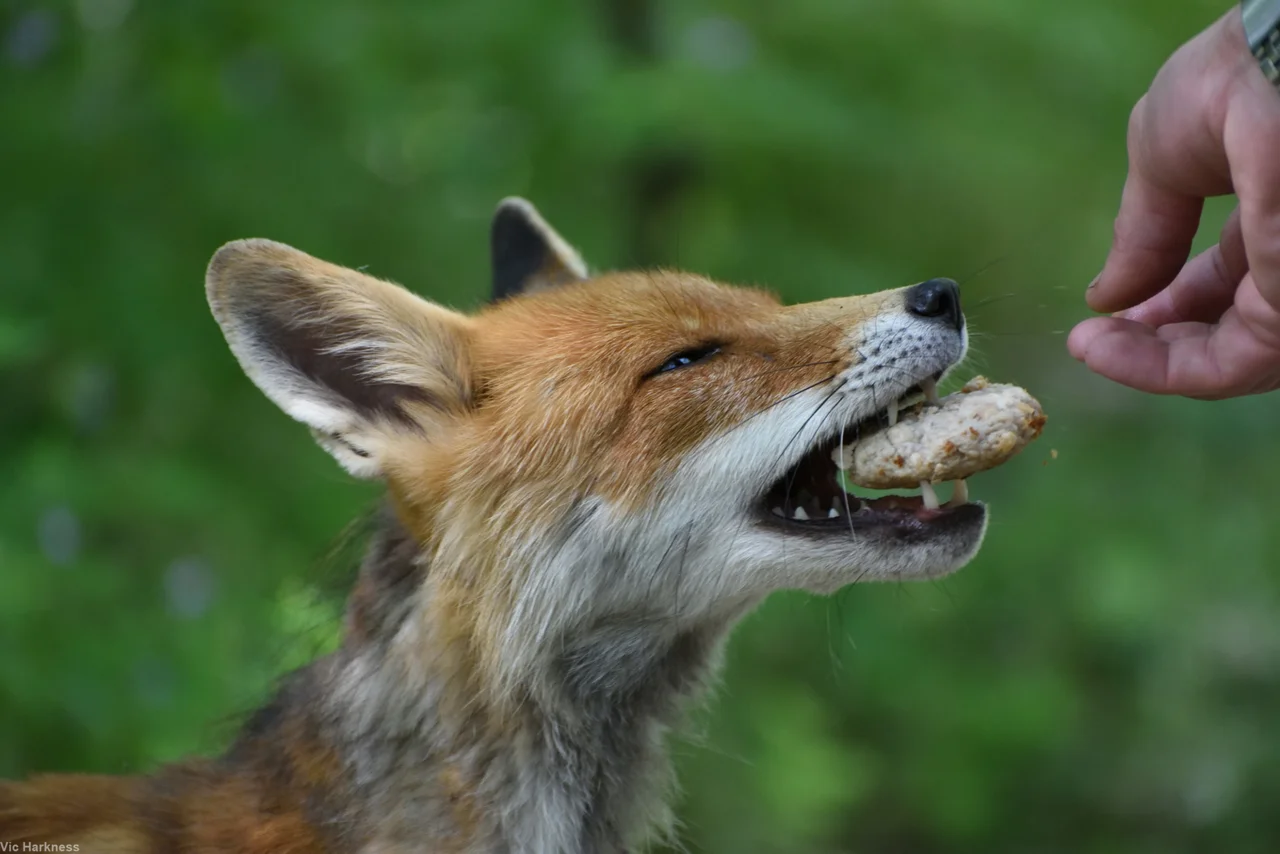
Camera traps placed throughout the zone now capture an animal census that would astonish anyone who stood at the perimeter in 1986. Gray wolves move in packs through abandoned villages. European bison, lynx, brown bears, moose, beavers, and white-tailed eagles have returned in numbers higher than the surrounding inhabited countryside supports. The science remains contested. Researchers like Anders Pape Møller have documented smaller brain sizes in birds living in the most contaminated areas, while others including Professor Nick Beresford argue that the absence of farms, hunters, and roads has done more good than radiation has done harm. Both can be true. The exclusion zone is a cruel and accidental experiment in what happens when humans simply leave.
Fire, Drone, and War
The zone has refused to stay quiet. Wildfires periodically tear through the dead pines and dry grasses, lifting cesium-137 back into the air; serious fires burned in 1986, 1992, 2010, and 2020. In February 2022, Russian forces seized the plant on the first day of the full-scale invasion, dug trenches in the Red Forest, and reportedly suffered acute radiation sickness for their trouble before withdrawing in late March. In February 2025, a Russian Geran-2 drone struck the New Safe Confinement arch over Reactor 4, opening a hole through the outer cladding. The IAEA later assessed that the structure had lost its primary safety functions. The zone, which was supposed to be the world's most carefully managed monument to a contained disaster, has instead become one of the more contested pieces of geography in Europe.
The Pull of the Place
Tourism, briefly booming after the HBO miniseries Chernobyl aired in 2019, brought thousands of visitors a year through licensed operators based in Kyiv. Permits are paused during wartime, but the fascination has not gone away. The video game series S.T.A.L.K.E.R., the Pink Floyd music video for Marooned, the documentary The Russian Woodpecker about the looming Duga radar antennas just south of the plant, the Markiyan Kamysh memoirs of illegal pilgrimages on foot through the woods at night - all of it speaks to something about this place that exceeds its original meaning. The zone is a museum, a wilderness, a crime scene, and a frontier. The wolves do not seem to mind.
From the Air
Center coordinates 51.30 N, 30.00 E. The exclusion zone sprawls roughly 100 km north of Kyiv, straddling the Belarus-Ukraine border along the Pripyat River. From cruising altitude, look for the cooling pond and reactor complex south of the river, the abandoned grid of Pripyat 3 km to the west, and the dark mass of the Red Forest immediately surrounding ground zero. Nearest airports: UKKK (Kyiv Zhuliany, ~110 km south), UKBB (Kyiv Boryspil, ~130 km southeast), UMGG (Gomel, Belarus, ~110 km north). Ukrainian airspace remains closed to civil traffic during the ongoing war.
Nearby Stories
- Slavutych 12 km away
- Polesie State Radioecological Reserve 17 km away
- Oster 21 km away
- 1995 Borodianka Mid-Air Collision 28 km away
- Malyn 30 km away
- Ovruch 51 km away
- Liubech 52 km away
- Nesvizh Castle 272 km away