
Dedebit Elementary School airstrike
The youngest was a baby, one year old. Fifteen of the dead at Dedebit Elementary School on the night of 7 January 2022 were children. The oldest were women in their fifties and sixties who had walked there from Humera in Western Tigray, driven from their homes by Amhara regional forces two months earlier. They were sleeping in a primary school classroom in a small town in northwest Tigray when the first bomb went through the roof, and they were running for the gate when the second bomb landed near it, killing more of them as they tried to escape. By morning, between 56 and 59 people were dead, and at least thirty more were injured.
Who Was Inside
The people sheltering at Dedebit Elementary School on the night of 7 January were internally displaced persons - refugees in their own country. Amhara regional forces had taken control of Tigray's Western Zone by the end of November 2020, and by December 2021 they had forcibly expelled roughly 1.2 million Tigrayans from the area. About 29,000 fled into North Western Tigray in mid-December 2021. Roughly 4,000 of them made it to Dedebit. The IDP camp at Dedebit Elementary School was established in November 2021. By the end of that month, 3,463 displaced persons were officially registered as living there. According to the aid workers on the ground, many - perhaps most - of the people in the camp were women and children. In the days immediately before the airstrike, some residents noticed a drone circling over the town.
The Bomb in the Classroom
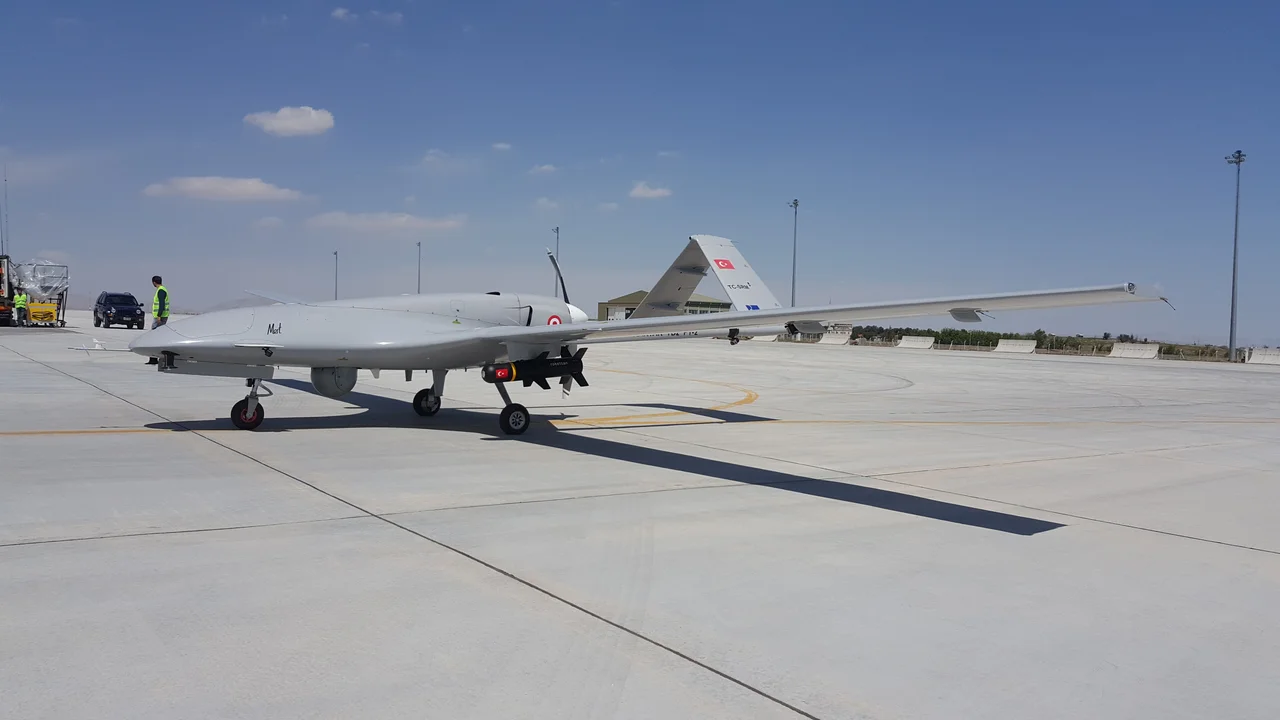
At some point between 11 p.m. and midnight local time on 7 January 2022 - Ethiopian Christmas - an armed drone dropped three laser-guided MAM-L bombs on the camp. The first struck the main school building, blowing a hole in the roof and killing most people within its blast radius. The second dropped near the main gate as people fled, killing more. The third landed northeast of the first and caused no additional reported casualties. One survivor described being woken by what he first thought was combat, until he saw the dismembered bodies of his neighbours and understood. Another survivor said three families had been wiped out. Bodies had been burned or blown apart so completely that the exact count of dead was difficult to establish. The initial bomb toll was at least 53 killed, 15 of them children; three more died later of their injuries at Shire Suhul General Hospital. All of the victims were former residents of Humera - the town they had been driven out of two months before.
Who Did It, and How They Knew
The Ethiopian National Defense Force was the only military in the conflict using armed drones at the time. Open-source investigators traced the flight path and concluded that Bahir Dar Airport in the Amhara Region - about 278 kilometres south of Dedebit - was the only base close enough for a Bayraktar TB2 drone to launch MAM-L munitions and return. The TB2 is a Turkish-made combat drone; neither Turkey nor Ethiopia has publicly confirmed the supply relationship, though independent reporting has documented it. The International Commission of Human Rights Experts on Ethiopia (ICHREE), established by the UN Human Rights Council, noted in its subsequent investigation that MAM-L munitions are 'surgical' in nature - providing real-time video and targeting to the drone operator. The placements of the first and second bombs - one in the sheltering building, one at the escape route - led the commission to conclude that the Ethiopian military had 'violated the principles of precaution and proportionality' and 'intentionally directed an attack against civilians.'
Afterwards
Surviving camp residents spent the rest of the night in fields outside the school grounds. Video footage recorded by Tigrai TV, a TPLF-affiliated media outlet, shows a priest sprinkling holy water on the dead while survivors audibly mourn. UN Secretary-General Antonio Guterres said he was 'heartbroken by the suffering of the Ethiopian people.' The UN High Commissioner for Human Rights spokesperson Liz Throssell said failure to respect the principles of distinction and proportionality 'could amount to war crimes.' EU High Representative Josep Borrell and the U.S. Bureau of African Affairs both condemned the attack. On 20 January, OCHA announced the relocation of 5,000 IDPs from Dedebit to Selekleka. Between 7 and 14 January, the ETAF airstrike campaign on Tigray killed at least 108 people and injured 75 - Dedebit was its deadliest single strike. In a statement to the BBC on 30 January, Government Communication Service minister Legesse Tulu acknowledged Ethiopia was using armed drones but refused to say where they were obtained and claimed civilians were not being targeted. Turkey did not respond to questions.
The Name of the Place
Dedebit is not a famous name. A small town in the northwestern corner of Tigray, on the road between Humera and Shire, it had a primary school that, before November 2021, taught children. For two months in late 2021 and early 2022 it became a refuge for families fleeing ethnic cleansing in the Western Zone. For the ninety seconds of the airstrike on 7 January 2022 it became a crime scene. Some of the dead would never be named - survivors and aid workers could not identify everyone whose remains they buried. The youngest victim was a one-year-old baby whose mother had carried her from Humera. The ceasefire that would eventually end the Tigray War began on 24 March, less than three months later. The crime at Dedebit is documented in a report by the UN Human Rights Council that Ethiopia and Turkey have ignored. Neither government has been held to account. The displaced people who survived moved on to other camps, and the school, whose children had nothing to do with any of it, stands emptied in a town that did nothing to deserve what happened to its primary school on Ethiopian Christmas night.
From the Air
Dedebit is at 14.10N, 37.93E in North Western Tigray, Ethiopia, at about 1,300m elevation. The nearest airport is Shire Inda Selassie (HASH/SHC), about 55 km southeast. Axum (HAAX/AXU) lies about 110 km east, Gondar (HAGN/GDQ) about 170 km south. Tigray airspace has been sensitive and restricted since 2020; current NOTAMs and security advisories must be checked before any operations. Do not overfly without authorization. Recommended viewing altitude from a safe distance, 10,000-12,000 ft AGL.
Nearby Stories
- Eritrean-Ethiopian War 23 km away
- Western Zone, Tigray 33 km away
- Church of Our Lady Mary of Zion 43 km away
- Simien Mountains 46 km away
- Welkait 52 km away
- Eritrea-Sudan Border 77 km away
- Southern region (Eritrea) 85 km away
- Kassala 148 km away