
Eden Camp Museum
Stan Johnson bought the overgrown camp near Malton in 1985 because he was going to put up a potato crisp factory. Then three elderly Italians walked in. They had been prisoners here from 1943, sent up to Yorkshire from the North African campaign, and they wanted to see the place again before they died. Johnson took them around the rotting huts. By the time they left he had abandoned the crisp factory. He spent the next two years clearing brambles and patching roofs, and on 21 March 1987 he opened Eden Camp as a museum. It billed itself, with characteristic Yorkshire confidence, as the world's first Modern History Theme Museum.
From Barbed Wire to Carbon Neutral
The War Office requisitioned the land from the Fitzwilliam Estates in early 1942 and started with tents inside a barbed wire fence. By mid-1943 the permanent camp of 33 huts was complete, and the first Italian POWs arrived - captured in Libya and Tunisia, most of them - to be put to work in the surrounding farms. They were moved out at the end of 1943. Polish soldiers assembling for the invasion of Europe used the camp in early 1944, then the first German prisoners arrived that summer. The last German prisoner left in early 1949. Then the place did what surplus military buildings always do in Britain: it got handed around. Agricultural holiday camp from 1950 to 1955, where city families paid for board and worked on local farms. Ministry of Agriculture depot in 1952. Pheasant rearing sheds and grain storage from 1955 under Headley Wise and Sons. Then thirty years of bramble, until the Italians came back.
Bread Shoes and Human Torpedoes
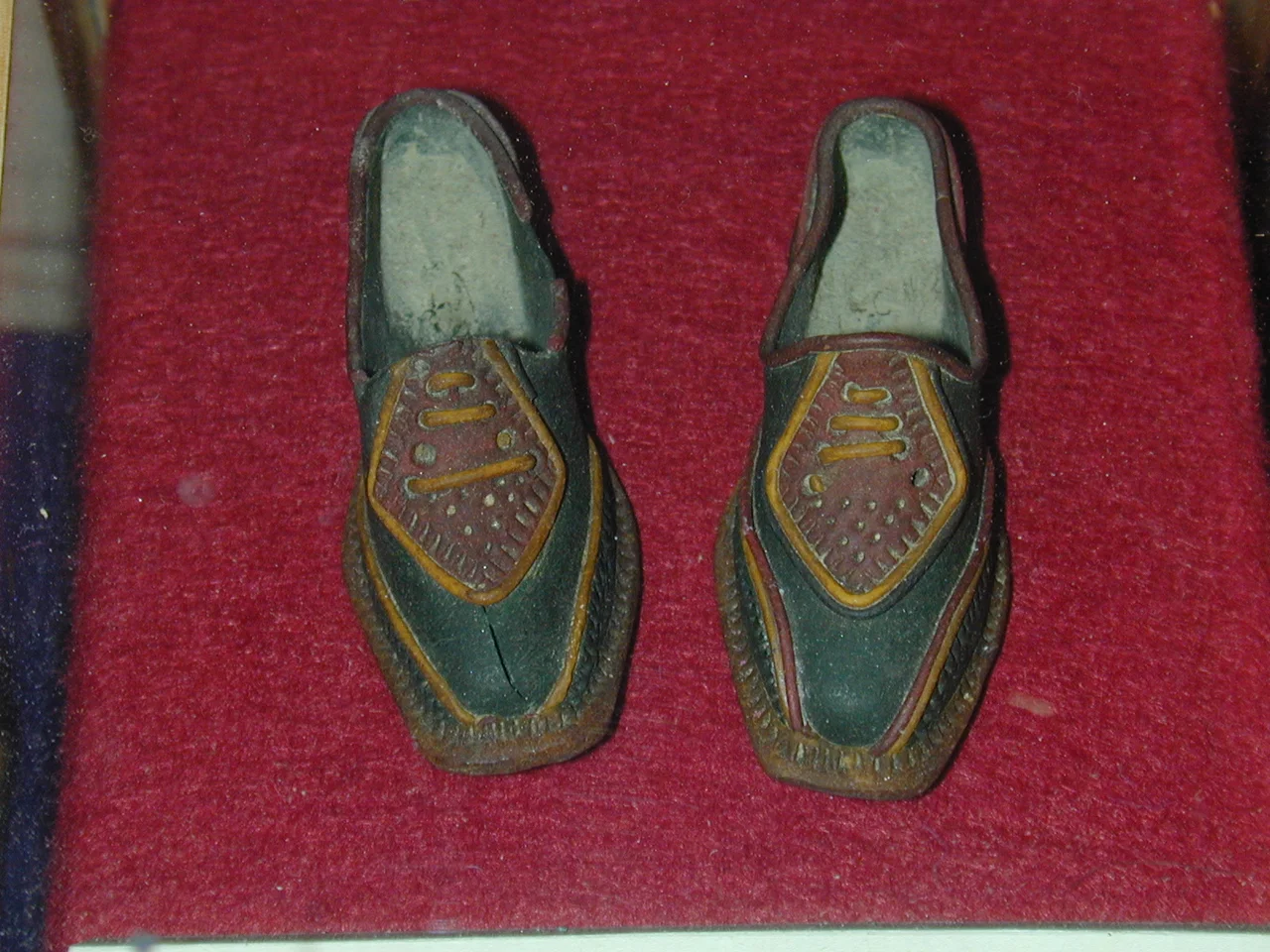
What the huts hold now is not a single exhibit but a labyrinth. Hut 10 is the POW collection - bread that was carved into ornaments, shoes made from rope and tin, the small painful inventiveness of men with too much time. Hut 11 covers the First World War. Huts 24 onward run through the political and military history of 1919 to 1945. There is a Sherman tank - actually an Israeli Super Sherman M50 - fully restored to running condition, and one of the other huts holds three human torpedoes and a Sleeping Beauty Motorised Submersible Canoe, the SOE's tiny one-man underwater raiding craft. A reproduction V-1 flying bomb sits on its launching ramp. The Blitz Experience in Hut 5 was rebuilt in 2022 by Technically Creative, with historical artefacts and theatre tricks recreating an air raid. Prince Philip came to see the place in November 2002. It has won Yorkshire Visitor Attraction of the Year twice and once placed runner-up nationally to the London Eye.
The Italian Who Made the Shoes
Among the artefacts in Hut 10 is a pair of shoes that an Italian POW made out of plaited bread crusts during his time at Eden Camp, simply because he could. The men who came here from 1943 to 1949 lived behind wire on the Yorkshire Wolds while their families across Italy and Germany lived through the war's end and its aftermath. Many of them never wanted to leave - dozens of Italian POWs stayed in Britain after their release and married local women. The three men who walked in on Stan Johnson in 1985 had not forgotten this corner of North Yorkshire, and the museum exists because they wanted other people to remember it too. The treatment was not always kind. The country was at war. But the camp was small enough that prisoners and guards knew each other's faces, and the shoes and the bread carvings and the photographs are the record of human beings who, for a few years, were here against their will and tried to make something with their hands anyway.
Carbon Neutral by 2030
After the pandemic closures of 2020 and 2021 the museum spent roughly a quarter of a million pounds putting the eighty-year-old buildings back into condition. New roofs, doors, and windows on the original huts. Wildflower meadows sown across the site. A new toilet block running on its own solar panels. The diesel generator that had powered the camp for decades was replaced with a proper electricity supply, cutting the annual carbon footprint by more than 77 percent. The Heritage Hall opened in April 2022 - a large modern exhibition space that doubles as a wedding venue (Eden Camp got its ceremony licence in January 2023). The aim is carbon neutral by 2030. A site that started as barbed wire around tents on requisitioned farmland is now hosting weddings under restored Sherman tanks, with wildflowers growing between the huts where Italian prisoners once lined up for roll call.
From the Air
Located at 54.15 N, 0.78 W just north of Malton in North Yorkshire, on the A169 road heading toward Pickering. The site sits in flat farmland on the edge of the Vale of Pickering, with the North York Moors rising 5 km to the north. Nearest civil airport is Teesside International (EGNV), 65 km northwest. Humberside (EGNJ) lies 60 km southeast. The 33 hut layout is recognisable from the air, arranged in two parallel rows. Best viewed at 1,500 to 2,500 feet AGL.
Nearby Stories
- 1892 Thirsk Rail Crash 4.3 km away
- Filey Brigg 5.6 km away
- Yorkshire Air Museum 7.2 km away
- Staithes 8.9 km away
- Darlington 10 km away
- Harewood House 11 km away
- Burton Constable Hall 20 km away
- Breagh Gas Field 56 km away