
Factory Records
Tony Wilson gave his coffin a catalogue number. FAC 501. The man who founded Factory Records in 1978 with actor Alan Erasmus had numbered everything else - posters, lawsuits, a hairdressing salon (FAC 98), the Haçienda's cat (FAC 191), even a bet he made with Joy Division's manager Rob Gretton (FAC 253) - and when he died on 10 August 2007 at the age of 57, while being treated for renal cancer, it seemed only consistent. Factory was less a record label than an aesthetic in motion. Most of its accountants quit. Most of its bands changed pop music. And most of the money the label ever made, it spent.
A Club Called The Factory
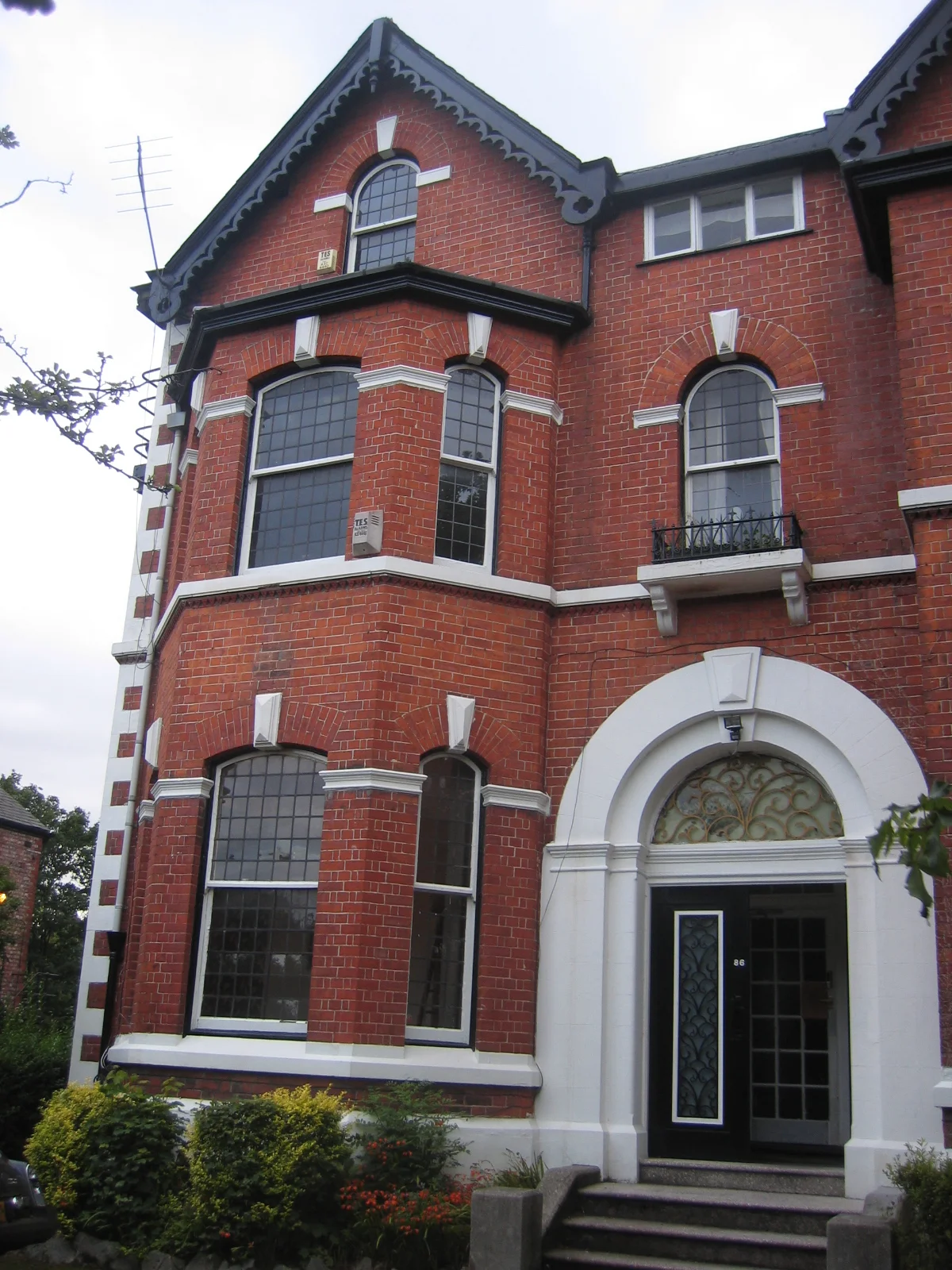
The name first belonged to a club night, not a label. On 26 May 1978, Alan Erasmus and Tony Wilson - the latter a Granada Television presenter who had championed the Sex Pistols on his music show So It Goes - launched Factory Nights at the Russell Club on the edge of the Hulme Crescents, a sprawling concrete housing estate in inner-city Manchester. Peter Saville, then a student at Manchester Polytechnic, designed the posters. In December 1978 the team released A Factory Sample EP, with tracks by Joy Division, the Durutti Column, Cabaret Voltaire, and comedian John Dowie. The first office was Erasmus's flat on the first floor of 86 Palatine Road in West Didsbury. The first full-length album, in June 1979, was Joy Division's Unknown Pleasures, with Saville's cover - white pulsar waveform on black - already iconic before it sold a single copy.
Ian Curtis, and What Came Next
On 18 May 1980, the night before Joy Division's first American tour, the band's singer Ian Curtis took his own life. He was twenty-three years old. He suffered from epilepsy and depression, and the marriage he had entered as a teenager had failed. The following month their single Love Will Tear Us Apart reached the UK top twenty; weeks later, their second album Closer was released to acclaim Curtis would never hear. Bernard Sumner, Peter Hook, and Stephen Morris regrouped as New Order. Their breakthrough single Blue Monday, released in 1983, became the best-selling 12-inch single of all time - and Factory famously lost money on every copy, because Saville had die-cut the sleeve to resemble a floppy disk and the packaging cost more than the disc inside. Saville later said nobody at Factory expected it to sell.
The Haçienda
FAC 51 was a nightclub. The Haçienda opened on Whitworth Street West on 21 May 1982, funded largely by New Order's royalties, designed by Ben Kelly in industrial yellow and black hazard stripes. It looked extraordinary and lost extraordinary amounts of money - tens of thousands of pounds every month for years. By the mid-1980s the crowd had shifted from drinking to MDMA, and the bar takings collapsed even as attendance soared. The Haçienda became the spiritual home of acid house in Britain. Happy Mondays, signed to Factory in 1985, became the second band - alongside New Order - whose hits subsidised the rest of the roster. By 1992 it had all unravelled: Happy Mondays were in Barbados spending too much on their album Yes Please!, New Order had spent 400,000 pounds making Republic, and London Records walked away from a rescue deal when they discovered Factory had no written contracts, meaning New Order owned their own back catalogue. Factory went bankrupt. The Haçienda finally closed in 1997.
Afterlife
Michael Winterbottom's 2002 film 24 Hour Party People made the story a national legend, with Steve Coogan playing Wilson and most of the original cast turning up in cameos. In 2010 Peter Hook reopened FAC 251, the old Factory headquarters on Charles Street, as a nightclub, with Ben Kelly redesigning the interior and Funktion-One supplying the sound. The original sound. From 19 June 2021 to 3 January 2022, Manchester's Science and Industry Museum hosted Use Hearing Protection, an exhibition built around Peter Saville's graphic designs and objects from the estates of Wilson and Gretton. Wilson is buried in Manchester Southern Cemetery under a Saville-designed gravestone of cobalt-blue glass. The inscription is in his own handwriting. The catalogue number, FAC 501, is engraved discreetly on the back.
From the Air
Located at 53.4679 degrees north, 2.2501 degrees west - the coordinates correspond to the former Factory Records headquarters on Charles Street in central Manchester, now FAC 251 nightclub. The Beetham Tower (47 storeys) and central Manchester's pattern of red-brick warehouses and modern glass are useful landmarks. Manchester Airport (EGCC) is 8 miles south. Manchester City Airport (Barton, EGCB) is 5 miles north-west. Recommended viewing altitude is 2,000 to 3,500 feet AGL given Manchester's busy controlled airspace; check Manchester CTR boundaries.
Nearby Stories
- National Science and Media Museum 0.2 km away
- Jodrell Bank Observatory 3.2 km away
- Siege of Lathom House 5.6 km away
- Chester Zoo 6.2 km away
- Whalley Abbey 8.9 km away
- Haddon Hall 10 km away
- Wentworth Castle 16 km away
- Blackpool 16 km away