
Goiânia
Imagine drawing a city before anyone has built a single brick. Atilio Correia Lima drew Goiania in 1933 - concentric rings spreading out from a central plaza, Avenida Goias running north-south, Avenida Anhanguera east-west, intersecting at the Praca Civica where the state government would rise. The plan assumed 50,000 inhabitants. Governor Pedro Ludovico Teixeira commissioned it because the old capital, the City of Goias, could not handle the administrative needs of a growing state. By 2016 Goiania held over 1.5 million people in the city proper and 2.5 million in the metropolitan area. The art-deco buildings of the original plan still stand at the center, dignified and a little lost, surrounded by the sprawl they never anticipated.
A Capital Built on Purpose
Brazil has a particular fondness for planned capitals - Brasilia is the most famous, but Goiania came first. When the military revolt of 1930 brought Pedro Ludovico to power as governor of Goias, he revived an idea that had been debated since 1753: move the capital somewhere more central, more modern, more connected to the economic interests of the state. In 1932 a commission chose the municipality of Campinas, and in 1933 the cornerstone was laid at the present location. The plan was art deco and rational, with buildings designed to project a young republic's confidence. The state capital formally transferred in 1937. Official inauguration came in 1942, with the president of the republic and his ministers in attendance, all standing on ground that had been pasture a decade earlier.
Getting There
Good air service runs non-stop from Sao Paulo in about an hour and twenty minutes. From Goiania, there are numerous flights daily to other Brazilian cities, either direct or through Sao Paulo or Brasilia. Santa Genoveva International Airport sits on the northeast side of town, with rental vehicles and taxi stands waiting. For the traveler on a budget or one who wants to see the countryside, the bus station at Praca do Trabalhador - worker's square - connects Goiania to anywhere in Brazil. The bus terminal shares its location with Araguaia Shopping, about 1 kilometer north of the central district. Brasilia is only three hours away by a conventional bus for about R$35, close enough that many Brazilians treat Goiania and the federal capital as a weekend-swap pair.
What to Do By Day
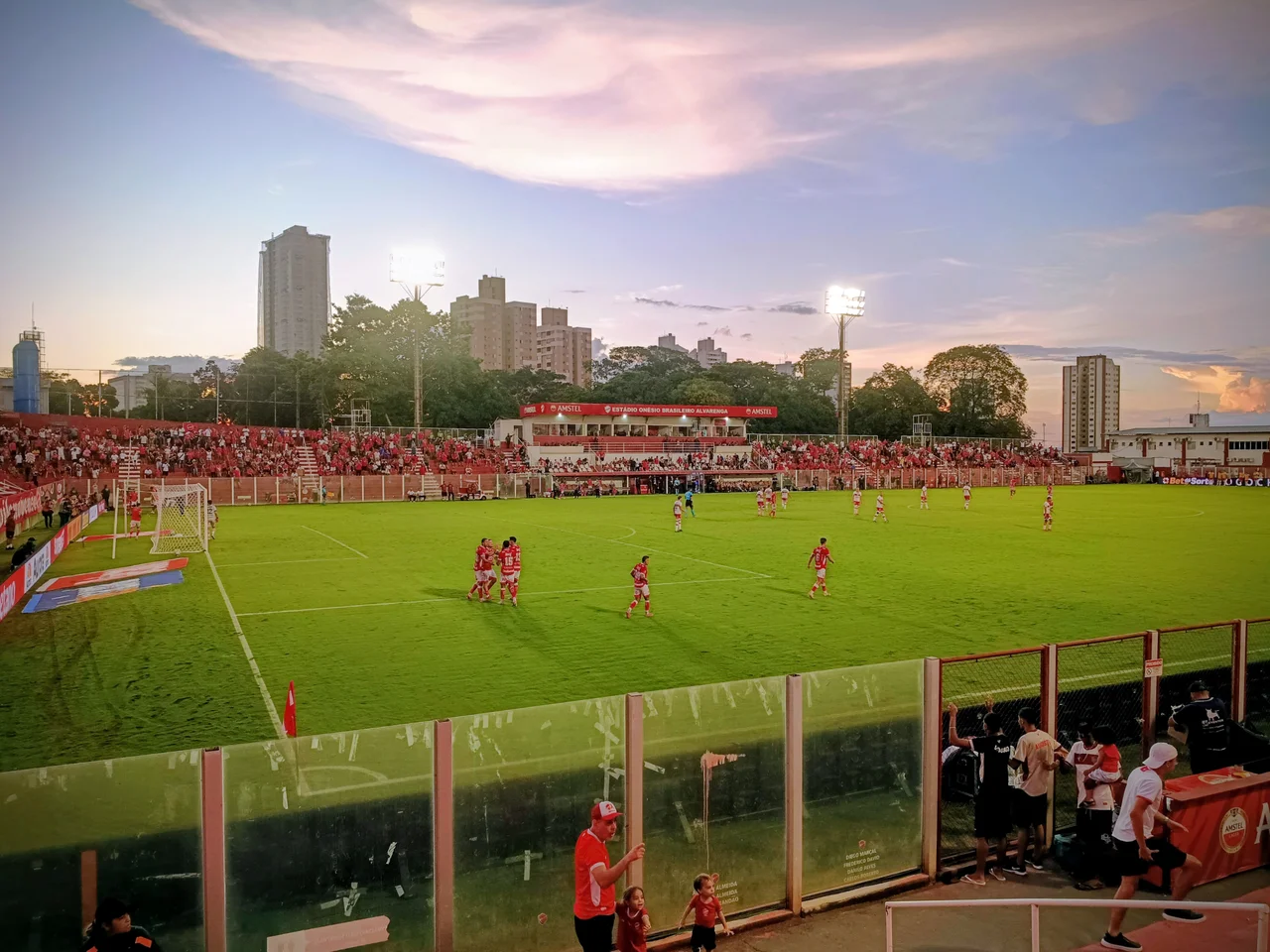
Goiania does not try to be a tourist city. During daylight hours the urban center has a few parks, some shopping streets, a few museums - the Museu de Arte de Goiania, founded in 1969 as the first public art museum in the Central-West region, sits inside the Bosque dos Buritis with its 140,000 square meters of buriti palms and running trails. Parque Mutirama is northeast of the center at the end of Avenida Araguaia, larger than Buritis, with walking paths and hilly terrain that break the pattern of the plain. Estadio Serra Dourada is the city's great football stage, considered one of the best turfs in Brazil; games run every Wednesday and Sunday. The real soul of daytime Goiania, though, is in the weekend fairs - the Feira Hippie at Trabalhador's Square on Sundays, the Feira da Lua on Saturdays at Tamandare Square, the Feira do Sol at Sol Square on Sundays.
Sebos and Shopping Streets
For a particular kind of traveler, the best reason to visit Goiania is the sebos - used bookshops that crowd Rua 3 and Rua 4 in the central sector. They are smaller than the sebos of Sao Paulo, but they carry rare books, CDs, and LPs at prices that reward patience. Avenida 85 is lined with clothing stores and car dealerships, its sidewalks busy on Saturdays. Avenida Jamel Cecilio holds hotels, supermarkets, and shopping malls, the commercial spine of the newer middle-class neighborhoods. Praca do Sol, on Rua 9 in the Setor Oeste, hosts a market on Sundays where art and household goods share space with food stalls. Goiania is known among Brazilian traders for low prices on clothing, enough that retailers from the North come here to stock their stores.
A City for the Evenings
What Goiania lacks by day it provides by night. The city's hot climate produces a culture of outdoor conviviality - people head out in the evening, filling bars and pubs and restaurants until well past midnight. The young people who came here to study at the Universidade Federal de Goias or the private faculties are a constant presence, filling plazas, ordering cold draft beer, turning the flat grid of the planned capital into something that feels alive in a way no architect drew. Night clubs cluster in specific districts. Pubs pretend to be British. The food is good and plentiful and cheap by Brazilian urban standards. For accommodation, Goiania offers everything from backpacker hostels to executive hotels catering to business travelers who come here for agribusiness, the sugarcane economy, or the region's healthcare industry. The planned city kept growing past its plan, but some things the plan got right.
From the Air
Goiania sits at 16.68°S, 49.26°W at 749 m elevation on Brazil's Central Plateau. Santa Genoveva International (SBGO) is the main airport on the northeast side, handling domestic and international flights; the new terminal opened in May 2016 with capacity for 6.5 million passengers. Aerodromo Nacional de Aviacao handles general aviation. Cruise at 5,000-7,000 feet to see the distinctive concentric radial plan with Avenida Goias running north-south and Avenida Anhanguera east-west intersecting at Praca Civica. The Meia Ponte River crosses the city north-south. Climate is tropical wet/dry (Aw): hot wet summers Oct-Apr, dry cooler winters May-Sep. Brasilia (SBBR) is 200 km northeast; Sao Paulo Guarulhos (SBGR) is 780 km south.
Nearby Stories
- Anicuns 17 km away
- Silvânia 28 km away
- Mossâmedes 40 km away
- Anápolis 47 km away
- Corumbá de Goiás 48 km away
- Orizona 63 km away
- Morrinhos, Goiás 100 km away
- Rio Verde, Goiás 148 km away