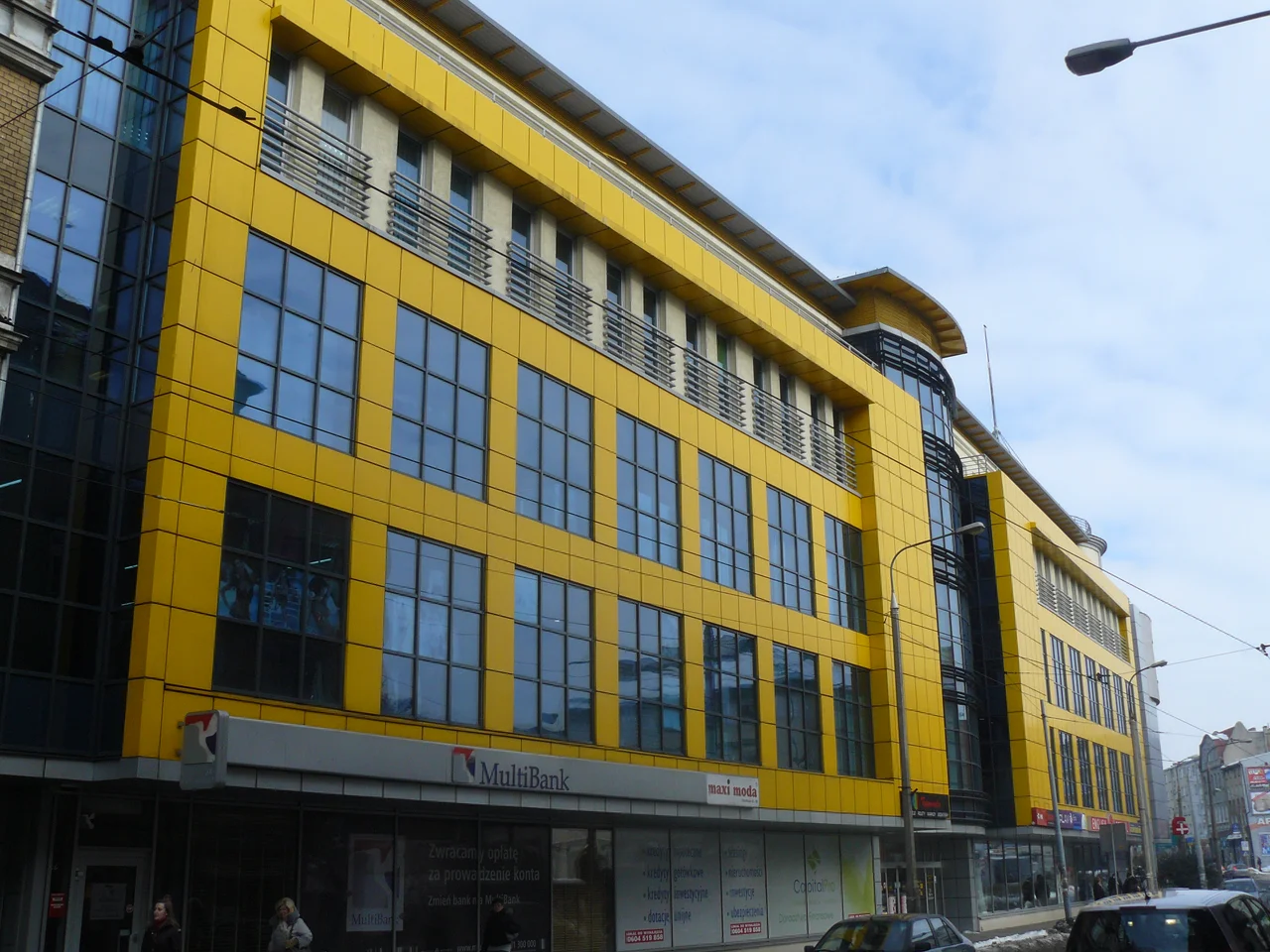

Gorzów Wielkopolski
On 30 May 1945 the town was officially named Kobylagóra - Mare Mountain. Five weeks later it was Gorzów nad Wartą. Not until 5 November 1946 did the Polish naming commission settle on Gorzów Wielkopolski, and by then the place had already changed its country, its language and nearly every person in it. For the previous seven centuries it had been Landsberg an der Warthe, a Brandenburg market town on the river, and before that it had been a Piast fort guarding the point where the little Kłodawka runs into the Warta. Kobylagóra survives today as the name of a street. It is not a bad monument: a city where even the name had to be argued over from scratch.
The Fort at the Confluence
Under the first Polish monarchs of the Piast dynasty there was a craft and trade settlement at the meeting of the two rivers, defended by a fort, and until the mid-thirteenth century this was the edge of Greater Poland. Then in 1249 the Silesian duke Bolesław II Rogatka sold Lubusz Land to the Ascanian margraves of Brandenburg, and in 1257 they founded a town on the site: Landisberch Nova, named for Altlandsberg further west. It was a frontier post of the newly established Neumark, planted within sight of the Greater Polish stronghold of Santok, and it changed hands about as often as the frontier itself. Pomerania seized it in 1319 and lost it by 1325; Polish troops besieged it that same year and Hussite armies in 1432. From 1373 the Luxembourg dynasty ruled it as part of the Lands of the Bohemian Crown, and in 1402 they agreed at Kraków to sell the region back to Poland - then sold it to the Teutonic Order instead. In 1454 the Order sold it on to Brandenburg to fund a war against the Poles. St Mary's turned Lutheran in 1537, and in 1701 the town became Prussian.
The Exchange
The Second World War came to Landsberg as an administrative fact before it came as a battle. The Germans ran nine forced labour camps in the town and four labour detachments of the Stalag III-C prisoner-of-war camp, holding French, Italian and Soviet captives - men worked hard and fed badly a short walk from the market square. In 1945 the front arrived, the Old Town was left in ruins, and the city passed to Poland. The German residents left, the last of them forced out in the early 1950s, at which point the streets began filling again with Poles resettled from the east, and with the Tatar and Romani families whose communities in Gorzów remain substantial today. Among those who left was a teenaged girl named Christa Wolf, born here in 1929, who became one of the most important writers in East Germany and spent much of her career circling the town she had fled - the childhood she could not return to except in prose.
Red Brick, and What Was Rebuilt Around It
The survivor is the cathedral. Gorzów's Gothic church of the Virgin Mary, built in red brick at the end of the thirteenth century, still holds the old market square while almost everything around it dates from after 1945. The centre is largely Communist-era construction, though much of it has been softened - many façades around the market square were renovated in a hurry ahead of Pope John Paul II's visit in 1997, and the improvement stuck. Better preserved is the New Town, the nineteenth-century district that came through the war largely intact: hundreds of buildings, protected in the Heritage Register. The eighteenth-century granary on the left bank of the Warta holds half of the Lubusz Voivodeship museum; the other half occupies the secessionist villa of Gustav Schroeder, complete with its original Biedermeier interiors. On the western edge of town lies the Jewish cemetery, vandalised in the 1930s, where some graves are still standing.
Papusza's City
Bronisława Wajs, known by her Romani name Papusza, lived in Gorzów and became the best-known Romani poet in Polish literature - a woman who taught herself to read in a culture that had little use for writing, and who paid for her fame with the suspicion of her own community. Her former home on Kosynierów Gdyńskich Street carries a plaque, as does the main city library on Sikorskiego, which holds a collection of books about her along with the manuscripts of her correspondence with the poet Julian Tuwim. Every year in the first week of July the city hosts Romane Dyvesa, the International Romani Gathering, with concerts in the open-air amphitheatre near the centre. It is organised by Edward Dębicki, himself a Romani poet and composer, whose ensemble Terno plays the festival.
The Warta Side
Gorzów calls itself the city of parks and gardens and has the acreage to back it up, from the central Park of Roses to the hilltop lookout in Siemiradzki Park, which opens onto the plains and forests running south. Down at the water, the renovated embankment has become the city's evening quarter, restaurants and bars strung along the riverbank. Moored in the river port is the Kuna, the oldest river icebreaker still in service anywhere, open as a museum ship. And then there is the speedway. Stal Gorzów, nine times champions of Poland, races in the top division at the stadium named for Edward Jancarz, and on race nights the sound of methanol engines carries across half the city - a sport that in Poland belongs to towns like this one.
From the Air
Gorzów Wielkopolski sits at 52.73 N, 15.25 E on the Warta in western Poland, about 55 km east of the German border. The Warta is the primary reference from the air - a wide, meandering river cutting east-west through flat, heavily forested country, with the city built on both banks and the small Kłodawka joining from the north. From 3,000-5,000 ft look for the dark red brick mass and tower of Gorzów Cathedral on the old market square, the oval of the speedway stadium, and the S3 expressway running north-south past the western edge of town toward Szczecin and Zielona Góra. There is no airport in the city: Solidarity Szczecin-Goleniów (EPSC) lies about 133 km north and Poznań-Ławica (EPPO) about 167 km south-east. The climate is transitional between oceanic and continental, so expect river valley fog on calm autumn mornings and generally good summer visibility.
Nearby Stories
- Pol'and'Rock Festival 7.6 km away
- Battle of Kunersdorf 11 km away
- Heros von Borcke 20 km away
- St. Mary's Church, Chojna 23 km away
- Słubice 49 km away
- Lubiaz Abbey 132 km away
- Battle of Leuthen 178 km away
- Stutthof Concentration Camp 271 km away