
Gran Torre Costanera
Locals just call it El Costanera, dropping the formalities for the tower everyone in Santiago can find on the skyline. At 300 metres and 64 storeys, it is the tallest building in South America, a tapering shaft of glass that catches the morning light off the Andes and throws a shadow more than a kilometre long across the city. It was the last major work of Argentine architect César Pelli, the man behind Kuala Lumpur's Petronas Towers, and it gave a mid-latitude capital better known for earthquakes than for skyscrapers a genuine landmark to call its own.
A Tower for the Southern Cone
Gran Torre Costanera anchors the Costanera Center, a complex that also holds the largest shopping mall in Latin America, two hotels, and a pair of additional office towers. The skyscraper itself stands 300 metres tall with 64 floors above ground and six basement levels below. Pelli's Argentine-born studio led the design alongside the Chilean firm Alemparte Barreda & Asociados and Canada's Watt International. The structural engineering, the demanding part in a country that shakes, fell to the Chilean firm René Lagos y Asociados, whose work was vindicated when the building rode out major quakes during and after construction.
Stalled, Then Skyward
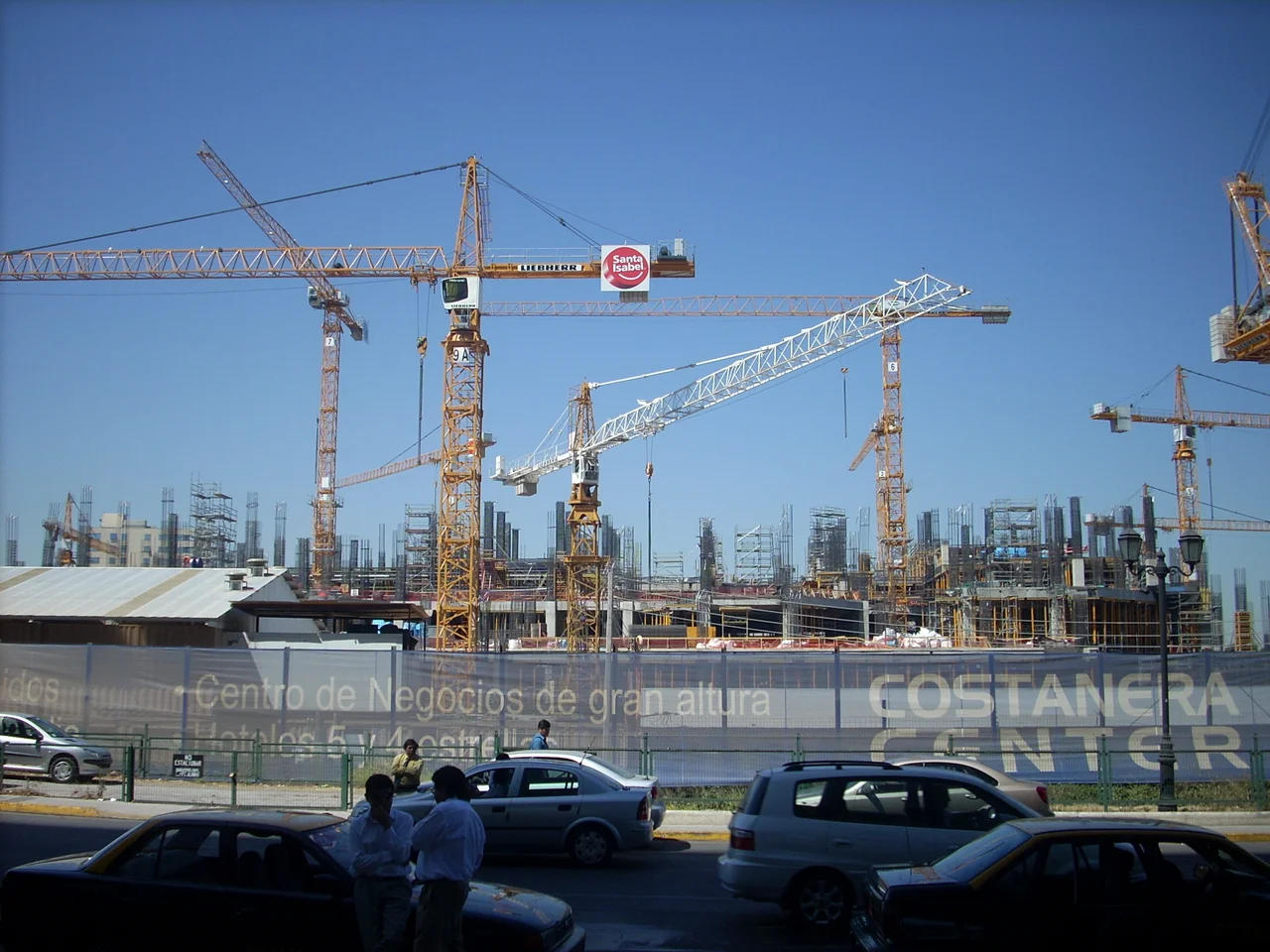
The tower nearly never finished. Construction began in 2006, but the global financial crisis froze the project in January 2009, leaving an unfinished concrete stump looming over Santiago, a stark monument to a recession reaching all the way to the Southern Cone. Work resumed on 17 December 2009. By late 2010 it had passed the neighboring Titanium La Portada to become the tallest in Chile, and on 14 February 2012 it reached its full height, claiming the record for Latin America. The building was completed in 2013, glass-clad and crowned with a latticed sculptural top.
The View from the Top
On 11 August 2015, the tower opened its summit to the public. The observation deck, called Sky Costanera, occupies floors 61 and 62 and offers a full 360-degree panorama, the highest viewpoint in Latin America. The 61st floor is enclosed behind glass; the 62nd is an open-air terrace where the wind reminds you how high you stand. On a clear day the sightline runs from the snowcapped wall of the Andes in the east, across the dense gray sprawl of Santiago's basin, toward the coastal ranges that hide the Pacific beyond.
Landmark and Lightning Rod
Not everyone welcomed it. Critics worried about a glass giant casting a mile-long shadow over a low-rise city, and the project drew its share of foreboding headlines as it rose. Yet the tower has settled into Santiago's identity the way landmarks tend to, becoming the backdrop of postcards and the meeting point everyone recognizes. Set against the permanence of the Andes, the gleaming shaft makes its own kind of statement: a city in the Southern Hemisphere, between mountains and sea, reaching deliberately for the sky.
From the Air
Gran Torre Costanera rises at 33.42°S, 70.61°W in the Providencia district of Santiago, near the Mapocho River. As the tallest structure for thousands of kilometres, it is the single most prominent landmark in the Santiago basin from the air, its glass shaft and latticed crown unmistakable against the surrounding mid-rise grid. The Andes form a dramatic snowcapped wall immediately to the east. Best viewed at cruising or descent altitude in clear weather; the clearer summer months (December–February) avoid the winter inversions that trap smog in the basin. Nearest major airport is Arturo Merino Benítez International (SCEL), roughly 14 km to the northwest, with the tower often visible on approach; Eulogio Sánchez Airport (SCTB) lies to the southeast.
Nearby Stories
- Paine Memorial 21 km away
- 1947 BSAA Avro Lancastrian Star Dust accident 23 km away
- Battle of Chacabuco 31 km away
- La Campana National Park 36 km away
- Puente del Inca 44 km away
- Casa de Isla Negra 62 km away
- Santa Cruz, Chile 103 km away
- Pierre Auger Observatory 172 km away